7 Affiliate Channel Eligibility Checks for Creators
Compare website, social, email, paid, video, and offline rules before you apply. Use seven checks to save proof and avoid channel mismatches.
On this page (6)
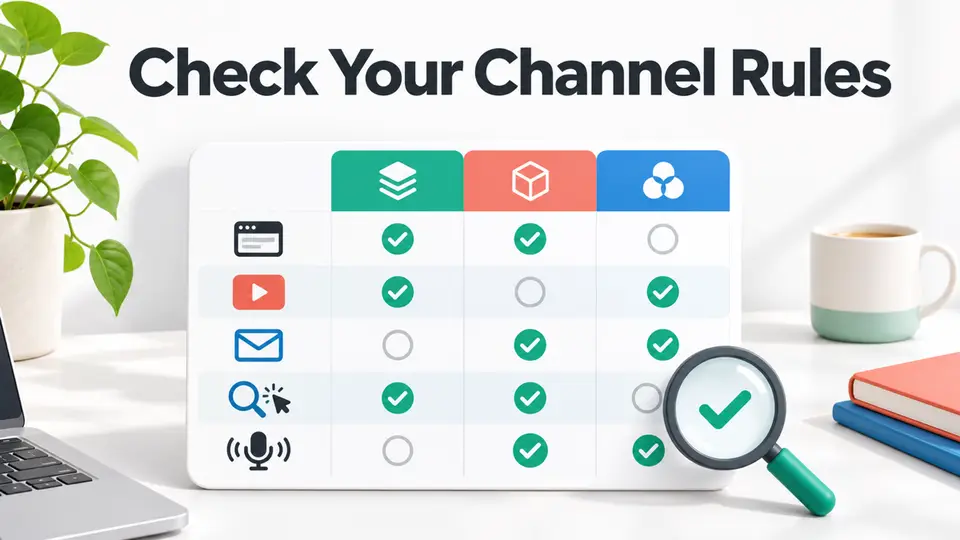
What Should You Compare Before Choosing?
Affiliate channel eligibility changes by network and by advertiser. A creator may be approved to join a network, then need separate approval for each brand. A website, public social profile, newsletter, podcast, paid search campaign, and offline event can each have different rules.
Use this seven-check matrix before applying. It helps you submit the exact channel you plan to use, find audience or market limits, and save the evidence you may need if terms change.
Quick answer: compare the channel, not just the program
List every channel you plan to use, then check whether the network and the advertiser accept it. Submit the exact public URL, audience location, content examples, and promotion method. Network approval does not guarantee advertiser approval, and one advertiser's social or email rules do not apply to every offer.
Treat affiliate channel eligibility as a program-by-program check rather than a universal badge.
| Channel | Evidence to prepare | Questions to verify |
|---|---|---|
| Website or blog | Owned URL, recent original pages, contact and disclosure information | Is ownership required? How much recent content is expected? |
| Social profile | Exact public profile URL, recent posts, audience and location | Is this platform accepted? Are followers or public visibility thresholds stated? |
| Video channel | Channel URL, review or tutorial examples, planned link placement | Are links in descriptions, pinned comments, or product tags permitted? |
| Newsletter | Signup page, sample issue, audience and sending method | Is email allowed? Are opt-in and unsubscribe practices specified? |
| Podcast | Public show page, episode examples, planned spoken or show-note link | Does the program allow spoken promotions and show-note links? |
| Paid search | Campaign keywords, landing page, tracking path | Are brand bidding, direct linking, or specific ad networks restricted? |
| Offline or community | Event, print, QR, or group placement plan | Is the placement public, trackable, and allowed by the advertiser? |
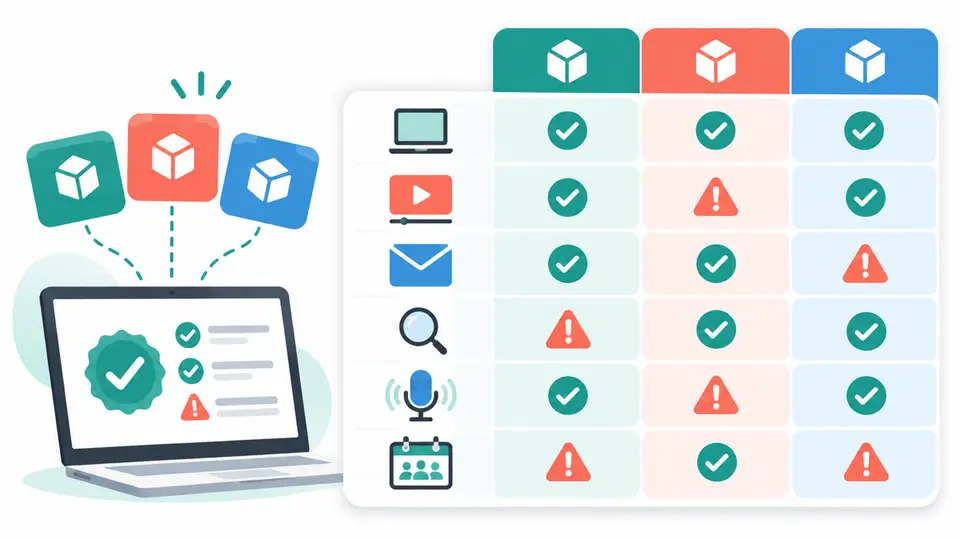
Seven checks before you submit an application
1. Name the exact channel you will use
Do not write only “social media” or “my website.” Record the domain, account handle, channel URL, newsletter archive, podcast page, or event placement. If you use more than one source, list each one. A reviewer should be able to open the same page you plan to use for promotion.
This also prevents a mismatch later. If your application names a blog but your traffic will come from a video channel, ask whether the second channel must be added or approved before you use it.
2. Separate network approval from advertiser approval
An affiliate network can review your publisher account before you apply to individual advertisers. Awin's publisher FAQ asks applicants to provide their website, social channels, or other planned methods. After network approval, publishers can browse the advertiser directory and apply to individual brand programs.
This distinction is central to affiliate channel eligibility: approval at one level does not confirm the other.
That sequence means the first approval is not a blanket permission to promote every advertiser or every product. Check the advertiser's program page and account terms separately. For discovery, compare listings such as the Shopify affiliate program, MailerLite affiliate program, and Semrush affiliate program, then confirm each brand's own rules.
3. Check website ownership and recent content
Some advertisers want a site they can review, with original content and a clear audience. Amazon Associates provides a concrete example of how specific a rule can be: its US application guidance says applicants must own the website, keep content recent, generally within the last 60 days, and show robust original content. Amazon gives at least 10 posts as a rule of thumb, not a universal requirement for all affiliate programs.
Before applying with a site, publish enough useful material to make its subject and intended audience clear. Remove unfinished pages, test key links, and provide the contact or disclosure details the advertiser asks for.
4. Verify social platform and audience rules
A platform that works for one program may not qualify for another. Amazon's US guidance currently lists Facebook, Instagram, Twitter, YouTube, TikTok, and Twitch. It asks applicants to provide the exact social page URL, keep the page public, and show an established audience. Amazon says a substantive number of organic followers or likes is usually at least 500.
Those are Amazon-specific rules. Do not turn its platform list or follower threshold into a general affiliate standard. For every advertiser, check the current supported channels and audience criteria, then use the exact profile that will carry the recommendation.
5. Review newsletter, podcast, and other promotion permissions
Some networks accept publishers who use newsletters, podcasts, social pages, blogs, or video channels. The advertiser can still limit where links appear, what claims you make, or which audiences you can reach. Confirm email rules before adding links to a newsletter, and check whether spoken podcast mentions, show notes, private communities, or offline materials are allowed.
Paid search needs its own review. Check brand bidding, direct linking, trademark terms, coupon rules, and required landing pages. A program may permit a channel while limiting how it can be used.
6. Match the audience market to the program market
Record where your readers or viewers live and where a referred customer will land. A program can be available only in certain countries, use a regional storefront, or offer different products and rates by market. If a page does not state a territory, check the application or ask the program before you build a campaign around it.
Do not assume that a network account in one country makes every advertiser offer global. Your matrix should include the destination country, currency, eligible customer, and whether you need separate links for multiple regions.
7. Save proof and a review date
Keep a compact record for each program: exact channel URL, eligibility statement, allowed promotion methods, region, source link, date checked, and any account-specific approval. Save a copy or screenshot of terms when the program permits it. If a term is missing, write “not stated” and ask the affiliate manager instead of filling it from an old article.
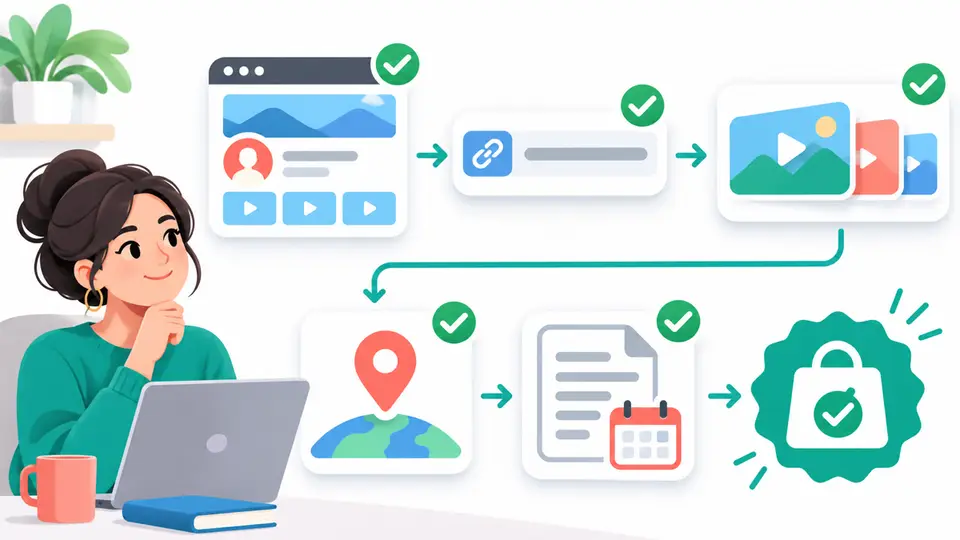
A simple channel eligibility worksheet
To compare affiliate channel eligibility across offers, keep one current row for every advertiser you plan to apply to.
Use one row for each advertiser, not one row for an entire network:
| Program | Channel and exact URL | Market | Allowed method | Audience threshold | Source and date |
|---|---|---|---|---|---|
| Example program | Public site or profile link | Reader country | Link placement and any limits | Requirement or not stated | Official terms, date checked |
If you apply to several programs, this worksheet reduces repeated research. It also makes it easier to spot a rule conflict before you publish a recommendation. The affiliate program approval guide covers general application readiness; this matrix adds a side-by-side view of channel requirements. For a no-website starting point, see affiliate programs for beginners with no website. For channel link placement, compare the Instagram versus TikTok affiliate link funnel guide.
Frequently asked questions
Can I join affiliate programs without a website?
Sometimes. Some programs accept social profiles, newsletters, podcasts, or other channels, while others require an owned website. Check the current advertiser rules and submit the exact public source you plan to use.
Does joining an affiliate network approve me for its brands?
No. Network approval may let you apply to advertiser programs. Each advertiser can have its own application, eligible channels, region, and promotion rules.
Does the 500-follower threshold apply to every affiliate program?
No. The 500 figure is Amazon's current guidance for most accepted social pages. Other networks and advertisers can set different thresholds or review the channel another way.
What should I do if an advertiser does not publish a channel rule?
Mark the rule as not stated, send the program manager your exact channel URL and promotion plan, and wait for a clear answer before relying on that method.
Key Takeaways for 7 Affiliate Channel Eligibility Checks for Creators
Affiliate channel eligibility is easiest to manage as a set of program-specific rules. Start with the exact site or profile you will use, separate network review from advertiser approval, then save the market, channel, and source evidence for each offer. Use FindAffiliates to discover programs and compare the current terms before you apply.