Instagram vs TikTok Affiliate Link Funnel for Creators
Compare an Instagram vs TikTok affiliate link funnel for product tags, profile handoffs, disclosure, eligibility, and tracking before choosing a creator path.
On this page (8)
What Should You Compare Before Choosing?
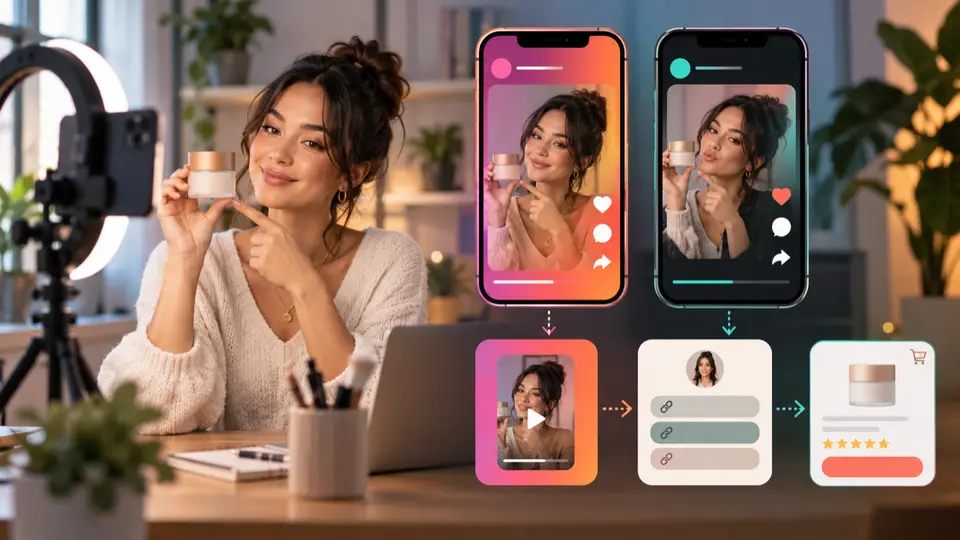
An Instagram vs TikTok affiliate link funnel works best when the clickable handoff matches what the viewer wants to do next. Use an eligible in-app product link when the exact item is available and the platform can report the resulting activity. Use a focused profile page when readers need a comparison, several products, or a longer explanation before they leave for an affiliate merchant.
The two apps are both useful for discovery, but their product surfaces, account eligibility, link placement, and reporting are not identical. Check the features visible in your own account and country, then compare clicks and credited sales from a consistent measurement plan. Views alone cannot tell you which path earns commissions.
Quick answer
| Funnel choice | Strong fit | Verify before publishing |
|---|---|---|
| Instagram product tag or affiliate link | One featured product in a Reel or feed post, when the feature appears for your account and market | Product catalog eligibility, selected item, commission attribution, and disclosure label |
| TikTok Shop product anchor | A TikTok video that demonstrates an item available in the eligible Shop experience | Creator and product eligibility, in-app commission terms, and product availability |
| Profile link to a focused landing page | A multi-item comparison, tutorial, or review that needs context before the merchant click | Website-link availability, mobile speed, redirects, disclosures, and sub-ID tracking |
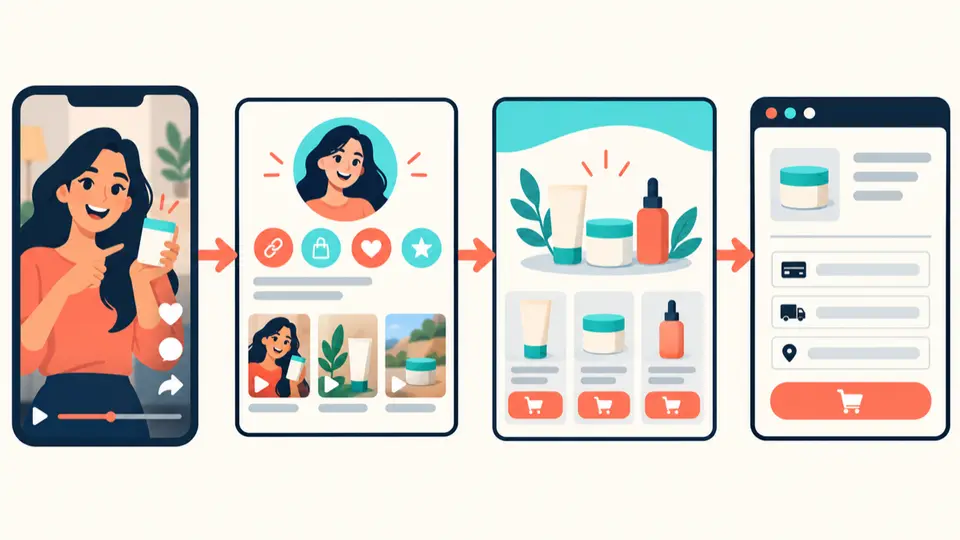
Start with the reader's next step, not with the platform's highest view count. A single product demonstration can point directly to that product if the link works for the target audience. A buying guide should usually send viewers to a page that explains the choices, with clear links to the products discussed. A useful Instagram vs TikTok affiliate link funnel map records the feature, handoff, disclosure, and reporting source before publishing.
What differs between Instagram and TikTok
Instagram: check native tags and profile routes
Instagram gives creators several possible handoffs, including product tags where available and links from the profile. In June 2026, Meta announced affiliate product tagging across 22 countries and regions, alongside catalog product links in Reels and feed posts. The announcement describes creators selecting items from participating business catalogs and earning commission through shared affiliate links. The rollout is market and account dependent, so confirm the feature in the Instagram app before promising a shoppable path.
Meta's announcement about affiliate product tags is a useful source for the rollout, but it does not establish that every creator, product, or country can use each placement. A tag also narrows the choice to the available catalog item. If your post covers several alternatives, a profile page can preserve the comparison and link each option separately.
Use the in-app disclosure controls that apply to the post and put a plain-language relationship statement near the recommendation and affiliate link. A viewer should understand the commercial relationship before choosing to leave the platform. When mapping an Instagram vs TikTok affiliate link funnel, keep disclosure close to each path so it remains visible if a viewer lands on the product or a profile page.
TikTok: distinguish Shop links from external affiliate links
TikTok can connect product demonstrations to TikTok Shop items where Shop and the relevant creator and product features are available. That native path can reduce the number of steps between a video and a product page. It is a different offer from a standard affiliate program link that opens an external merchant. Review the active commission and attribution information for the exact TikTok Shop product, and do not assume that a separate merchant affiliate program will credit an in-app Shop order.
When a video directs viewers to an external affiliate page, use only a website or profile link that is enabled for your account. Keep the destination focused on the products shown in the video. Since profile and Shop capabilities can vary by region and account, test the route on a viewer account and on a phone before posting. Avoid relying on a pinned comment or a spoken instruction if viewers cannot reach the same working link from the published post.
TikTok's official content disclosure instructions require the disclosure setting for content promoting a third-party brand in exchange for payment or another incentive. The platform says branded content receives a Paid partnership label and that turning on the setting does not affect distribution in feeds. Use the in-app setting, then add any additional disclosure required by your audience's location and the program.
Choose the right handoff for the content
Use a native product link when all three conditions are true: the viewer is considering one identifiable product, the product is eligible for the feature shown in your account, and the merchant or platform terms explain how commission is credited. Show the product clearly, name the use case, and state the relationship in the post. A direct product link is a poor fit if it sends the viewer to a different color, plan, bundle, or country page than the one in the video.
Use a profile landing page when the video begins a larger decision. Examples include comparing a starter kit with a premium option, explaining several tools in a tutorial, or showing a product category where readers need a buying checklist. Put the matching guide near the top of the page, label each affiliate link, and avoid a generic page full of unrelated offers. One click should move the viewer into the context promised by the video.
For example, a creator who shares a craft tutorial might send viewers to a page comparing the Etsy affiliate program with other relevant maker offers. A commerce consultant could create an educational page about platform tools and research the Shopify affiliate program. A design instructor might compare available creative tools and check the Canva affiliate program listing, while confirming current application eligibility before recommending it. These are examples of different audience paths, not endorsements of a particular program or an assertion that every application is open.
Track both paths with the same discipline
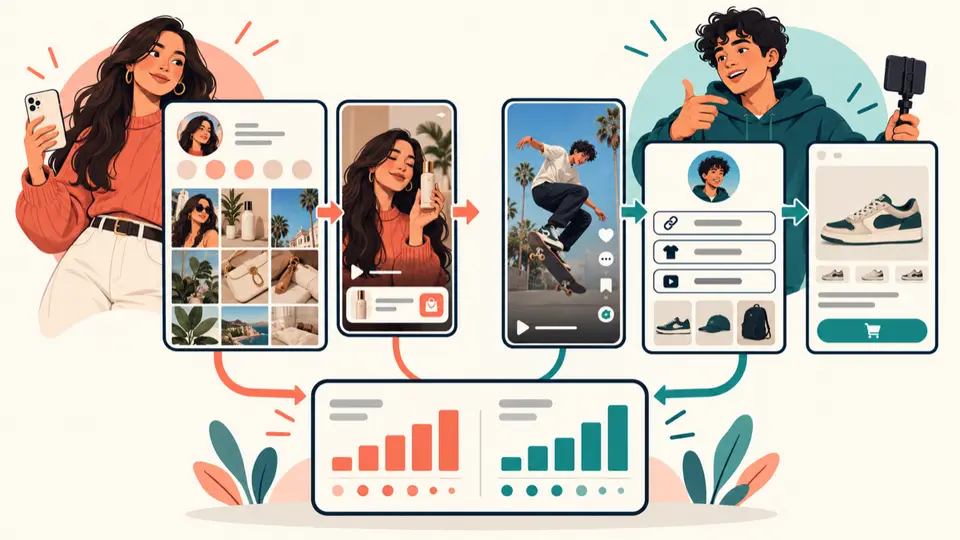
Create a separate tracking label for each platform, content format, and destination. Keep the merchant's affiliate parameters intact. If the program permits sub-IDs or campaign IDs, use a consistent scheme such as ig_reel_guide_oct and tt_video_guide_oct. Add campaign parameters to your own landing page analytics where allowed, but do not change the affiliate redirect in a way that violates program terms or loses its tracking data.
Record a small set of comparable events:
| Event | What to record | What it tells you |
|---|---|---|
| Qualified views | Views on the specific post, using the platform's own definition | Whether the creative reached viewers |
| Profile or product-link taps | Taps reported by the platform or analytics on your landing page | Whether the call to action prompted a click |
| Merchant outbound clicks | Clicks on each labeled affiliate button | Which offer or product earned consideration |
| Attributed orders and commission | Values from the affiliate dashboard after its reporting delay | Whether clicks became credited transactions |
Compare rates using the same time window and note reporting delays, cancellations, and attribution limits. A platform may report link taps while an affiliate dashboard reports orders under a different attribution rule. Keep those as separate measures. Do not treat a sale as incremental if the program's dashboard only shows that the click received credit.
A practical launch checklist
Before posting, confirm the selected feature is visible to the target account and market. Open the product page from the published preview, check that the correct item and price region appear, and verify the final merchant URL. If a landing page is part of the route, test it on mobile, make the first relevant recommendation easy to find, and place disclosure beside the link.
Keep a dated record of the affiliate program, destination URL, allowed traffic sources, commission event, attribution period, and any product exclusions. These terms often live in a network dashboard rather than on a public page. Recheck them when a campaign changes or a platform feature is introduced. The affiliate program research checklist and guide to choosing affiliate programs can help structure that review. For placement ideas across other channels, see where to promote affiliate links.
Run one controlled test at a time. Keep the creative and offer similar while changing the destination, or keep the destination constant while changing the call to action. Record the date, audience, country, post format, and link path. A few posts will not establish a reliable long-term winner, so use early results to find broken steps and questions viewers ask, then gather more observations before allocating a larger share of effort.
Key Takeaways for Instagram vs TikTok Affiliate Link Funnel for Creators
The Instagram vs TikTok affiliate link funnel decision comes down to the feature your account can use and the amount of context a buyer needs. Choose an in-app tag for a verified, single-item handoff when the program confirms how it pays. Choose a focused profile page for comparisons and tutorials, and make every intermediate click useful and measurable. Test disclosures, eligibility, and the full route before you publish. Browse the FindAffiliates directory to research suitable programs.
FAQ
Can I use the same affiliate link on Instagram and TikTok?
Use the same destination only if the program permits both traffic sources and the link works for both audiences. Separate platform or sub-ID tracking where allowed, and verify that redirects preserve the merchant's attribution parameters.
Are Instagram product tags available to every creator?
No universal availability should be assumed. Meta announced affiliate product tagging for 22 countries and regions in 2026, but feature access and participating catalogs can depend on market and account. Check the current app and program terms.
Does TikTok require affiliate disclosure?
TikTok says content that promotes a third-party brand for payment or another incentive must use its content disclosure setting. Local law and the affiliate program can require additional disclosure, so state the relationship clearly near the recommendation.
Should I send every video to a link-in-bio page?
No. A landing page helps when a viewer needs a comparison, multiple options, or extra explanation. A verified native product link can be simpler for one item, if the feature is available and its commission rules match your goal. A focused Instagram vs TikTok affiliate link funnel gives each viewer a working route that matches the post and makes the commercial relationship clear.