Affiliate Article Brief Template, 9 Fields for Publishers
Use this affiliate article brief template to define the query, reader, proof, outline, offer links, disclosure, and review owner before drafting.
On this page (8)
What Should You Compare Before Choosing?
An affiliate article brief template turns one search query into an assignment before research starts. It records the reader, decision, and claims that need current evidence.
Use this affiliate article brief template to align the query, reader, evidence, outline, and review owner. A clear brief also exposes overlap and missing sources before drafting.
A brief cannot promise rankings, traffic, or commissions. It gives the writer a focused job and a way to verify that the finished page answers it.
Quick Answer
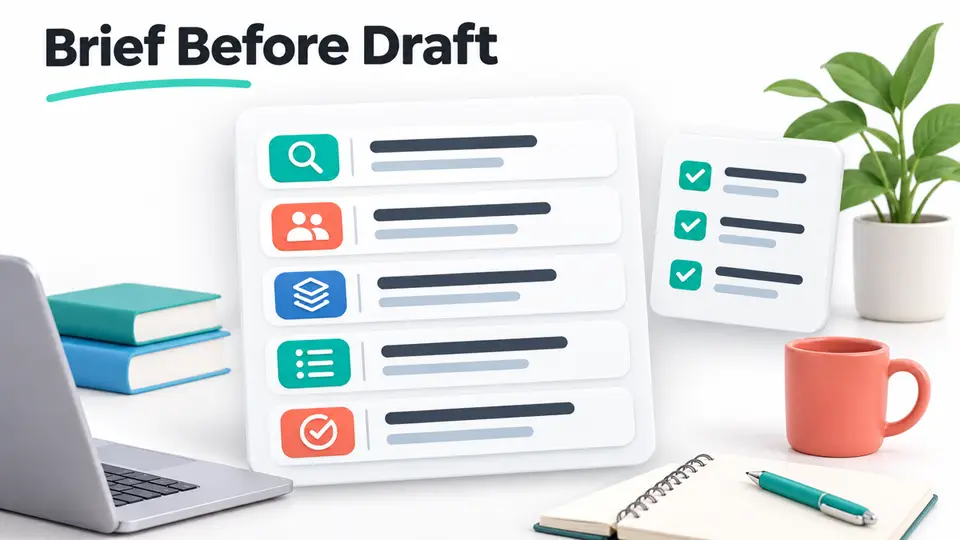
A useful affiliate article brief has nine fields: target query, reader, page promise, evidence plan, offer candidates, format, links, disclosure and claim ownership, and a review trigger. Keep one brief for each planned article, even when several pages sit in the same topic cluster.
| Field | The question it answers |
|---|---|
| Target query | What exact question should the article answer? |
| Reader | Who needs the answer and what are they deciding? |
| Page promise | What useful outcome will this page provide? |
| Evidence plan | Which current sources are needed? |
| Offer candidates | Which programs might fit, and what terms need checking? |
| Format and outline | What structure will make the answer easy to use? |
| Links | Which relevant internal and external pages should connect? |
| Disclosure and ownership | Which claims and disclosures need review? |
| Review trigger | What change should cause another source check? |
Why Prepare a Brief Before Writing
A content map plans a group of related pages. An article brief defines one page's reader, promise, evidence, and structure. Use the affiliate content map template for a query cluster or the affiliate niche launch content map to test a niche. Use this brief once an article is ready to assign.
Unlike a product review, a comparison or how-to may rely on official terms and public documentation. A review needs first-hand product evidence and a fair evaluation. Use the affiliate product review template when the article depends on testing a product.
Google's helpful content guidance recommends writing for an intended audience and providing original value. Treat it as a quality check, not a ranking formula. For program articles, compare public discovery pages for the Shopify affiliate program, Webflow affiliate program, and SiteGround affiliate program with official terms for the publisher's region and account.

The Nine Fields to Include
1. Target query and close variants
Write the exact phrase a reader might search, then add only close variants that express the same task. Avoid combining several questions just because their words look similar. For example, a guide about comparing affiliate programs for a newsletter has a different job from a guide about finding programs that accept newsletter publishers.
Note whether the query is a question, comparison, list, template, or program review. Search volume stays unknown unless a reliable keyword export or property report confirms it. Do not turn an autocomplete suggestion or a result count into a monthly traffic estimate.
2. Reader and decision
Describe the reader in practical terms. A new publisher choosing a first offer needs application rules and realistic next steps. An established site owner comparing two programs may need rate bases, eligible events, attribution details, and evidence dates.
State the decision the reader should be able to make after reading. If the brief cannot name that decision in one sentence, narrow the audience or query before drafting.
3. Page promise and boundaries
State the reader's useful outcome. A checklist can compare offers, a how-to can verify an approval route, and a review can explain who benefits from a tool and its limits.
List what the page will not answer. This keeps a comparison from becoming a beginner guide or a checklist from appearing to settle a legal question.
4. Evidence plan
Name the source needed for each claim: official program pages for rates and eligibility, help documentation for platform features, and dated terms for changes. Mark account-only details unknown rather than infer them.
Separate evidence that supports a fact from evidence that only signals reader interest. Search results and forum questions can help describe intent, but they do not prove a commission rate or program rule.
5. Offer candidates and term checks
List programs that fit the reader and article. For each, verify eligible actions, rate base, attribution window, reversals, region, channel rules, and application route. Do not choose by headline percentage alone.
Keep a source date beside each checked term. If a directory profile and an official page differ, show the conflict and identify which source is current for the claim. Do not copy a term from a neighboring program or a different country.
6. Format and outline
Match the structure to the task: criteria and a table for a comparison, steps and an example for a how-to, useful profiles for a program list, and field explanations for a template.
Put the direct answer near the beginning. Use headings that describe reader questions rather than internal project labels. A brief should include only enough outline detail to guide the writer while leaving room for useful examples discovered during research.
7. Internal and external links
Name related guides and the most relevant category or directory. Place each source link near the claim it supports.
Each link should answer a useful next question. Verify every destination and remove stale or irrelevant links.
8. Disclosure and claim ownership
State who will check program claims, product statements, and disclosure language. The FTC Endorsement Guides explain that a material connection, including a commission relationship, should be disclosed clearly and conspicuously when readers would not otherwise expect it.
The brief should tell the writer where the disclosure belongs in the article and who confirms it. A disclosure does not make an unsupported product claim accurate, so claim review and disclosure review are separate tasks.
9. Owner and review trigger
Name the final fact checker, next review date, and events that reopen the page, such as a program closure, new rate sheet, revised qualifying event, major product update, or broken link.
If no one owns refreshes, the page can keep stale claims long after its original research was sound. Assign responsibility before drafting rather than leaving it for a future cleanup.
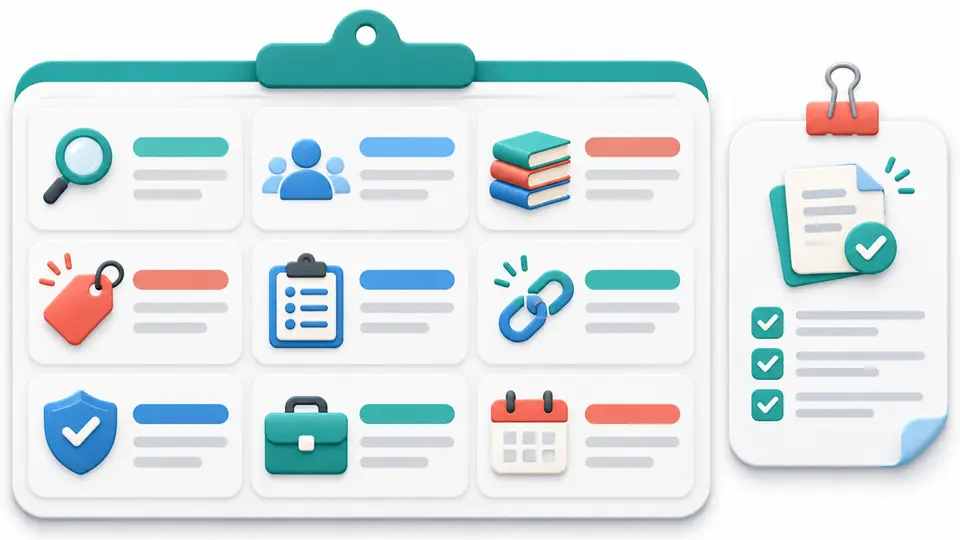
Copyable One-Page Brief
Use one row for each field and fill it with verified decisions before writing starts.
Copy this affiliate article brief template into the assignment system, then record source names and review ownership before research.
| Brief field | What to record |
|---|---|
| Target query | Exact search phrase and a few close variants |
| Reader | Audience, experience level, and immediate decision |
| Page promise | The answer or action the article will provide |
| Boundaries | Related questions the page will leave to other guides |
| Evidence | Required official sources, source dates, and unknowns |
| Offers | Candidate programs and the terms that must be verified |
| Format | Article type, answer-first block, outline, and table needs |
| Links | Related published guides, directory pages, and source links |
| Review | Claim owner, disclosure reviewer, review date, and triggers |
For a hypothetical newsletter comparison, the brief might say that the reader is choosing a program for an email audience, the page will compare accepted channels and official terms, and private tracking rules remain unknown until checked in an account. That is enough to guide useful research without inventing a rate or promising an outcome.
Check the Brief Before Drafting
Read the query and page promise together. They should describe the same reader task. Confirm that the outline answers the question, that each important claim has a source plan, and that any offer has an eligible audience and a verifiable program route.
Check for cannibalization before assigning the work. Compare the brief with existing published articles and drafts. If another page already answers the same question for the same reader, revise the audience or purpose only when that change creates a materially different answer. Otherwise, choose a different topic.
Finally, check the link plan and ownership. The article needs useful links to relevant programs, related published guides, and authoritative sources. Every rate, eligibility, or product claim should have a named reviewer and a refresh trigger.
| Final check | A brief is ready when |
|---|---|
| Query and reader | The same real question and audience appear in both |
| Promise and outline | Each main section advances the stated decision |
| Evidence | Important claims have current sources or are marked unknown |
| Offers and links | Destinations fit the reader and have been checked |
| Ownership | A reviewer and refresh trigger are named |
Key Takeaways for Affiliate Article Brief Template, 9 Fields for Publishers
An affiliate article brief template keeps the query, reader, source plan, offers, outline, links, disclosure, and review ownership together. Use it for one article at a time, then revisit it whenever a major term or reader need changes. Browse FindAffiliates to discover programs, and confirm current facts at the official source before publishing.
FAQ
What should an affiliate article brief include?
Include the exact query, intended reader, page promise, boundaries, evidence plan, program candidates, outline, link targets, disclosure owner, and refresh trigger.
How is an article brief different from a content map?
A content map plans a related group of pages. An article brief assigns one page and records its reader, evidence, structure, links, and review responsibilities.
Should a brief include an estimated search volume?
Only include a volume when a reliable keyword-tool export or first-party search report supports it. Otherwise, record the volume as unknown and describe demand as directional.
When should a publisher update an article brief?
Update it when the query, intended audience, official program terms, source evidence, or article owner changes enough to affect the promised answer.