Affiliate Niche Content Map: 8 Steps for Publishers in 2026
Build an affiliate niche content map from a validated audience: choose a pillar, map supporting queries, plan evidence, link pages, and test a small launch.
On this page (8)
What Should You Compare Before Choosing?
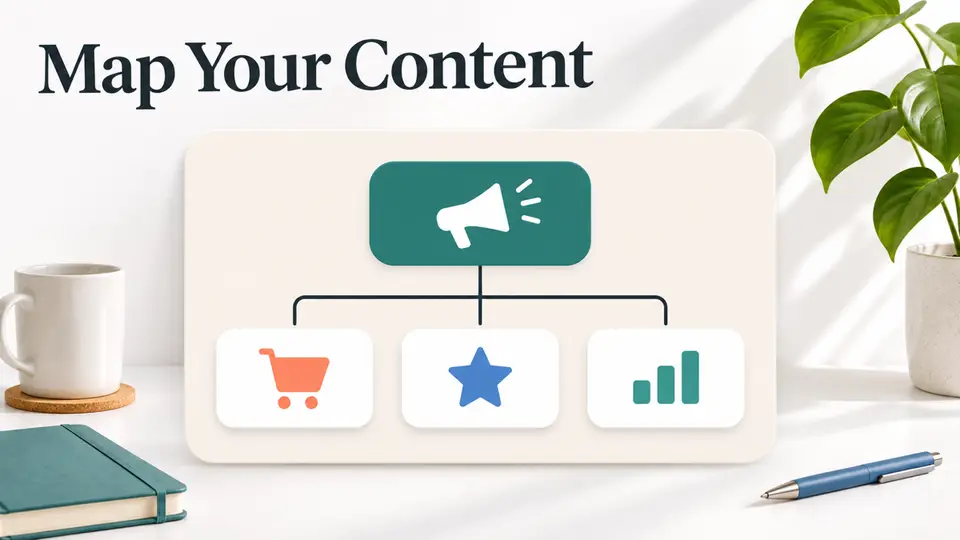
An affiliate niche content map turns a validated audience and recurring problem into a small set of useful pages. It connects one clear pillar topic to supporting queries, evidence needs, program research, internal links, and a realistic publishing test.
If niche research already says the audience has repeated questions and relevant offers exist, the next job is planning what to publish first. This map helps you move from a promising subject to a manageable first cluster without mistaking a large keyword list for a strategy.
Quick answer: What belongs on the map?
| Step | Map output | Decision it supports |
|---|---|---|
| 1 | A specific reader and problem | Who is this for? |
| 2 | One pillar query and promise | What is the central answer? |
| 3 | Supporting reader questions | What else must be explained? |
| 4 | A grouped query set | Which pages have distinct intent? |
| 5 | Evidence required for each page | Can you support the claims? |
| 6 | Relevant programs and offer checks | What can readers evaluate? |
| 7 | A page and link sequence | How will readers move through it? |
| 8 | A small pilot and review date | What will you learn before expanding? |
The sequence matters. Start with the reader's job, then choose a small group of pages that answer it from different angles. An affiliate niche content map is a planning tool, not a promise of rankings, traffic, or commission.
How to build an affiliate niche content map
1. Carry forward one validated reader and problem
Begin with the audience and repeated problem you already checked. Avoid widening the topic to "everyone interested in business." A useful reader definition names a situation, a goal, and a constraint. For example: a first-time shop owner wants to compare store tools but has limited time to maintain a website.
Keep the evidence beside the statement. It might include recurring questions, observed search suggestions, interviews, or a clear inventory of relevant products. The affiliate niche validation scorecard covers whether the niche merits further investment. This map starts after that decision.
2. Choose a pillar query with a clear promise
Write one sentence that tells the reader what the central page will help them decide or do. A pillar should be broad enough to connect the cluster, yet specific enough that you can answer it with evidence. "How to start an online shop" could be a pillar for a defined reader; "everything about ecommerce" is too wide.
Record the main query as a hypothesis, not a fact about volume. Note the location, audience, and intent you are targeting. If results mix setup instructions, platform comparisons, and business advice, narrow the promise until your page has one clear job.
3. Collect the supporting questions
List the questions a reader must resolve before and after the pillar decision. Look at autocomplete and related searches, competing result headings, support forums, customer questions, and the gaps in existing pages. Treat those sources as clues to intent, not proof that a phrase has a certain monthly volume.
For a shop owner, support questions might include how to choose a website builder, what payment tools to compare, how to write a return policy, and how to connect a domain. Put one question on each row, then record the source that surfaced it. Do not turn every wording variant into a separate article.

4. Group questions by intent and assign a page
Cluster questions that need the same answer. Keep separate pages only when the reader's task or the evidence changes. A buying comparison, a setup tutorial, and a troubleshooting guide may deserve different pages. Three phrasings of the same comparison usually belong together.
Assign a working page type to each group: guide, checklist, comparison, glossary, template, or review. Add a short reason for the split. This makes the map useful to an editor and helps catch cannibalization before drafting. If two pages would share the same answer and products, combine them or choose a more distinct angle.
5. State the evidence each page needs
Before drafting, list the claims the page will make and the sources needed to support them. A tutorial may need official setup instructions. A comparison may need current pricing and eligibility. A buyer guide may need hands-on criteria, limitations, and a clear explanation of what could not be verified.
Mark each planned page as ready, research needed, or blocked. Do not fill an evidence gap with an old directory value or a competitor's unsupported claim. Google's people-first content guidance asks creators to make useful content for readers. A map should make that practical by naming the proof needed before publication.
6. Match program research to real reader decisions
Build a short program research list from the products a reader may reasonably compare. The directory pages for Shopify, Webflow, and SiteGround can help you find offers connected to store setup, site building, and hosting.
Use those pages as discovery starting points. Before making a current claim or recommending an offer, check the brand or network's own terms, allowed promotion channels, geography, attribution, and payout requirements. A content plan should not force an offer into a page when it does not fit the reader's task.
7. Draw the reading path and internal links
Choose the order in which a reader would naturally use the pages. The pillar can point to supporting guides, while each supporting page returns the reader to the broader decision or a relevant comparison. Add the intended links to the map so writers do not have to invent them later.
Use descriptive anchors and link only where the next page helps. A page about updating old claims might point to an affiliate content refresh checklist. Do not add links simply to increase link count. The reader should be able to see why the next page is useful.
8. Define a small publishing pilot
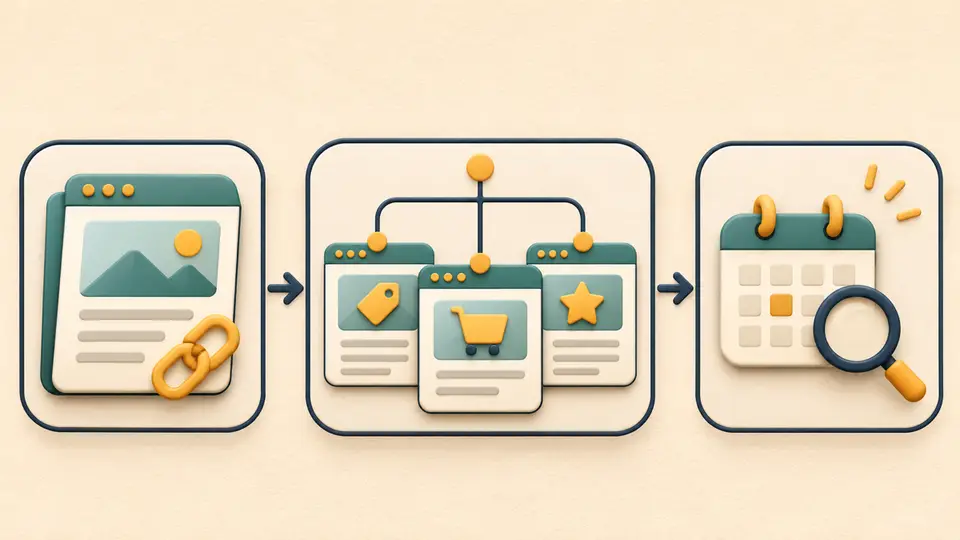
Choose a short first batch that answers the pillar and its most important supporting questions. Set a fixed review date and decide what you will inspect: impressions, qualified clicks, reader replies, content production effort, verified offer depth, or whether the pages can support useful internal links.
The goal is learning, not declaring success from a handful of visits. Set a stop rule too. If evidence is thin, the audience is too broad, or every page depends on terms you cannot verify, pause expansion and revise the map. Record the decision so future work does not quietly turn an experiment into a commitment.
Worked example: content for a small online shop audience
Suppose your niche research points to new shop owners who need plain-language help choosing their first set of web tools. A focused pillar could compare the decisions involved in launching a small shop. Supporting pages might explain store builder selection, hosting needs for a self-hosted site, checkout questions, and a launch checklist.
| Page role | Example reader question | Evidence to collect |
|---|---|---|
| Pillar | What should a first-time shop owner compare before launch? | Current product capabilities and fit criteria |
| Comparison | Which store builder fits a small catalog? | Official plan and feature pages |
| Setup guide | What does a site need before accepting orders? | Provider setup and security documentation |
| Checklist | What should be checked before launch day? | A tested process and dated source notes |
This is a map, not a promise that every idea deserves its own URL. Merge pages that share intent. If the audience is broad, narrow by product type or experience. Keep the affiliate niche content map focused on a useful first cluster.
How to review the map before writing
Check that the pillar has one reader and one promise, that each supporting page adds a distinct answer, and that factual claims have credible sources. Mark unverified program details. Then confirm the link path and give the pilot a review date and decision rule.
Mistakes that weaken a launch map
Turning every keyword variation into a page
A large spreadsheet can hide repeated intent. Compare the actual questions and results before splitting a topic. Combine near duplicates so each published page earns its place with a distinct answer.
Planning offers before understanding the reader
Program availability is not a content strategy. Start from the reader's task, then research offers that can help. If a program's current terms are unclear, mark them for verification and avoid unsupported claims.
Treating search estimates as guarantees
Third-party tools model demand and can disagree. Record the tool, date, and location, and describe the numbers as estimates. If no verified export is available, say that demand is directional and use multiple intent signals.
Expanding before checking the pilot
Publishing a large cluster at once can multiply research and maintenance costs. Start with a few distinct pages, learn from the evidence, then add topics where reader questions or performance data show a real gap.
Turn the map into a practical first month
Assign the first few pages an owner, source checklist, links, and update date. Draft the most useful page first. At review, keep what answers real questions, improve clear gaps, and stop topics that do not justify the effort. Browse the FindAffiliates program directory for offers, then check whether they fit the audience.
FAQ
What is an affiliate niche content map?
It is a plan that connects a defined reader and problem to one central page, supporting questions, evidence requirements, program research, internal links, and a review point.
How many articles should a new affiliate site plan first?
Start with a small group that answers one clear reader problem. The right size depends on available evidence and production time. A short pilot is easier to review than a large batch built on assumptions.
Should every keyword become its own article?
No. Group phrases when they serve the same intent. Give a question its own page when its reader task, evidence, or answer is distinct.
Does a content map guarantee search traffic?
No. It helps organize useful work and reveal gaps. Search visibility depends on many factors, and a map cannot promise rankings, visits, or revenue.