Affiliate Niche Validation Scorecard: 8 Tests in 2026
Use this affiliate niche validation scorecard to test audience demand, competition, offer depth, expertise, and upkeep before investing in content.
On this page (14)
What Should You Compare Before Choosing?
An affiliate niche validation scorecard helps a publisher decide whether a specific audience and topic deserve more research before they invest months in a site or content plan. It is not a promise of traffic or income. It is a way to collect evidence, expose gaps, and choose one small next step.
Start with a narrow audience and a recurring problem, then check whether people search for answers, useful offers exist, and you can produce credible content. The eight tests below help you compare ideas without pretending that one trend chart or commission rate proves a niche will work.
Quick Answer: What Should You Test?
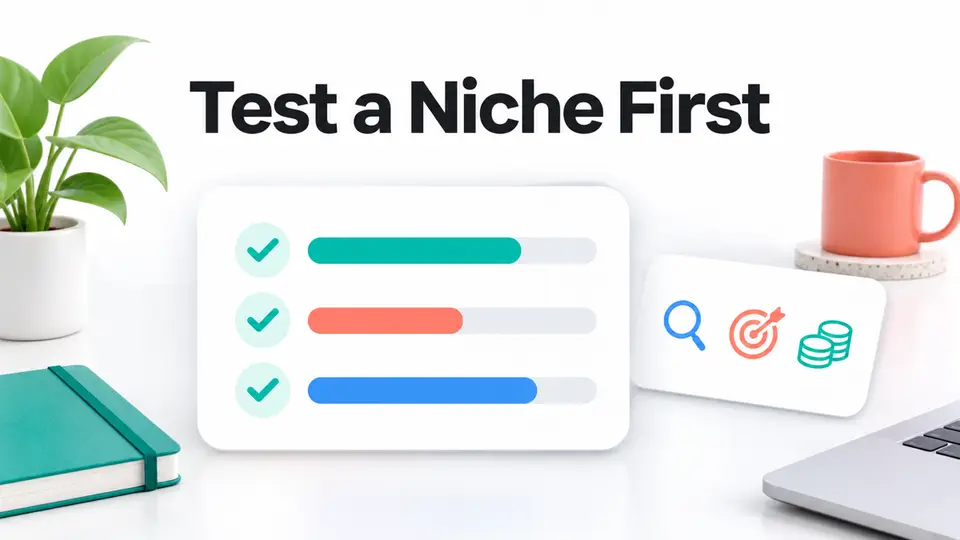
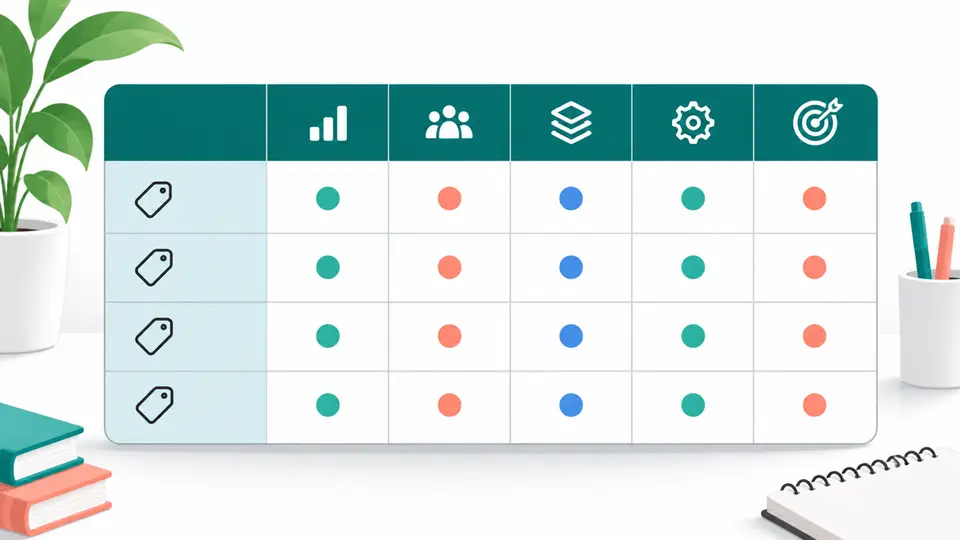
Score each niche idea from zero to two on eight criteria: audience clarity, recurring need, demand signals, realistic competition, offer depth, reader economics, your evidence and access, and upkeep effort. Keep the notes beside the score. A low total means gather more evidence or stop, not that the audience has no value. The affiliate niche validation scorecard is a comparison aid, so keep the source note beside each number and explain any zero or one.
| Test | What to record | Strong evidence looks like |
|---|---|---|
| Audience | A specific group and situation | You can name who needs the answer and why |
| Need | Repeated questions or problems | Multiple independent places show the same job |
| Demand | Search and community signals | Several query patterns and current discussions |
| Competition | Pages ranking for those queries | A clear answer gap you can serve |
| Offers | Relevant programs and products | More than one plausible route to solve the need |
| Economics | Price, repeat use, and commissions | The reader value is clear, with terms verified |
| Credibility | Your access, experience, or research | You can support claims without pretending to test |
| Upkeep | Update burden and distribution | The topic can be maintained with your time and channels |
How to Use This Scorecard
Treat this as a working filter, not a benchmark. Give a niche zero when you have no evidence, one when the evidence is plausible but incomplete, and two when you can point to specific supporting examples. The score helps you compare your own ideas. It does not rank you against other publishers.
Google Trends shows normalized, relative search interest, not raw search counts. Compare terms over the same place and time range, then use other evidence as well. Google's Search Console Performance report can show the queries that already bring impressions and clicks to your own site. A new publisher may not have that history, so use it as a later validation source rather than a requirement.

---
1. Name the Audience Precisely
Replace a broad category with a group that shares a real task. “Fitness” could mean home-gym beginners, physical therapists, or endurance runners. Those groups ask different questions, buy different products, and need different proof. Write one sentence: “I help [audience] choose or do [task] when [constraint].” If the sentence could fit almost any reader, narrow it.
Look for evidence in public questions, product comparisons, community discussions, existing customer language, or your own audience messages. Do not infer demand from your personal interest alone. A clear audience also makes it easier to find an appropriate affiliate program research checklist and avoid promoting offers simply because they pay a commission.
2. Confirm the Problem Repeats
A niche is more useful when readers face a recurring problem, not just a one-time curiosity. List the questions that come before, during, and after a purchase or service choice. For example, a new creator may need setup advice, comparison guidance, troubleshooting, and a later upgrade decision. That creates several helpful content paths around one audience.
Search for the same problem in more than one place. A repeated question in search suggestions, a specialist forum, and product reviews is stronger than one viral post. Keep the exact wording and source date in your notes. A cluster of specific questions gives you a better publishing plan than a broad label such as “make money online.”
3. Check Demand Without Inventing Volume
Collect several query patterns: problem terms, comparison searches, “best for” searches, and questions about setup or alternatives. Look at search results and autocomplete for evidence of how people frame the task. Google Trends can help compare relative interest over time, but its scale is normalized. A value of 100 is not a monthly search count, and low-volume phrases may show as zero.
If you already have a site, inspect Search Console queries by page, country, and date range. A new publisher can instead record search suggestions, forums, retailer questions, and competing pages. Label each signal by source and date. When you review your affiliate niche validation scorecard, keep relative interest separate from verified traffic to your own pages. Search visibility is one part of the decision, not proof that every person searching will buy.
4. Inspect the Competition for an Answer Gap
Review several pages that rank for the core query and one or two related questions. Note the audience, format, freshness, first-party proof, and what the pages leave unanswered. A result from a large publisher does not automatically mean the niche is closed. A useful opening could be a specific audience, a missing comparison, a regional constraint, or a clearer way to explain tradeoffs.
Do not call a query “low competition” only because the results look old. The intent may still be served well, or newer pages may be difficult to beat. Describe a concrete gap you can fill and the evidence needed to fill it. If you cannot identify a credible improvement, keep researching instead of committing to a full content calendar.
---
5. Check Offer Depth and Reader Fit
Find several real products or services that solve the audience's problem. A niche should not depend on one affiliate program that could change its terms or close enrollment. Ask whether each offer is relevant, available to the intended audience, and supported by current public information. Three loosely related programs are weaker than two offers that directly solve the same reader task.
Directory pages can help you build a research list. For example, review the Kit affiliate program, Shopify affiliate program, and Teachable affiliate program only when those tools match the audience's needs. These listings are starting points, not a guarantee of current eligibility or terms. Confirm details with each program before making a claim.
6. Estimate the Reader's Decision and Economics
Map what a reader may buy, how often the need returns, and what alternatives they can choose. A high advertised commission does not show that a niche has strong reader demand, good conversion, or stable payout terms. Keep estimates separate from verified numbers and avoid using another publisher's earnings as a forecast for your site.
Write down the value a reader receives before you consider monetization. If the best answer is a free tool, an existing product, or no purchase, include that possibility. A useful affiliate niche lets the publisher compare options honestly. It should not force a product recommendation into every article.
7. Match the Work to Your Evidence and Access
Choose a topic where you can add something reliable: hands-on use, interviews, public documentation, repeated product tests, or careful comparisons of published terms. You do not need to claim personal experience when you do not have it. State what you reviewed, what remains unknown, and which statements come from a vendor.
Estimate the research required for the first useful guide. A niche involving safety, changing regulations, fast product releases, or regional availability may need more specialist review than your current process allows. If you cannot reach the product, audience, or authoritative sources needed to support claims, narrow the idea or choose another niche.
8. Check the Maintenance and Distribution Cost
List the facts that may change: pricing, inventory, program access, product compatibility, policy, and seasonal demand. Then estimate how often those facts need review and what would trigger an earlier update. The niche may be promising but still impractical if every useful page becomes stale before you can maintain it.
Also name one distribution path beyond waiting for search traffic, such as a newsletter, a specialist community, video tutorials, or a professional network. Choose channels that fit the audience and their rules. The guide to evergreen and trending affiliate niches can help you decide whether the topic depends on a durable need or a short seasonal window.
Turn the Score Into a Small Test
Use a positive result as permission for a small experiment, not a full site. Publish one useful page or interview a few readers. Record missing facts and note whether people find the answer valuable. If evidence is promising but upkeep costs are high, narrow the topic. If demand, audience, or offers remain unclear, keep researching. Niche content can serve readers without affiliate offers, but do not assume it will earn commissions.
Key Takeaways for Affiliate Niche Validation Scorecard: 8 Tests in 2026
An affiliate niche validation scorecard helps you compare ideas using audience need, demand, competition, relevant offers, evidence, and the cost of maintaining useful content. Keep each score tied to a source or observation. Then test one focused question before building a large site. Browse the FindAffiliates directory when you are ready to research programs that fit a defined audience.
FAQ
How do I validate an affiliate niche before starting?
Write a specific audience and task, gather several demand signals, examine search results, check relevant offers, and estimate the work required to create and maintain evidence-backed content.
How many affiliate programs should a niche have?
There is no universal minimum. Look for more than one relevant option so your content can compare realistic alternatives, then verify each program's current terms and eligibility.
Does Google Trends show exact search volume?
No. Google explains that Trends normalizes data to compare relative popularity by place and time. It is not a report of raw monthly query counts.
Should commission rate decide whether a niche is worth pursuing?
No. Reader demand, product fit, conversion conditions, and reliable terms matter too. A commission rate alone does not show whether a recommendation serves your audience.
Can I validate a niche without an established website?
Yes. Start with public search suggestions, community questions, product comparisons, and interviews. Use Search Console later if your site begins to collect impressions and clicks.