SaaS Affiliate Commission Cash Timing: 5 Checks for 2026
Model SaaS affiliate commission cash timing by cohort. Separate receipts, gross profit, commissions, and payout dates before setting a cash buffer.
On this page (8)
What Should You Compare Before Choosing?
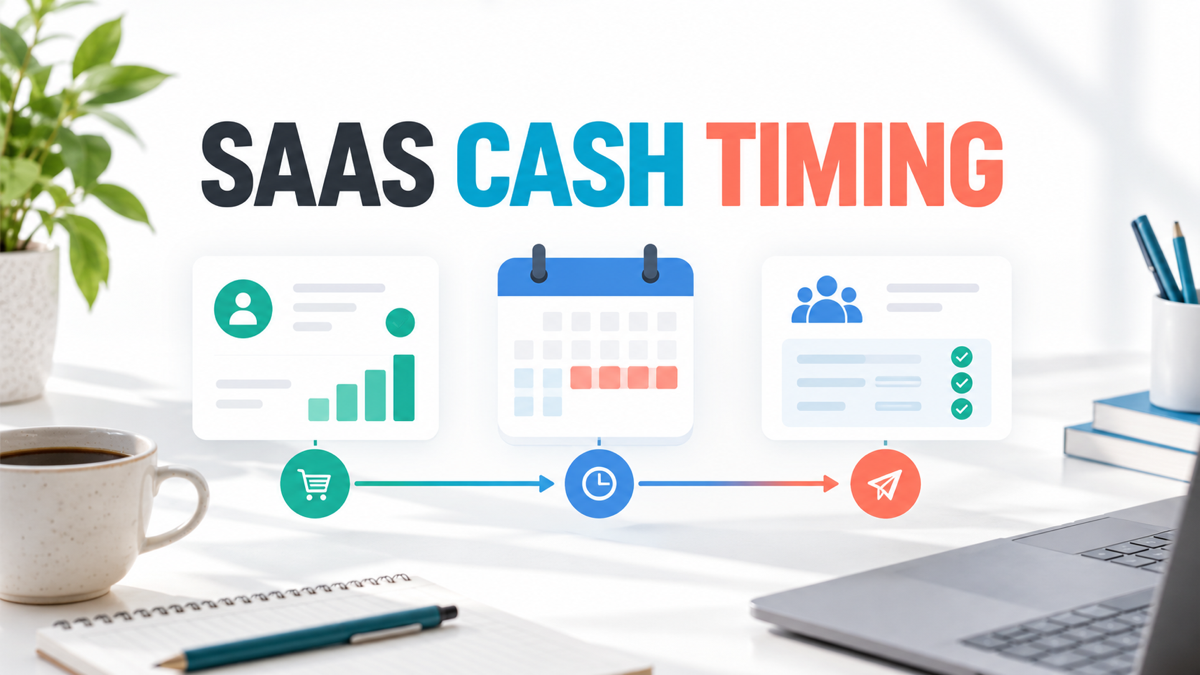
SaaS affiliate commission cash timing is the gap between a customer payment, the commission event, the program's approval point, and the date money leaves the business. A commission percentage does not show when the cash arrives or when the affiliate should be paid.
Quick answer: Model each referral as a dated cash-flow cohort. Track customer cash collected, refund or review holds, approved commission, payout fees, and the scheduled payment date separately. Then compare the cash due to partners with cash already collected from the same customer cohort.
This is a planning model for both SaaS program owners and publishers. It is separate from a payout policy template or a gross-profit ROI result. The existing affiliate program ROI guide measures economic return, while SaaS payback versus ROI explains how long it takes for gross profit to recover program costs.
Keep four dates separate
A subscription's contract value, recognized revenue, collected cash, and affiliate commission can all land in different periods. Do not treat annual recurring revenue as cash in the bank, and do not treat an attributed referral as a payable commission before it meets the program's qualification and approval rules.
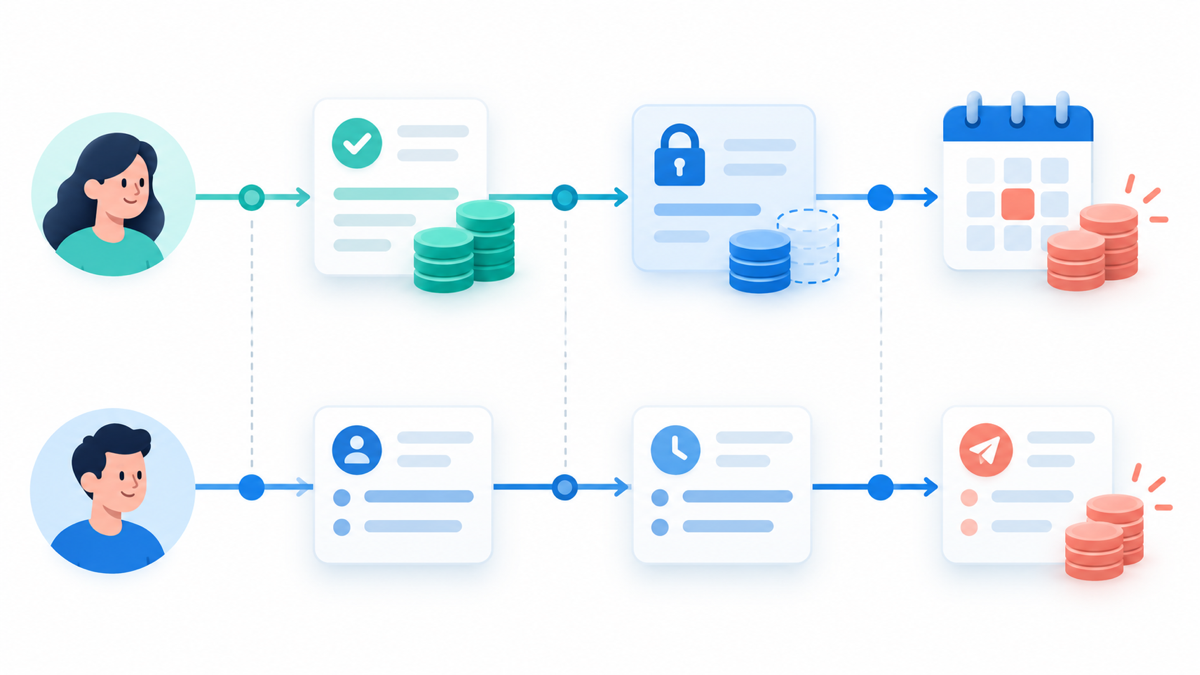
For each customer cohort, record four dates:
- Customer payment date: when money is actually collected, including the difference between monthly billing and an annual prepayment.
- Commission event date: the qualifying sale, paid invoice, renewal, or other event named in the affiliate terms.
- Approval date: when the commission clears refund review, validation, or another documented hold.
- Payout date: when the approved balance is sent, after the program's weekly, monthly, or quarterly schedule and any threshold.
The Scoutner SaaS Affiliate Program Terms 2026 report shows why the dates should stay separate. Its directory sample lists 159 programs with monthly payouts, 22 with more frequent or on-request payouts, and 4 quarterly schedules. Of 56 programs that published a hold or lock period, the median was 45 days. This is one reported sample, selected from U.S. brand-search demand, not a universal SaaS benchmark.
Five checks for SaaS affiliate commission cash timing
1. Start with cash collected, not booked value
Build the cohort from actual customer receipts. A $1,200 annual contract paid up front creates a different cash pattern from a $100 monthly subscription, even if both show the same annual contract value. If payment is invoiced later, split the contract from the date cash is collected.
Record refunds, chargebacks, payment failures, discounts, and credits beside the receipt. If a commission is based on cash collected after discounts, use that same amount in the payout model. If the program uses another basis, document it separately rather than silently assuming the commission is a percent of headline price.
2. Map the earning event and hold rule
Write down what makes a commission eligible: signup, trial conversion, first paid invoice, or each successful renewal. Then document the hold start point and the date a commission becomes payable. The Kajabi affiliate payout guide is one official example. Kajabi lets owners set a commission due day from 2 to 365 days and recommends at least 30 days as a buffer for refunds or disputes. Its guide separates pending, due, paid, and canceled statuses.
That example does not define a standard for every affiliate program. Your terms may start the hold on the sale date, the end of the month, or another event. Record the source wording and calculate from that exact date.
3. Add the payout calendar and threshold
After the hold ends, the next scheduled payment run can add more time. A commission that becomes due one day after a monthly cutoff might wait nearly a full cycle. Minimum balances, referral-count requirements, payment setup, tax forms, and processing delays can push the actual date further.
Use separate dates for commission approval and payment release. When an affiliate asks when an approved balance will arrive, support should be able to show the status, cutoff, next run, and payment method instead of answering with a single average.
4. Calculate the cohort cash buffer
For each payout date, estimate:
Cash buffer needed = approved commissions due + payout fees + reversal reserve - cash collected from the referred cohort
The reserve should reflect your own refund, chargeback, and reversal evidence. Do not count forecast renewals as collected cash. If the result is positive, the program must fund the gap from other working capital. If it is negative, the cohort's collected receipts cover the planned payout on that date, but the result still depends on reversals and operating costs.
This is the working calculation for SaaS affiliate commission cash timing, not a profitability formula. Use it to plan the payout window, then evaluate gross-profit payback separately.
Consider 12 customers paying $200 per month, with a hypothetical 25% commission on each eligible monthly invoice. If all twelve pay, the business collects $2,400 for that month's cohort and the corresponding commission is $600 before fees or reversals. If a 45-day hold applies and the program pays once a month, the first release may land roughly 45 to 75 days after the qualifying sale, depending on the cutoff. That example is a model, not a universal payment promise.
5. Stress-test billing, churn, and gross profit
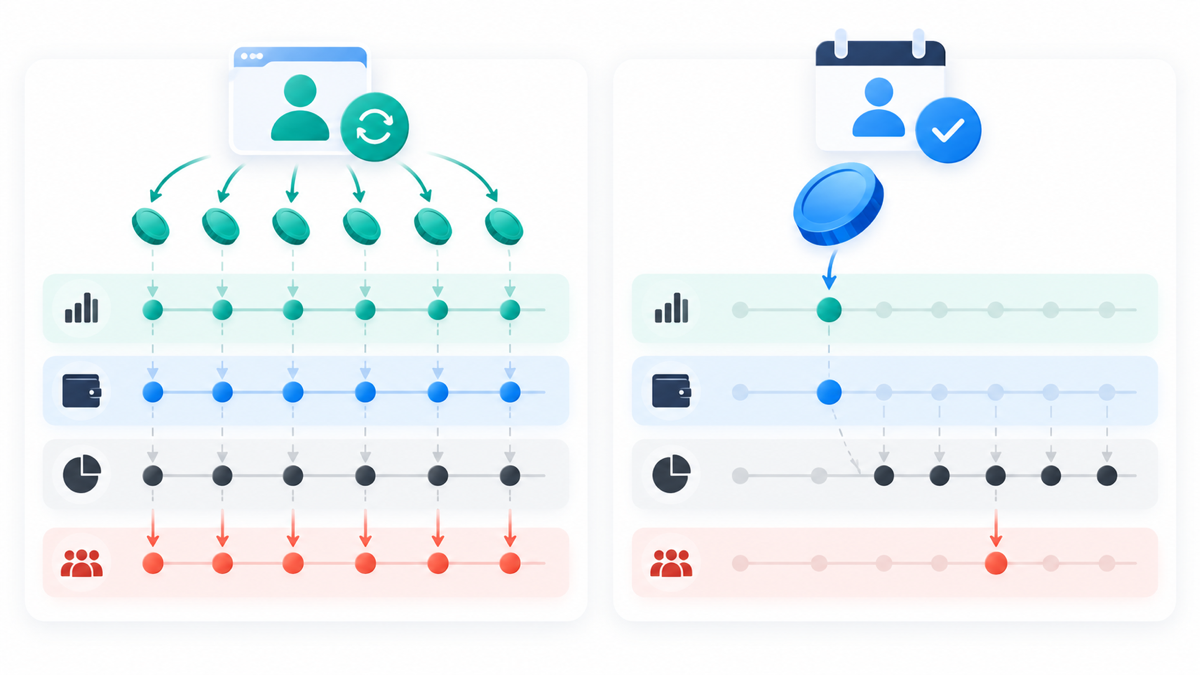
Run separate cases for monthly billing, annual prepayment, failed payments, refunds, and early cancellation. A recurring commission may continue only while the customer pays, while a flat bounty may be earned after one qualifying event. Model the exact terms rather than multiplying a headline rate by full contract value.
Compare the payout date with customer receipts and gross profit, but keep those measures distinct. Gross profit can support a payback analysis; cash collected supports a liquidity check. A program can have positive projected ROI and still need a buffer if the affiliate is paid before the referred customer has generated enough cash.
The guide to how often affiliate programs should pay covers policy cadence and partner expectations. The SaaS payout policy examples covers the wording partners need to understand pending, due, and paid states. This article focuses on forecasting the cash dates behind that policy.
Keep partner terms distinct from your forecast
For publishers researching SaaS offers, the Freshdesk affiliate program, Gorgias affiliate program, and LiveAgent affiliate program show different public commission structures and earning rules. Use the directory as a discovery starting point and check current vendor terms before projecting a payment date. A cookie window, commission duration, and payout schedule describe different parts of the agreement.
For program owners, the same distinction should be visible in your own dashboard and partner terms. Publish the qualifying event, hold start, approval state, payment cutoff, threshold, and any event that can cancel or reverse a balance. Then reconcile the exported partner ledger to actual bank payments each cycle.
A small monthly review table
| Field | Question to answer | Why it matters |
|---|---|---|
| Customer cash received | What amount cleared and on which date? | Separates cash from contract value |
| Commission basis | Which payment or event qualifies? | Prevents applying the rate to the wrong amount |
| Hold and approval | When does the commission become due? | Shows the waiting period before payout |
| Payout schedule | What is the next cutoff and release date? | Captures batching delay |
| Reversal reserve | Which refunds or disputes remain open? | Avoids spending cash tied to reversible transactions |
| Cohort balance | How much cash covers the payout? | Reveals the funding gap |
Source confidence and limits
The Scoutner report is a dated research sample and its hold-period median applies only to programs in that sample that publish a hold. Kajabi's guide documents Kajabi's own controls, not every platform or contract. Always use your program's signed terms and payment records for an actual forecast.
If your affiliate software cannot export both transaction dates and payment dates, keep a separate reconciliation table and confirm status definitions with the vendor. Directory pages can help locate programs or examples, but they do not replace your own current agreement or finance ledger.
Key Takeaways for SaaS Affiliate Commission Cash Timing: 5 Checks for 2026
SaaS affiliate commission cash timing is easier to manage when receipts, commission events, approval, and payout are separate dated fields. Build forecasts by customer cohort, test monthly and annual billing, and compare planned payments with cash actually collected. For more examples and tools, browse the FindAffiliates directory and confirm every payout claim against the current official terms.
---
FAQ
How long does it take to pay a SaaS affiliate commission?
It depends on the qualifying event, the hold period, the payout cutoff, and any threshold or payment requirements. In Scoutner's 2026 sample, 56 programs published a hold period and the median was 45 days, but that figure is not a universal rule.
Is affiliate commission cash timing the same as payback period?
No. Cash timing asks when customer receipts and partner payments occur. Payback period compares gross profit with program costs over time. A program can meet a projected payback target and still need cash to cover payouts before enough customer receipts arrive.
What is the difference between a hold and a payout schedule?
A hold delays when a commission becomes due, often while refunds or other conditions are reviewed. A payout schedule determines when due commissions are sent. The second step can add time after the hold ends.
How should a SaaS team estimate its affiliate payout cash buffer?
Add approved commissions due by date, payout fees, and a documented reversal reserve, then subtract cash already collected from the referred cohort. Recalculate when billing, refunds, commission rules, or payout schedules change.