Affiliate Payout Policy Examples for SaaS Programs
Affiliate payout policy examples for SaaS programs, including pending status wording, refund holds, payout timing, thresholds, and partner emails.

What Should You Compare Before Choosing?
Affiliate payout policy examples help SaaS teams turn a vague promise into rules partners can understand. Without a written policy, every delayed payment feels personal, every refund review creates confusion, and every support ticket slows the affiliate manager down.
The best policy answers five questions before a partner sends traffic: when a commission is created, how long it stays pending, what can delay approval, when approved commissions are paid, and how the partner will be notified.
This guide gives practical wording you can adapt for a SaaS affiliate program, plus the operating rules behind each example.
What A Payout Policy Needs To Say
A useful payout policy is not only a payment date. It is the bridge between tracking, refunds, fraud review, finance, and partner trust.
At minimum, write rules for commission creation, pending status, approval checks, payout schedule, thresholds, payout methods, tax requirements, declined commissions, and contact ownership. If one of those rules is missing, partners will fill the gap with assumptions.
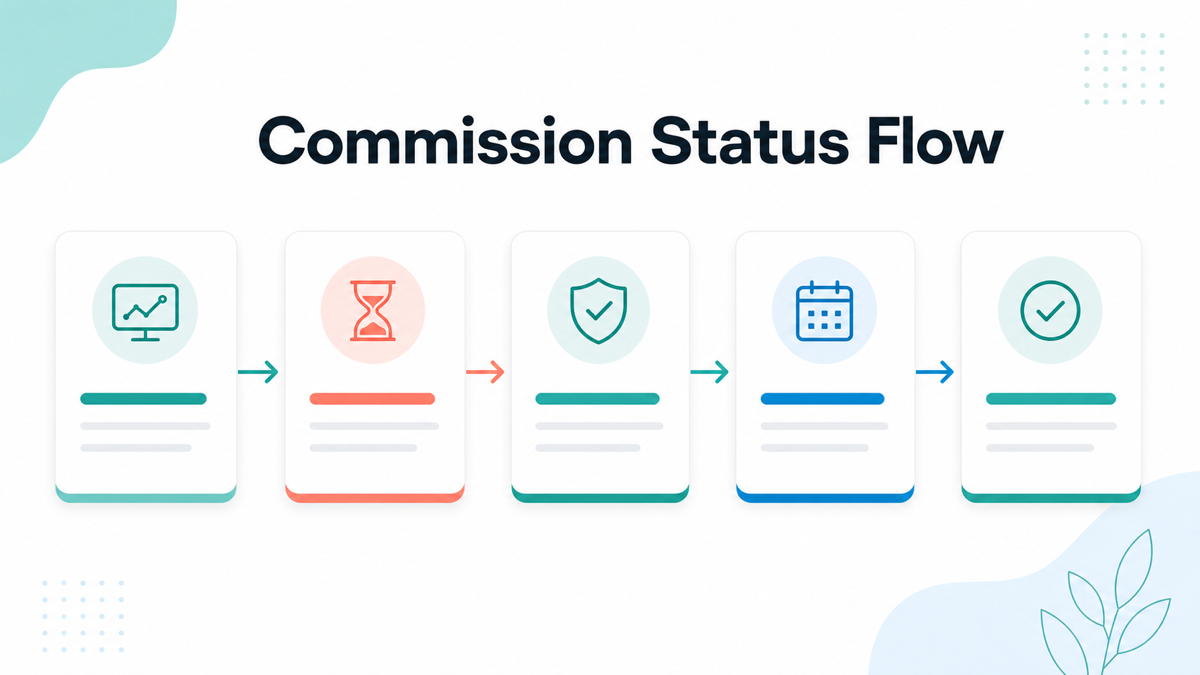
For context, Rewardful explains in its affiliate payout guide that commissions move through pending before payout and that the pending window should clear the refund period. FirstPromoter's payout documentation also shows why payout workflows often include balances, generated payouts, payment methods, and manual actions. The tool can support the workflow, but your policy still has to explain the rules in plain language.
If you have not set the timing yet, start with the related guide on how often affiliate programs should pay affiliates. This article focuses on the copy and examples after you know the policy shape.
Example 1, Standard Monthly Payout Policy
Use this when your SaaS product has normal refund risk, monthly finance operations, and a simple partner base.
Commissions are tracked after a referred customer makes a successful payment. New commissions remain pending during our review window so we can account for refunds, chargebacks, duplicate accounts, and program rule checks. Approved commissions are paid monthly once the affiliate reaches the minimum payout threshold and has provided the required payment details.
This example works because it gives the partner a sequence. The commission is tracked first, then reviewed, then approved, then paid. It does not promise instant payment before revenue quality is known.
Monthly payout language fits many SaaS teams because finance can reconcile one batch, support can answer with one rule, and partners can plan around a predictable date. If you use tools such as Rewardful, FirstPromoter, or Tapfiliate, make sure the dashboard statuses match this wording.
Example 2, Refund Hold And Pending Commission Policy
Use this when customers have a free trial, refund window, annual plan, implementation period, or higher chargeback risk.
Commissions stay pending until the customer's refund window has closed and the account remains in good standing. If a customer refunds, cancels before eligibility, disputes payment, or violates purchase rules, the related commission may be adjusted, delayed, or declined. We review pending commissions before each payout cycle.
This is the safest of the affiliate payout policy examples because it explains the reason for delay. The partner can see that pending does not mean ignored. It means the revenue is still being verified.
The related affiliate payout hold policy goes deeper on hold periods. In short, your hold should usually match or exceed the refund risk window. Paying too early can create clawbacks, support disputes, or margin loss.
Do not copy a 30-day rule blindly. If your product has a 14-day trial plus a 30-day refund period, a longer pending window may be cleaner. If your product has no standard refunds and low fraud risk, a shorter review window may be enough.
Example 3, Trusted Partner Faster Payout Policy
Use this when you want to reward proven partners without giving every new affiliate faster payment terms.
New partners start on the standard monthly payout schedule. Partners with a clean referral history may qualify for faster payout review after consistent compliant referrals. Faster payout status can be removed if referrals create unusual refunds, policy violations, duplicate accounts, or traffic quality concerns.
This wording gives you flexibility without making the program feel arbitrary. It also avoids promising special treatment before you know whether the partner sends qualified customers.
Trusted partner terms work best when the criteria are visible. You might use clean referral history, low refund rate, approved traffic sources, accurate disclosures, and completed payout details. Keep the list practical, not legalistic.
Tolt, Rewardful, FirstPromoter, and Tapfiliate all serve SaaS teams that need tracking and partner operations. The exact controls differ by platform, so verify whether your chosen tool supports partner groups, manual approvals, payout notes, or custom timing before you promise faster handling.

Example 4, Commission On Hold Policy
Use this when a referral needs manual review beyond the normal pending window.
A commission may be placed on hold if we need to verify the referral source, customer status, billing details, compliance with program terms, or unusual account behavior. We will review held commissions and either approve, decline, or request more information. Held commissions are not included in payout batches until review is complete.
This example separates normal pending status from a specific review issue. That distinction matters. Partners are more patient when "pending" means normal review and "on hold" means something needs attention.
Tie this language to your affiliate commission approval workflow. The person approving commissions should know what evidence is needed, when to ask the partner for context, and who makes the final call.
Also decide what you will say in the partner portal or email. A short note such as "customer refund window still open" is better than silence.
Example 5, Payout Threshold And Missing Details Policy
Use this when partners must reach a minimum balance or submit tax and payment details before payment.
Approved commissions are paid only after the affiliate reaches the minimum payout threshold and provides accurate payout and tax information where required. If payout details are missing, approved commissions remain available for a future cycle after the partner completes the required details.
Threshold language should be visible before signup. A minimum balance can be reasonable, but it should not feel like a hidden delay after the partner has already earned money.
This is also where onboarding matters. Your affiliate onboarding sequence should explain payout setup early, not after the first commission is due.
Payout Policy Matrix
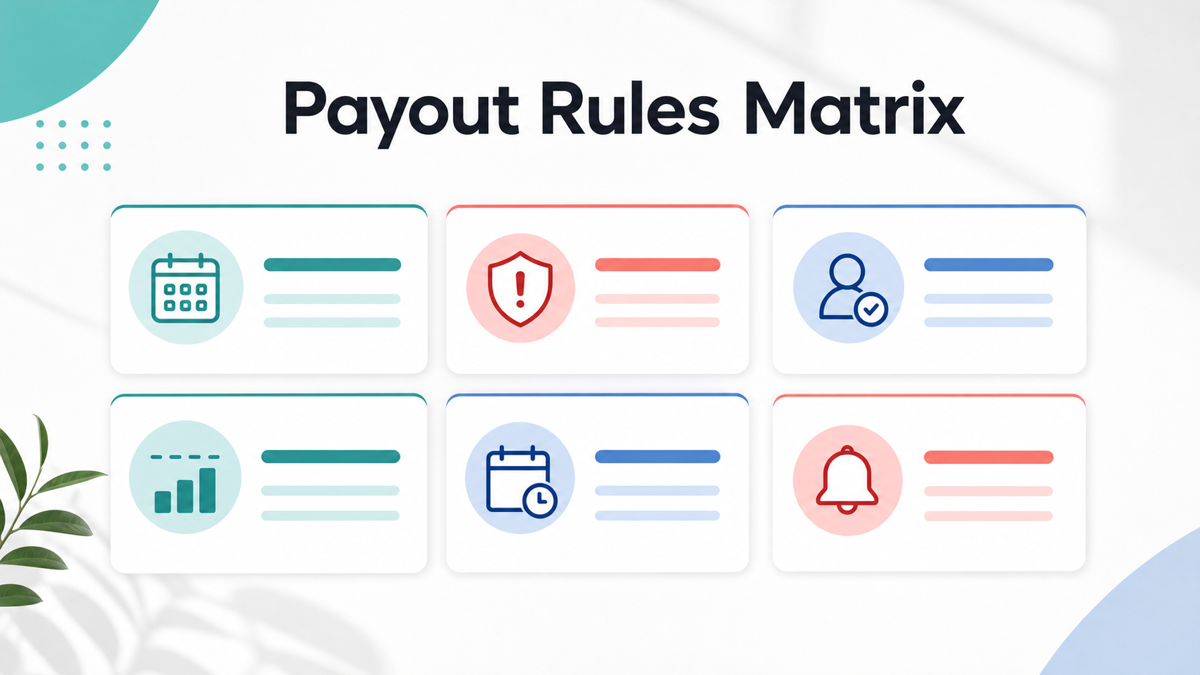
| Policy area | Plain-English rule to publish | Why it matters |
|---|---|---|
| Commission creation | Say whether commission starts at signup, trial, payment, or qualified purchase | Prevents disputes over unpaid trials |
| Pending window | Match the review window to refund and fraud risk | Protects confirmed revenue |
| Approval checks | List refunds, duplicate accounts, self-referrals, and rule violations | Makes declines easier to explain |
| Payout schedule | Name the normal payout rhythm and cutoff logic | Reduces "when do I get paid" tickets |
| Threshold | State the minimum balance before payout | Prevents hidden-delay frustration |
| Missing details | Explain tax or payment setup requirements | Keeps finance and partner support aligned |
The key is consistency. The landing page, terms, partner portal, onboarding email, and payout reminder should all tell the same story.
Partner Email Copy You Can Reuse
Here is a simple approval email:
Your commission for the referred customer has moved from pending to approved. It will be included in the next payout cycle if your account has reached the payout threshold and your payment details are complete.
Here is a hold email:
We placed this commission on hold while we review the referral source and customer status. No action is needed yet. We will approve, decline, or follow up with a question after review.
Here is a missing-details email:
Your commissions are approved, but payout details are incomplete. Please update your payment information before the next payout cycle so eligible commissions can be paid.
These short messages turn policy into partner experience. They also reduce the chance that a normal delay becomes a support escalation.
Mistakes To Avoid
The first mistake is copying payout wording from another program without checking your refund window. Your policy should match your actual product economics.
The second mistake is promising fast payouts to recruit partners before fraud review and finance workflows are ready. Speed is only useful when the system is reliable.
The third mistake is hiding thresholds, payout methods, or tax requirements until after approval. Good partners want the rules before they promote.
The fourth mistake is using one vague status for everything. Pending, on hold, approved, declined, and paid should mean different things.
The fifth mistake is changing payout timing without notice. If monthly becomes quarterly, or a threshold changes, give partners a clear effective date and reason.
Key Takeaways for Affiliate Payout Policy Examples for SaaS Programs
Affiliate payout policy examples are useful because they make the invisible part of your program visible. Partners do not need a long legal document first. They need a clear answer about when commissions become payable, what can delay payment, and how they will be notified.
Start with monthly payouts after a sensible review window, then add specific rules for refund holds, trusted partners, held commissions, thresholds, and missing details. Browse FindAffiliates to compare affiliate software and program examples before you finalize the wording.
FAQ
What should an affiliate payout policy include?
It should include commission creation rules, pending windows, approval checks, payout timing, payout thresholds, payment methods, tax requirements, declined commissions, and the support contact.
What is a good payout schedule for SaaS affiliate programs?
Monthly payouts after a refund or review window are a strong default for many SaaS programs. Faster payouts can work for trusted partners after a clean referral history.
Should pending commissions be visible to affiliates?
Yes. Showing pending commissions helps partners trust that tracking works, but the policy should explain that pending does not mean payable yet.
Can an affiliate commission be put on hold?
Yes. A commission can be put on hold when the referral source, customer status, billing details, or compliance with program terms needs manual review.
Should payout policy examples include exact dates?
Use exact dates only if your finance process can consistently meet them. Otherwise, publish a clear rhythm, cutoff, and expected payout window.