Experience vs Physical Gift Affiliate Programs: 7 Checks
Compare experience vs physical gift affiliate programs with seven creator checks for audience fit, redemption, shipping, attribution, commissions, and claims.
On this page (11)
Which Affiliate Programs Are Worth Comparing First?
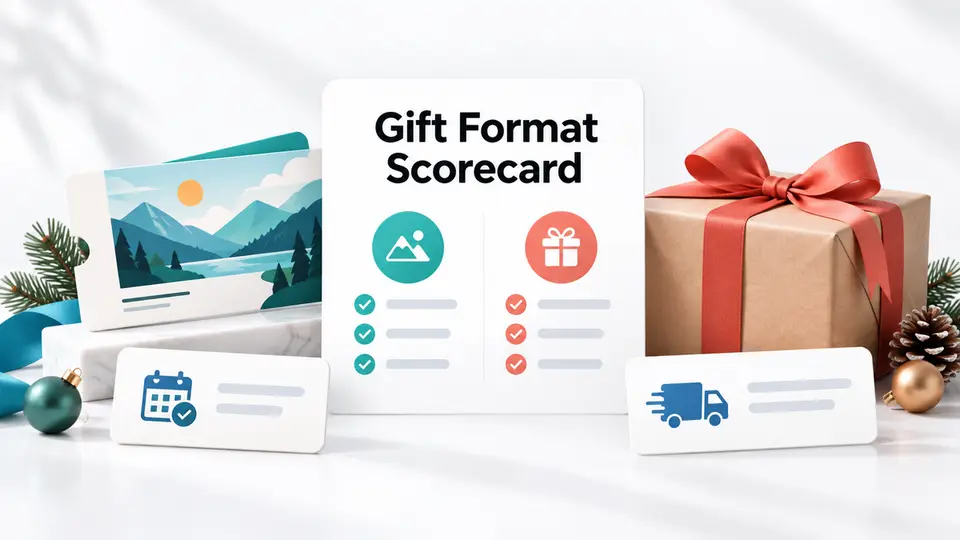
Experience vs physical gift affiliate programs suit different shopping questions, but a creator should compare the actual offer terms before choosing a format. An experience voucher may leave the recipient to select a date or activity. A physical gift may require a product choice, production time, and delivery to an address. Each can work when the content matches the audience and explains the next step clearly.
Quick answer: Choose an experience offer when your audience values activities, flexible redemption, or trip planning. Choose a physical gift when readers need a specific item, customization, or a delivery plan. Compare redemption, fulfillment, commission basis, attribution, returns, exclusions, and the proof available for every claim. A brand may offer both formats, so classify the specific product or voucher rather than the company.
| Creator check | Experience gift offer | Physical gift offer |
|---|---|---|
| Reader decision | Which activity, place, or date fits? | Which item, style, size, or personalization fits? |
| Delivery step | Voucher or booking instructions | Stock, personalization, shipping, and address |
| Timing risk | Booking availability and redemption rules | Production cutoff, carrier time, and local delivery |
| Key proof | Voucher terms and eligible experiences | Product details, shipping policy, and return rules |
| Good content format | Activity guide or recipient scenario | Product comparison, sizing guide, or gift checklist |
How to compare experience vs physical gift affiliate programs
This comparison is for creators and publishers deciding which affiliate offer belongs in a useful gift guide. It is not a consumer ranking of gift formats or an estimate of which one will convert better. Public sources provide examples of program and product information, but they do not offer comparable conversion, order value, or return data.
The examples use live FindAffiliates listings for Tinggly, Personalization Mall, Artifact Uprising, and Merry Market. Treat directory details as a shortlist. Confirm accepted network terms and the product page before publishing specific rates, windows, or availability.
1. Start with the audience's buying job
Write the reader's question in one sentence before choosing an affiliate program. A reader seeking a shared activity needs different help from someone searching for a personalized keepsake or a small item that can ship quickly. This distinction should shape the headline, examples, filters, and call to action.
An experience gift guide can organize options by recipient, location, activity, accessibility, or booking flexibility. A physical gift guide can compare dimensions, materials, personalization choices, sizes, care, or what arrives in the box. If the audience is divided, make separate sections and explain the difference instead of forcing every item into one winner.
Look for an offer that supports the guide you can actually produce. A photography publisher may be able to explain how a photo book is made, while a travel creator may have practical context for choosing an activity. If you cannot add useful firsthand, sourced, or clearly labeled research, choose another category.
2. Compare the delivery and redemption path
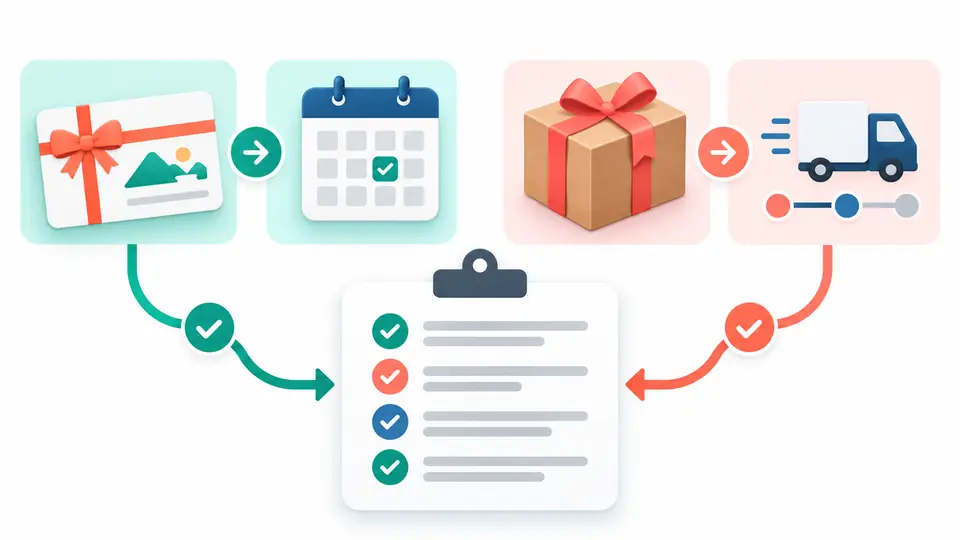
Map what happens from click to recipient. An experience offer may use a voucher, a booking step, or a choice made after purchase. A physical product may require selecting a variant, entering a delivery address, and waiting for preparation and shipment. These are common differences between formats, not promises about every merchant.
For example, Tinggly's affiliate page describes its offer as experience gifts and publicly lists a tiered commission schedule. That does not establish the rules for every voucher, activity, destination, or booking. Check the current product terms before saying how long a voucher lasts, whether it can be exchanged, or which experiences are available.
For a physical product such as a photo book or personalized keepsake, inspect the actual product page and its shipping and return policies. A guide to Artifact Uprising can show a reader what kind of product the program covers, but it cannot substitute for current production and delivery details.
3. Verify timing before making a delivery claim
Timing can determine whether an offer fits a gift occasion. A voucher may avoid shipping but can still have booking limits, location requirements, or an activity calendar. A personalized product can need proofing or production before the carrier begins delivery. Do not turn a listed processing estimate into a guaranteed arrival date.
Use the retailer's current cutoff, destination, shipping method, and product status. If those details are missing, say so and direct readers to check the retailer before ordering. Update seasonal pages when the cutoff changes, rather than carrying last year's promise forward.
The holiday affiliate offer update calendar is useful for planning repeated offer and cutoff reviews. For a sale-period QA pass, use the Black Friday affiliate content checklist. Those are maintenance aids, not evidence that a particular merchant will meet a deadline.
4. Read the commission basis, not just the headline rate
Commission comparisons are meaningful only when the qualifying event and rate basis are clear. A percentage may apply to confirmed orders, selected products, or a tier earned after a defined amount of referral activity. Returns, taxes, discounts, and excluded categories can change what qualifies.
At the time of review, Tinggly's public affiliate page lists 5%, 10%, and 15% tiers based on monthly referred sales. Do not apply the top tier to every forecast or assume the public page overrides the terms in an accepted account. Record the date checked, the source, the tier requirement, and anything the page leaves unstated.
For a physical offer, a listing may summarize a base rate, while the network account defines the current eligible products and transaction rules. For example, FindAffiliates lists a 6% rate for Personalization Mall and 10% for Artifact Uprising. Verify both in the active offer before including a current commission claim. If a rate cannot be verified, describe the product fit and mark the rate as not stated.
5. Confirm tracking and attribution terms
Ask what action earns credit, how long tracking lasts, whether a coupon can receive credit, and how the program handles later clicks or cross-device purchases. The answers affect both a publisher's content plan and a reader's path to purchase.
Do not infer a cookie duration from an affiliate network, a similar merchant, or a directory category. If the public offer does not state a window, use wording such as "confirm the current attribution window in the accepted offer." If a network dashboard has a different term from an old article, update the article before promotion.
The experience and physical formats may share an affiliate program, and one merchant can sell both. Tinggly's FindAffiliates profile describes an experience-gift marketplace, while its own affiliate page is the source for the public commission tiers. Keep the distinction between product format and affiliate program visible in your notes.
6. Check refunds, exchanges, and exclusions
A gift guide should tell readers where to verify what happens when an order is canceled, returned, exchanged, or never redeemed. These details affect customer expectations and can also affect commission reversals. Do not promise that an experience voucher is refundable or that a physical product can be returned unless the current terms say so.
Personalized products may have different rules from standard stock items. A physical order can also be delayed, partially shipped, or excluded from a promotion. A voucher can have activity-specific booking conditions. Link to the relevant policy or name the exact section the reader should check.
Keep the creator's disclosure and editorial evidence nearby. The gift affiliate programs for creators guide compares example programs, while this article helps decide which format and proof belong in a particular guide. Do not copy its figures without checking the source and date again.
7. Match claims to the evidence you can maintain
Before publication, make a small claim ledger with the statement, source URL, date checked, and next review date. Separate official program terms from directory summaries, product-page details, your own testing, and editorial recommendations. This lets you correct one changed fact without rewriting the whole guide.
Avoid claims such as "arrives by Christmas," "works anywhere," or "no-risk gift" unless the exact product policy supports them for the relevant destination and date. Use narrower language, such as "check the current delivery estimate for your address" or "review the voucher's booking and exchange terms." The Awin merchant profile for Merry Market is one example of a network source to compare with the accepted offer details.
If evidence is incomplete, state what is unknown. A clear limit is more useful than a guessed cookie window or an implied delivery guarantee. Recheck the important terms when the guide is updated and when the merchant changes its product or network offer.
Experience vs physical gift affiliate programs at a glance
| Decision point | Experience offer | Physical offer |
|---|---|---|
| Content advantage | Help readers choose an activity or redemption path | Help readers choose an item, option, or customization |
| Operational question | Can the recipient redeem it in the intended location and period? | Can the item be produced and delivered to the intended address in time? |
| Strong evidence | Current voucher, booking, and exchange terms | Current product, shipping, and return pages |
| Common uncertainty | Availability and attribution window | Stock, cutoff date, personalization, and product exclusions |
| Best next step | Verify the exact experience and program terms | Verify the exact variant and delivery estimate |
When comparing experience vs physical gift affiliate programs, choose the format that lets you answer the audience's question with current evidence. A useful comparison can include both when the differences are clear and each recommendation has a source. Find other programs through the FindAffiliates directory and use the affiliate program research checklist to vet each offer before adding it to a guide.
FAQ
How do I compare experience vs physical gift affiliate programs?
Neither format is automatically better. Choose an experience offer when your audience needs help with activities, locations, or redemption. Choose a physical offer when readers need product, size, customization, or delivery guidance. Compare current terms and audience fit before deciding.
Can one affiliate program include both experience and physical gifts?
Yes. A merchant may sell different product types or offer a physical presentation for a voucher. Review the exact product, fulfillment path, and accepted affiliate terms rather than labeling the entire company as one format.
Should creators promise a gift will arrive by a certain date?
Only when the merchant's current policy supports that statement for the exact product, destination, and shipping option. Otherwise, share the current estimate and tell readers to verify availability before ordering.
What should I do when a cookie window is not public?
Do not guess. Mark the public term as not stated, then check the active network offer or ask the program contact before publishing a duration.