Bitdefender vs Malwarebytes Affiliate Program Terms
Compare the Bitdefender vs Malwarebytes affiliate program by commission, attribution, payout, and audience fit, with conflicting public rates clearly flagged.
On this page (9)

Who Should Promote This Affiliate Program?
The Bitdefender vs Malwarebytes affiliate program comparison has one clear starting point: Malwarebytes publishes a referral period, while the current Bitdefender partner page describes several commission tiers but no public attribution duration. Bitdefender's headline rates also vary by product and campaign. Do not rank these programs by the largest number in a directory or assume that an unknown cookie window is standard.
The practical choice depends on the security audience you serve, the specific campaign you can join, and the terms visible in your account. This article compares public affiliate-program information only. It does not test or rank either product's malware detection, privacy, or device protection.
Quick comparison
| Program | Public commission evidence | Attribution evidence | Public payout evidence | Main question to resolve |
|---|---|---|---|---|
| Bitdefender | Official page says base terms start at 20% revenue share for new customers and 50% commission for business products; custom deals can reach or exceed 100%. FindAffiliates listing last verified Apr 26, 2026, says up to 80%. | No current public cookie window found in the sources reviewed | Official partner page mentions a $10 threshold and payout options | Which rate and attribution terms apply to the exact campaign and product? |
| Malwarebytes | Official page advertises up to 30% per sale | Official page lists a 45-day referral period | Official page says commission is received within 30 days of point of sale | How do the accepted Partnerize terms define qualifying orders and payment timing? |
How to read the public terms
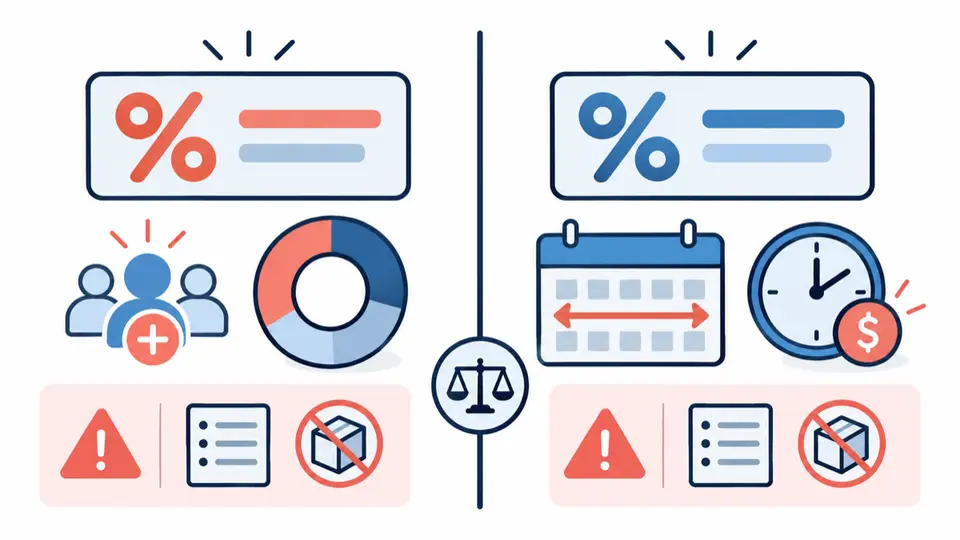
A headline commission is not a forecast. The rate can depend on customer status, product type, sales channel, geography, discount use, or a custom agreement. The referral period describes a tracking window, not guaranteed credit. A payout threshold describes when funds can be paid, not when an order becomes payable. A Bitdefender vs Malwarebytes affiliate program review should compare each field separately and leave it marked unknown if the public source does not say.
The current public pages reviewed for this article are linked below. Directory listings help discover programs, while the advertiser's live campaign terms and accepted agreement control the offer you can actually promote. Save the URL and date of the terms you checked so that you can compare them with later updates.
Bitdefender: multiple public commission levels
Bitdefender's official affiliate partner page says its base deal starts at 20% revenue share for new customers and 50% commission for business products. It also advertises custom deals that can reach or exceed 100% revenue share and describes a $10 threshold for payout setup. Those statements refer to different products or negotiated deals, so they should not be collapsed into one universal commission rate.
The Bitdefender listing on FindAffiliates displayed up to 80% when checked on Apr 26, 2026. That older directory snapshot does not line up exactly with the current official page's public language. The sources do not establish whether the difference reflects an offer update, a particular product mix, or a campaign-specific rate. Ask the affiliate contact which campaign applies to your audience and record the product, commission base, eligible customer definition, and payment conditions from the accepted terms.
The public partner page reviewed here does not give a cookie or attribution duration. Do not copy a duration from another vendor, a reseller program, or a prior post. If the network dashboard reveals an attribution window after you apply, cite that date and campaign in your own records. If it does not, ask the program before building a comparison or earnings model around tracked clicks.
Bitdefender may fit publishers whose readers already evaluate consumer or business security software. The content should explain the purchase context, supported plan, device or business use case, and relevant limitations from verified product documentation. This affiliate-term comparison is not evidence that Bitdefender is more effective than another security product.
Malwarebytes: clearer public referral details
The current Malwarebytes affiliate page advertises up to 30% commission per sale, a 45-day referral period, and commission received within 30 days of the point of sale. It directs new partners to the Cleverbridge Partnerize affiliate platform to find and accept the campaign terms. The public page is more specific than Bitdefender's about referral duration, but the active campaign agreement still controls qualifying purchases, cancellations, payment processing, and any publisher restrictions.
Before planning content, verify whether the offer covers the specific product and country you intend to discuss. Save the active campaign name and terms, then check how the network reports clicks, transactions, reversals, and payable balances. The public page's "up to" rate is a ceiling, not a promise that every approved publisher receives that rate on every product or order.
The Malwarebytes program listing on FindAffiliates is a useful directory reference, and the current advertiser page should be checked before quoting rates. A prior broad antivirus affiliate program roundup already introduces both brands. This comparison adds a focused audit of publicly available affiliate mechanics and notes where the latest first-party detail differs from directory snapshots.
Compare fit before commission ceilings
Use the same questions for both campaigns:
| Check | What to record | Why it matters |
|---|---|---|
| Commission basis | Revenue share, fixed amount, product-specific rate, or customer tier | The base determines what the percentage applies to |
| Qualifying order | New customer, selected plan, first payment, or another event | Exclusions can change which conversion counts |
| Referral period | Explicit days from click, if stated | An unknown window should remain unknown |
| Payout | Threshold, payment cycle, method, currency, and reversal rules | A commission balance may not be immediately payable |
| Promotion policy | Allowed channels, brand bidding, coupon use, and disclosure | A strong audience match can still violate campaign rules |
For example, a publisher writing a household device setup guide may care more about the product match, supported operating systems, and a reliable tracking route than about the maximum published rate. A technical support site may have an audience arriving after a malware warning or a cleanup question. Each context calls for accurate, current product information and a clear disclosure. Do not turn an affiliate comparison into an unsupported product safety claim.
The F-Secure affiliate program listing provides another security offer to research if your audience needs a third option. Its presence in the directory is a discovery lead, not proof that it shares the same commission basis, eligibility, or product scope as either program above. Verify its own active terms before adding it to a recommendation.

A repeatable program review
Open the official partner page and the live network campaign on the same day. Copy the commission text exactly, note whether it is a maximum or base rate, and record the product and customer conditions. Then capture the attribution duration, payout threshold, processing schedule, currency, refund treatment, and permitted traffic sources. If a field is not stated, write "not publicly stated" rather than borrowing a typical value from other programs.
Compare those terms with your audience and content plan. A Bitdefender vs Malwarebytes affiliate program audit should record each campaign name and source date. A newsletter about small business endpoint setup may evaluate business products differently from a consumer family technology blog. A malware cleanup tutorial and a preventive device checklist attract readers at different decision stages. Match the campaign to the reader's real question, and include appropriate non-affiliate alternatives where useful.
Use a separate tracking label for each program and article if the platform permits sub-IDs. Do not change merchant links in a way that breaks attribution. After publication, compare dashboard clicks and credited transactions only after the program's reporting delay. Record cancellations and reversals. A high click count without credited sales may indicate a mismatch, an incomplete checkout, or a reporting rule, so diagnose the route before writing an earnings claim.
The affiliate program research checklist can hold the dated source evidence for these fields. The affiliate cookie duration guide explains why a referral period should be recorded separately from a payout delay. When comparing several campaigns, use the FindAffiliates comparison tool and keep the rate basis consistent.
Key Takeaways for Bitdefender vs Malwarebytes Affiliate Program Terms
The Bitdefender vs Malwarebytes affiliate program decision is not settled by a single commission ceiling. Malwarebytes publishes a 45-day referral period and up to 30% per sale. Bitdefender publishes distinct base and custom commission terms, while the public attribution window remains unclear in the sources reviewed. Check the exact campaign you can join, match it to your readers, and keep dated evidence for every rate and rule. Browse the FindAffiliates directory to research related offers.
FAQ
Which program has the higher public commission?
The current Bitdefender page lists 20% revenue share for new consumer customers, 50% for business products, and custom deals that can reach or exceed 100%. Malwarebytes advertises up to 30% per sale. These are different bases and campaign conditions, so they cannot be ranked by the headline number alone.
What is the Bitdefender affiliate cookie duration?
The current public Bitdefender partner page and the directory snapshot reviewed for this article do not state a verified cookie duration. Check the active campaign dashboard or ask the affiliate contact before publishing an attribution claim.
How long is the Malwarebytes referral period?
Malwarebytes' official affiliate page lists a 45-day referral period. Confirm the accepted Partnerize campaign terms because they control the attribution rules for your account.
Does the comparison evaluate either security product?
No. It compares public affiliate program terms and publisher fit. It does not test malware detection, privacy, or product performance. Review current product documentation and independent testing before making a product recommendation.