4 Book Affiliate Programs for Book Bloggers in 2026
Compare four book affiliate programs for bloggers by format, commission, attribution window, and audience fit before choosing what to promote.
On this page (9)

Which Affiliate Programs Are Worth Comparing First?
Book affiliate programs can serve very different reader needs. One sends readers to independent bookstores, another focuses on ebooks and devices, another specializes in used and rare inventory, and an audio membership pays a fixed bounty for a qualifying signup. The right fit depends on what your audience reads and how it prefers to buy, not just the largest headline rate.
This guide compares four options with public terms available as of November 7, 2026. Rates and eligibility can change, so confirm the current terms in your affiliate account before publishing a promotion. For a broader research method, use this affiliate program research checklist.
Quick answer: Bookshop suits readers who want to support independent bookstores, Kobo fits ebook and audiobook audiences, AbeBooks serves used and collectible book searches, and Audible works for creators who can explain the value of an audio membership. Compare the earning action, attribution window, and reader fit before choosing.
| Program | Strongest reader fit | Public earning detail | Attribution detail |
|---|---|---|---|
| Bookshop.org | Readers who want to buy new books and support independent bookstores | 10% for non-bookstore affiliates, with a higher tier available to qualifying affiliates | 48 hours for eligible purchases through a referral link |
| Kobo | Ebook, audiobook, and eReader audiences | Up to 5% on ebooks, audiobooks, and devices; up to 10% on accessories | 14 days |
| AbeBooks | Used, rare, signed, and out-of-print book searches | 5% on eligible book value, with a per-item value limit | 30 days, with the first three attributed sales counted |
| Audible | Readers who are likely to try an audio membership | Fixed bounties for eligible trial or paid membership signups | Check the current Associates account terms |

1. Bookshop.org for readers who value independent stores
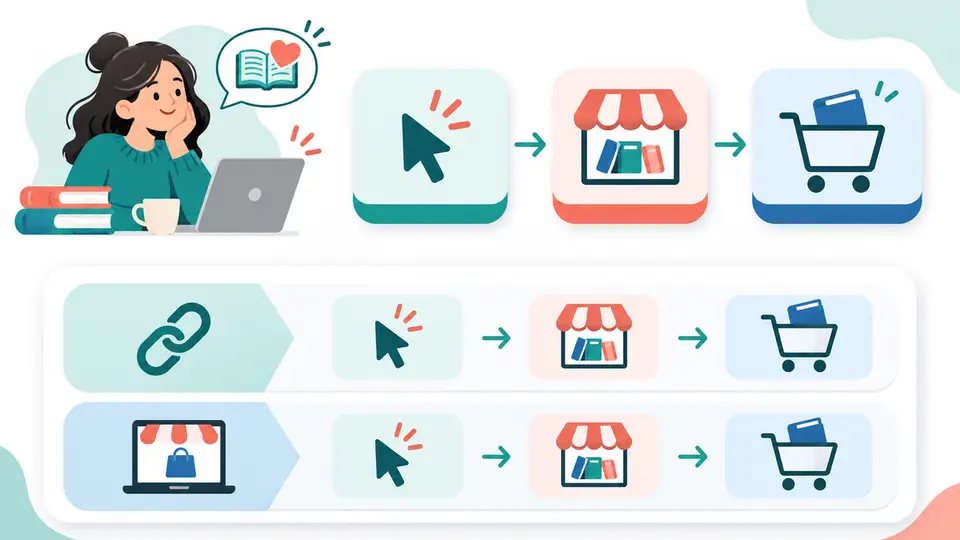
Bookshop.org is a practical match for a book blog that recommends new releases, seasonal reading lists, author collections, or book-club picks. A recommendation can lead to a book page, a curated list, or a storefront that reflects the publication's taste. That makes the program especially relevant to reviewers, authors, publishers, magazines, book clubs, and creators who want to connect purchases with independent bookstores.
Bookshop's current support guide says non-bookstore affiliates earn 10% on qualifying sales through referral links, with a 48-hour attribution period. It also says qualified affiliates may be eligible for an enhanced shared-revenue program of up to 15%. The separate 30% rate applies to qualifying bookstore affiliates, not every blogger. Read the official Bookshop affiliate explanation before using a higher rate in a forecast.
The Bookshop affiliate program listing is a useful place to compare the offer with other options. For an article aimed at readers who want to buy locally, explain how Bookshop supports bookstore discovery instead of presenting the rate as the only reason to click.
2. Kobo for digital reading and audiobooks
Kobo fits creators whose readers already use eReaders, buy digital titles, or listen to audiobooks. Its public US affiliate page lists commissions of up to 5% on qualifying ebooks, audiobooks, and devices, up to 10% on accessories, and a 14-day cookie. It also says applications can take one to two weeks to approve. These terms make a direct comparison with a print-book storefront less useful: the product mix and shopping path are different.
Check whether the products you discuss are available in the storefront region your audience uses. A creator with a global readership may need separate links or a clear note about regional availability. Kobo's official US affiliate page is the source for the current published rate and tracking details. The Kobo Books affiliate program listing can help readers explore the offer alongside other book-related programs.
3. AbeBooks for used, rare, and out-of-print titles
AbeBooks is a better match when the content depends on editions and seller inventory. It lists new, used, rare, and out-of-print books through independent sellers, so it can support posts about first editions, collectible books, older textbooks, or finding a title that is no longer easy to buy at a large retailer.
AbeBooks' public affiliate terms state a 5% commission on eligible book value for purchases made within 30 days. The terms limit the commissionable value of an individual item to US$500. They also say a referral cookie tracks the first three sales in the window, and a new click begins a new 30-day window and sale counter. Approved commissions are paid through Impact after the site's stated locking period, so the sale date and cash date are not the same.
The AbeBooks affiliate program listing helps readers review the offer. Avoid implying that every expensive collectible earns commission on its full price. If you cover a signed or rare book, explain that price, condition, seller, and shipping can affect the purchase decision.
4. Audible for eligible membership signups
Audible can suit a podcast, commuting, accessibility, or audio-book-review audience. Its affiliate program runs through Amazon Associates rather than a separate standalone program. Audible's current affiliate page lists a US$5 bounty for an eligible free-trial membership and US$10 for an eligible paid membership. Those are action-based bounties, not a percentage of every audiobook's retail price. The eligible action and the current account terms determine whether a referral qualifies.
The Audible affiliate program listing is the directory entry for this offer. Before placing a link, confirm that your content follows Amazon Associates' current rules and that your reader understands when a free trial turns into a paid membership. Membership prices, trial availability, and promotional bounties can change, so avoid promising that every visitor will see the same offer.
How to compare the four programs for your audience
Start with the format your readers already request. A review of recent hardcovers may convert better through a bookseller than through an ebook offer. A guide to eReader setup has a clearer Kobo connection. Collectible searches are a natural AbeBooks use case, while a podcast about listening habits can explain an Audible membership more directly than a print review can.
Next, compare the earning event. Bookshop and Kobo publish percentage rates for eligible purchases, AbeBooks applies a percentage to eligible book value within a stated cap, and Audible publishes bounties for eligible membership actions. These figures cannot be ranked as though they use the same denominator. A fixed bounty can be larger or smaller than a percentage depending on the order value and qualifying action.
Then compare attribution, return behavior, and payment timing. A longer window does not guarantee a conversion, and an order that is canceled or returned may not become an approved commission. For a complete evaluation, use the steps in how to compare affiliate programs and how to find affiliate programs worth joining. Check the current account dashboard for terms that are not clearly stated on a public page.
| If your article is mainly about... | Start by checking... | Why |
|---|---|---|
| New releases or book-club picks | Bookshop.org | Connects book discovery with independent bookstore support |
| Ebooks, eReaders, or digital listening | Kobo | Public terms cover several digital reading categories |
| Used, rare, or older editions | AbeBooks | Inventory includes used and collectible books |
| Listening routines or audio memberships | Audible | Eligible membership signups can trigger a fixed bounty |
A simple way to choose what to publish
Choose one reader problem and build the recommendation around it. For example, a “where to buy this month's book-club pick” article can compare availability, formats, and bookstore support. A “find a signed first edition” guide should explain condition and seller checks before linking to a marketplace. A digital reading tutorial can include device compatibility and audiobook access as well as the affiliate option.
Avoid repeating the same generic “best book programs” block on every page. Add a useful reason for each recommendation, disclose affiliate relationships clearly, and link to the option that matches the reader's stated intent. Your FindAffiliates homepage can help you discover other current program categories when a book audience also asks about reading tools or subscription services.
FAQs
Which book affiliate program pays the highest rate?
There is no universal winner because the programs pay for different actions and products. Bookshop lists a 10% base rate for non-bookstore affiliates, Kobo lists up to 5% on selected digital products, AbeBooks lists 5% on eligible book value subject to a per-item limit, and Audible lists fixed membership bounties. Compare expected reader fit and approved conversions, not just the headline figure.
Can a book blogger earn Bookshop's 30% commission?
The 30% rate is for qualifying bookstore affiliates. Bookshop's public explanation lists 10% for non-bookstore affiliates and says qualified affiliates may be eligible for a separate enhanced program up to 15%. A regular book blog should not claim the bookstore rate unless it meets Bookshop's bookstore requirements.
Does Audible pay a percentage on every audiobook?
The current Audible affiliate overview highlights bounties for eligible free-trial and paid membership signups. It says the program runs through Amazon Associates. Check the live Associates account for the eligible actions and current terms instead of assuming every audiobook purchase earns a percentage.
Should I join all four programs?
Only if each offer fits the content and audience you can serve. Start with the two or three programs that match reader intent, verify your eligibility, and test link placement with clear disclosure. More links do not automatically improve the reader experience or affiliate income.
Key Takeaways for 4 Book Affiliate Programs for Book Bloggers in 2026
Book affiliate programs work best when the offer matches how a reader wants to find and enjoy a book. Use Bookshop for new-book discovery with independent-store support, Kobo for digital reading, AbeBooks for used and collectible searches, and Audible for eligible audio memberships. Recheck terms before publishing, state the limits plainly, and let audience fit guide the recommendation.