Affiliate Network vs Direct Program: 7 Checks for 2026
Compare affiliate network vs direct program terms with seven checks for tracking, approval, payment, attribution, restrictions, and support before applying.
On this page (6)
What Should You Compare Before Choosing?
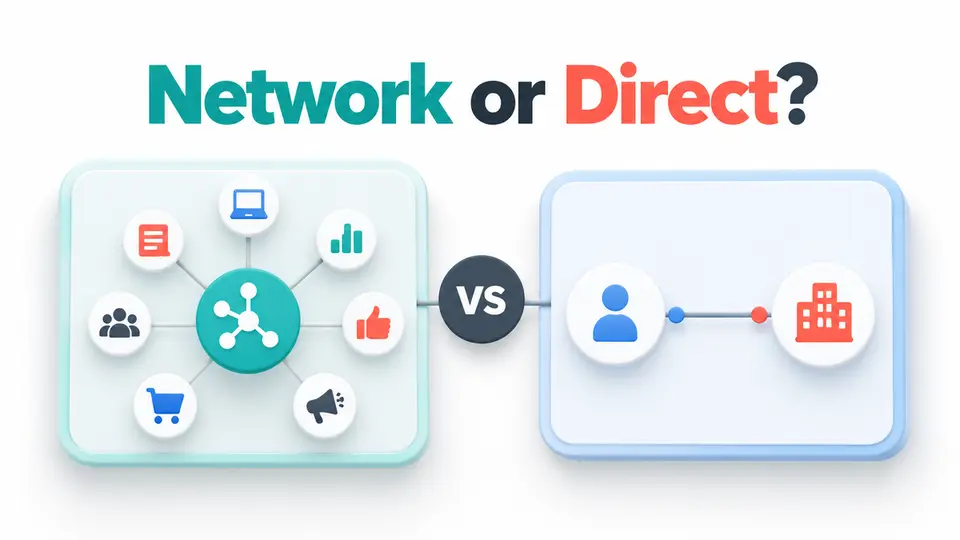
Affiliate network vs direct program is a practical choice about where you apply, how referrals are tracked, who approves a transaction, and where payment questions go. A network can provide shared infrastructure across advertiser programs. A direct program is managed by an advertiser, though it may still rely on an outside tracking provider.
Quick answer: Compare the operating terms for the specific advertiser, not just the platform label. Check who approves you, who owns the report, what event earns commission, who sends payment, how attribution works, which promotion rules apply, and where to take a dispute. Seven checks below turn that comparison into a repeatable process.
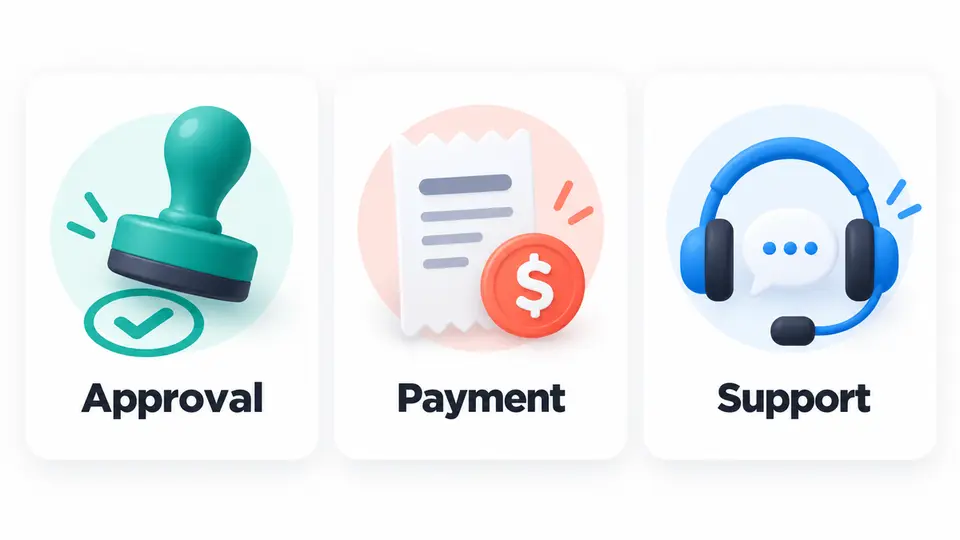
| Area | Network program | Direct program | Evidence to collect |
|---|---|---|---|
| Application | Network approval plus advertiser approval may both apply | Advertiser reviews the application | Eligibility and approval status for this offer |
| Tracking | Network may provide links, reporting, and account tools | Advertiser may use an in-house dashboard or outside provider | Link format, attribution, and transaction status definitions |
| Payment | Platform may handle payment, with timing that varies by advertiser | Advertiser or its payment provider sends funds | Payor, threshold, schedule, and payment method |
| Support | Network and advertiser may handle different issues | Advertiser or its provider handles program questions | Contact path and records needed for a dispute |
These are common patterns, not guarantees. The same network can host programs with different approval rules and payment timelines, while a direct advertiser can outsource tracking or support. The Awin FAQ explains that an affiliate network facilitates advertiser programs and that each advertiser sets its own publisher criteria.
What the two routes mean
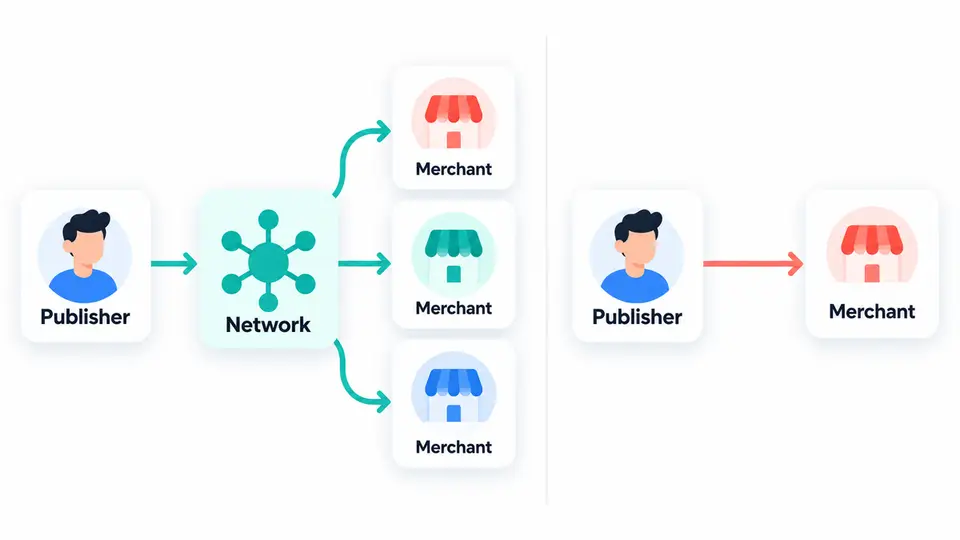
An affiliate network sits between advertisers and publishers. It can provide tracking links, reporting, technical support, and payment administration. You usually join the network first, then apply to each advertiser program you want to promote. Network access alone does not mean an advertiser accepted your application.
A direct affiliate program is operated for a particular advertiser. The brand may run its own dashboard and support process, or use a vendor behind the scenes. For example, Kinsta says it uses a custom-built affiliate dashboard for referral tracking. That setup is different from a network directory, but the publisher still needs to read Kinsta's own commission and attribution terms.
An affiliate network vs direct program comparison should use the same due diligence for both routes. This guide is about what a publisher should verify before applying. It is distinct from the affiliate program research checklist, which covers broad source and audience checks, and the guide to choosing affiliate programs worth promoting, which focuses on product fit.
Seven checks for an affiliate network vs direct program
1. Who approves the publisher and the offer?
Separate account approval from advertiser approval. A network may verify your publisher account, after which an advertiser still decides whether your website, audience, channel, or traffic source fits its program. A direct program may combine those steps, but its team can still review the site manually.
Record the application requirements and decision owner. Do not treat an active network account as permission to use a brand's affiliate link. If your content is new or your site is under construction, confirm that the advertiser accepts it before planning a campaign around that offer.
2. Who provides the tracking link and report?
Find out where the link is created, what ID appears in it, and which dashboard is the source for clicks and conversions. A network can assign publisher IDs and aggregate reporting across advertisers. A direct program can operate its own dashboard, as Kinsta does for its affiliate referrals.
Compare the report fields, export options, and update timing. If you use the FindAffiliates profiles for Circle, GetResponse, or Kinsta as starting points, verify each program's tracking provider in its current application materials. A directory page helps you find an offer; it does not replace the program's own dashboard terms.
3. Who decides when a conversion is approved?
An attributed click or order is not always a payable commission. The advertiser may validate a purchase, refund, subscription, or other qualifying event before approving the transaction. A network dashboard may show that status, but you still need the advertiser's definition of pending, approved, rejected, and reversed.
Write down the event that qualifies and the reason a transaction can be declined. For subscriptions, check whether each invoice, the first payment, or a different milestone triggers commission. Keep the terms beside the report so a status change has context.
4. Who owes and sends the payment?
The platform label does not answer who pays you or when. Confirm the legal payor, payment currency, threshold, payment method, and cycle. In a network, payment can be centralized while the expected timing still varies by advertiser. A direct offer may pay from the brand's own account or through an external provider.
Awin says it runs payments on the 1st and 15th, while its FAQ also says average payment times vary by advertiser and sector. The account interface shows individual advertiser timing. Use the source that applies to the specific program rather than copying a platform-wide schedule into every recommendation.
5. How does attribution work for this advertiser?
Check the cookie or referral window, attribution model, cross-device limits, and what happens when a buyer clicks another affiliate link. A longer window is not a guarantee of credit if a browser blocks a cookie, the reader switches devices, or another link overwrites the original attribution.
Kinsta's public affiliate page describes a 60-day tracking cookie and last-touch attribution. That is a program-specific example, not a default for direct programs. Record the exact wording and date you checked it, then test the actual tracking link if the program permits a compliant test.
6. Which promotion rules apply to the link?
Review restrictions for branded paid search, coupon codes, email, social channels, incentive traffic, and disclosure. There can be network-wide rules and advertiser-specific rules. Follow the stricter rule when both apply, and save the terms version you relied on.
Awin's guidance lists misleading advertising, unauthorized brand bidding, and deceptive tracking among the activity its rules address. A direct program can set its own limits too. Check whether a channel must be declared in your application, and ask for clarification before using a tactic the agreement does not clearly allow.
7. Where do support and disputes go?
Map the contact path for account access, broken links, tracking questions, approval decisions, and missing payments. The network may answer platform questions while an advertiser handles offer eligibility or transaction review. A direct program might have one affiliate team, but you still need to know which details it requires.
Keep dated screenshots or exports of the link, click, transaction ID, status, and terms. Remove customer personal data unless the program specifically requires it through a secure channel. A clear evidence packet makes a support request easier to investigate and helps you compare an answer with the applicable terms.
Which route fits your publishing workflow?
Choose the route that makes a suitable offer easier to find and its conditions easier to verify. For an affiliate network vs direct program decision, a network can be useful when you want a single dashboard for several advertisers. Direct programs can be convenient when one brand is central to your content and its own team publishes clear terms. A publisher may use both routes across different offers.
| If your priority is... | What to compare first |
|---|---|
| Finding several related brands | Advertiser coverage, approval steps, and filter quality |
| Keeping payout records together | Payor, statement detail, currency, and payment schedule |
| Diagnosing a missing referral | Dashboard access, event timing, and support owner |
| Promoting one product deeply | Direct offer rules, audience fit, and brand support |
| Avoiding inaccurate claims | Source date, regional terms, and transaction definitions |
Use the same evidence checklist for network and direct offers. The FindAffiliates directory can help you discover programs by category, while the official program terms should control any claim about rates, attribution, or payment. Do not rank a program above another just because one page shows a larger number.
Key Takeaways for Affiliate Network vs Direct Program: 7 Checks for 2026
Affiliate network vs direct program is not a universal winner question. It is a verification question for each advertiser offer. Compare approval, tracking, commission approval, payment, attribution, promotion restrictions, and support before placing a link in your content. Save the current terms, test your link where permitted, and revisit the details when the offer changes.
FAQ
Is a direct affiliate program always better than a network?
No. A direct program may offer a clear brand relationship, while a network may give you access to several advertiser programs and shared tools. Compare the specific offer, reporting, payment, and support terms before choosing.
Can I join a network and still be rejected by an advertiser?
Yes. Network account approval and advertiser program approval can be separate decisions. Check the individual advertiser's requirements and wait for its acceptance before promoting the offer.
Who pays an affiliate in a network program?
It depends on the network and advertiser terms. The network may administer payment, but timing and transaction approval can still vary by advertiser. Verify the payor, threshold, schedule, and method in the current account information.
What should I compare first in a direct program?
Start with eligibility, qualifying action, commission basis, attribution, payment conditions, and promotion rules. Then check the support contact and the evidence needed to resolve a tracking or payment issue.