Affiliate Application Bio Examples for 7 Channels in 2026
Use these affiliate application bio examples to explain your audience, channel, content, and promotion plan with specific proof and no inflated claims.
On this page (8)
What Should You Compare Before Choosing?
Affiliate application bio examples are useful when a form asks who you reach, what you publish, and how you plan to promote a partner. A strong answer connects a real audience to a real channel and a specific content plan. It does not need impressive-sounding claims or promises about future sales.
The samples below are fictional starting points for seven publisher types. Replace every bracket with details you can verify, and leave out a metric if you do not have a reliable source for it. Each affiliate program sets its own application fields and rules, so treat these as adaptable examples rather than a universal application formula.
Quick answer: what to include
| Channel | Explain | Useful proof |
|---|---|---|
| Niche website | Topic, reader, and review format | Published guides and about page |
| YouTube | Video subject and product placement | Public videos and channel page |
| Newsletter | Subscriber interest and email format | Signup page and sample issue |
| Podcast | Listener focus and episode format | Episode archive and show notes |
| Short-form social | Platform, niche, and link placement | Public profile and recent posts |
| Deal or community site | How offers are selected and presented | Rules, moderation policy, and examples |
| New publisher | Planned format and launch status | Live landing page, calendar, and first content |
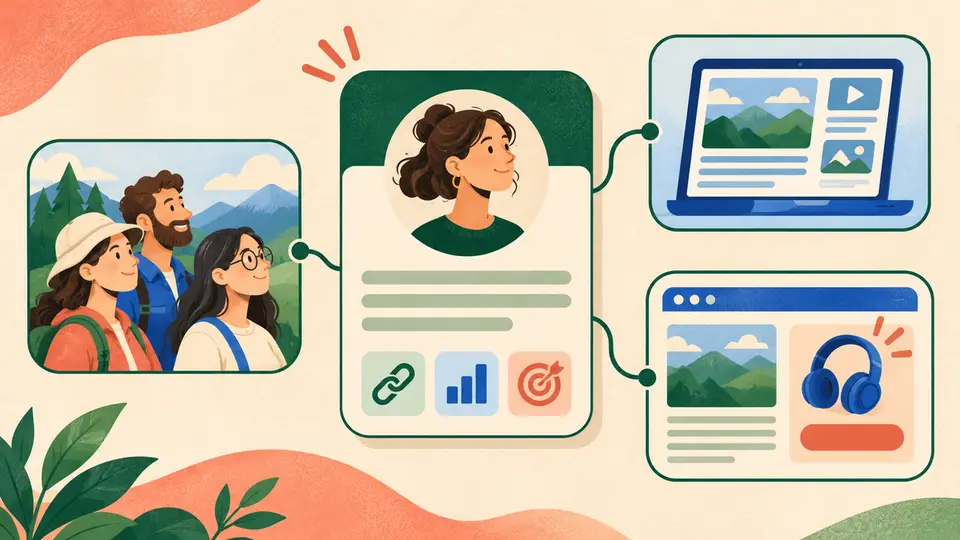
A concise bio can answer four questions in order: who is the audience, where do they find your content, what do you publish, and how will the program fit? If a form has a character limit, put the audience and channel first.
What reviewers can understand from a useful bio
A reader or advertiser reviewing an application needs enough detail to judge relevance and channel fit. Broad statements such as “I have a lifestyle audience” leave the reviewer guessing about the subject, format, and placement. A more useful description names the topic, the people served, and the content they can inspect.
For example, Awin's publisher signup guide asks applicants to enter a promotional-space URL, allows social profiles to be added, requests a description of the promotional space, and asks the publisher to choose relevant sectors. The guide also recommends describing the unique features of the website or social profiles. Those are Awin's published instructions, not requirements that automatically apply to every program. Read the actual form before applying.
The examples below follow that audience, channel, content, and placement structure. They are intentionally specific without inventing traffic, conversion, or sales numbers.
Affiliate application bio examples for 7 channels
1. Niche website or blog
Example: “Trail Notes is a hiking and day-trip guide for first-time hikers in the Pacific Northwest. I publish gear explainers, route preparation guides, and field-tested packing lists. I plan to include relevant products in clearly labeled gear guides and update each page when availability or product details change.”
Why it helps: The example names a defined reader, the actual site topic, and the type of pages where an offer could appear. A program reviewer can visit the site and compare the description with the published work. Do not say that you tested a product unless you did.
2. YouTube channel
Example: “I make beginner home-repair videos for renters and first-time homeowners. My public channel includes tool comparisons and step-by-step demonstrations. When a product is useful to the tutorial, I plan to place a relevant link in the description and identify the relationship clearly.”
Why it helps: The bio gives the channel format and a concrete placement. Link the public channel, not a private analytics screenshot or a creator account that reviewers cannot access. If a program limits eligible platforms, confirm that rule separately.
3. Newsletter
Example: “The Practical Pantry is a weekly cooking newsletter for busy households planning low-waste meals. Each issue includes one recipe, a short equipment note, and seasonal shopping guidance. I would feature a partner only when its product is relevant to the recipe or kitchen task, with a clear explanation in the email.”
Why it helps: The reviewer learns the newsletter's subject, cadence, and where a recommendation would fit. Do not claim a subscriber count unless it is current and can be supported. If you publish a signup page or sample issue, include the public URL when the form allows it.
4. Podcast
Example: “Fieldwork Weekly is a public interview show for early-career landscape designers. Episodes cover project planning, materials, and software workflows. I plan to mention a relevant partner in the episode notes or a clearly labeled sponsor segment when the topic and audience fit.”
Why it helps: The description tells the reviewer how listeners discover the show and what a placement could look like. Only describe ad formats you can actually deliver, and distinguish an affiliate recommendation from a paid sponsorship if both are part of your plan.
5. Short-form social creator
Example: “I publish short, captioned videos about budget-friendly apartment organization for renters. My public profiles show room-by-room storage tests and small-space routines. I plan to share a relevant product page through the profile link or a platform feature that permits affiliate links, with a clear disclosure near the recommendation.”
Why it helps: The channel and link path are explicit. A platform may change where links are allowed, and a program may restrict some social placements. Check both sets of current rules before describing a feature as part of your plan.
6. Deal, coupon, or shopping community
Example: “Saver Circle helps parents compare practical household offers. Members can see the source, expiration date, and important conditions beside each listed offer. I review submissions before publishing and remove expired promotions during scheduled checks.”
Why it helps: A deal publisher should explain how offers are selected, moderated, and kept current. If your community uses user submissions, describe the review process. Do not suggest that every deal is independently tested unless that is what your team does.
7. New publisher with limited history
Example: “Studio Starter is a new resource for independent illustrators setting up a client-ready portfolio. I am publishing beginner guides on portfolio hosting, invoicing, and file delivery. The launch plan includes two tutorials each month, and I will add a partner only where its tool directly supports a step in those guides.”
Why it helps: A new publisher can explain a real launch plan without pretending to have a long track record. Point to a live landing page, an initial article, a public posting calendar, or another concrete sample. Say what is planned and what is already live so the reviewer can distinguish them.

Five edits before you submit
- Replace broad audience labels. “Small-space renters who need storage ideas” is easier to evaluate than “people interested in home.”
- Name the real channel. Link the website, public profile, podcast feed, newsletter signup page, or community page the form requests.
- Choose one or two fitting content formats. A focused plan is more credible than saying you will use every platform and placement.
- Separate published work from plans. Label an upcoming tutorial as planned. Do not present it as a published review or proven campaign.
- Remove unsupported metrics and promises. Do not guarantee sales, claim an audience size you cannot document, or imply that applying means approval.
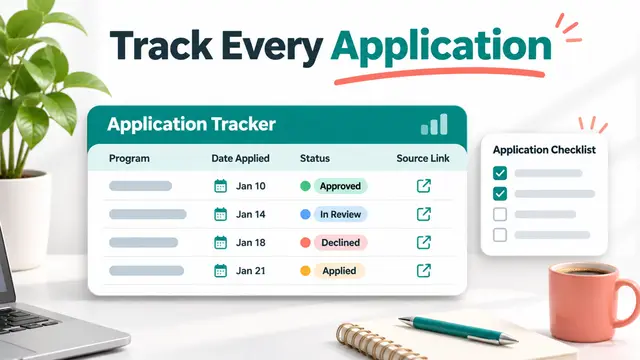
You can use the affiliate program application tracker template to record the exact application URL, requirements, date checked, and status. For the rest of the review process, see how to get approved for affiliate programs and the affiliate application follow-up email templates. These guides cover adjacent tasks; the examples here stay focused on describing a publisher and its channel.
Match the bio to programs you have researched
A polished description cannot make an unrelated offer suitable. Before applying, check the actual program page, permitted channels, target regions, and the products your readers already seek. FindAffiliates listings can help you begin that research, including the Shopify affiliate program, Kit affiliate program, and Canva affiliate program. Review each current program's own requirements before submitting an application.
Key Takeaways for Affiliate Application Bio Examples for 7 Channels in 2026
A useful application bio gives reviewers a fast, verifiable picture of your audience, channel, content, and likely placement. Start with one of the seven affiliate application bio examples, replace the fictional details with your own, and remove anything you cannot prove. Then review relevant programs in the FindAffiliates directory and tailor the description to each form.
FAQ
What should I write in an affiliate program application bio?
Describe your audience, publishing channel, main content formats, and how a relevant partner could fit. Link to public examples and use only current, supportable metrics.
How long should an affiliate application bio be?
Follow the form's character limit. If there is no limit, use a few concise sentences that answer who you reach, what you publish, and where a partner could appear.
Can a new publisher apply without traffic numbers?
Some programs may consider new publishers and others may set minimum requirements. Do not guess at a universal rule. Explain what is live, what is planned, and provide a concrete sample of your work.
Do these affiliate application bio examples guarantee approval?
No. They help make a publisher's channel and plan easier to evaluate. Each advertiser or network decides which channels and applicants meet its current requirements.