Affiliate Application Form Template for SaaS Programs
Use this affiliate application form template for SaaS programs to screen audience fit, traffic sources, content quality, disclosure, and risk.

What Should You Compare Before Choosing?
An affiliate application form template for SaaS programs should help your team approve better partners without creating a long, awkward form. The goal is not to collect every possible detail. The goal is to understand audience fit, traffic source, content quality, disclosure readiness, and promotion intent before you open portal access.
A strong form makes review easier for the team and clearer for the applicant. It tells serious partners what to prepare, filters low-fit signups, and gives you enough context to approve, reject, or ask one follow-up question.
Use this template as a public-facing structure for a reviewed SaaS affiliate program.
Quick Answer
The best affiliate application form template for SaaS programs asks for contact details, audience type, main channel, content examples, traffic source, promotion plan, disclosure agreement, and payout readiness after approval. Keep the first form short, then collect private payout or tax details inside the partner portal only after approval.
| Form section | What to ask | Why it matters |
|---|---|---|
| Partner identity | Name, business, website, email | Confirms who is applying |
| Audience fit | Audience type, niche, buyer problem | Shows whether referrals can convert |
| Channel proof | Website, newsletter, YouTube, social, community | Validates traffic source |
| Content examples | Two or three relevant links | Speeds quality review |
| Promotion plan | How the partner will introduce the product | Reveals intent and risk |
| Compliance | Disclosure and restricted-channel acknowledgement | Sets rules before approval |
If you already have an application page, compare it with your affiliate program application page examples. The page explains the program. The form collects the review signals.
The Short Form Template
Start with a form that a good applicant can finish in a few minutes. Long forms create friction for quality partners and still do not stop poor-fit applicants from submitting weak answers.
Use this structure:
| Field | Suggested question | Required |
|---|---|---|
| Full name | What is your full name? | Yes |
| Business or brand | What company, site, or creator brand do you represent? | Yes |
| What email should we use for partner communication? | Yes | |
| Primary channel | Where will you promote the product most often? | Yes |
| Audience | Who do you reach, and what problem do they have? | Yes |
| Content examples | Share two links that show your audience and content quality. | Yes |
| Promotion plan | How would you introduce our product to your audience? | Yes |
| Disclosure agreement | Do you agree to disclose affiliate links clearly? | Yes |
| Notes | Anything else we should know? | No |
Tools such as Tally, Rewardful, and FirstPromoter can fit different parts of this workflow, from forms to portals to affiliate tracking.
Map Each Field To A Review Signal
Every field should earn its place. If a field does not help you approve, reject, route, or follow up, remove it.
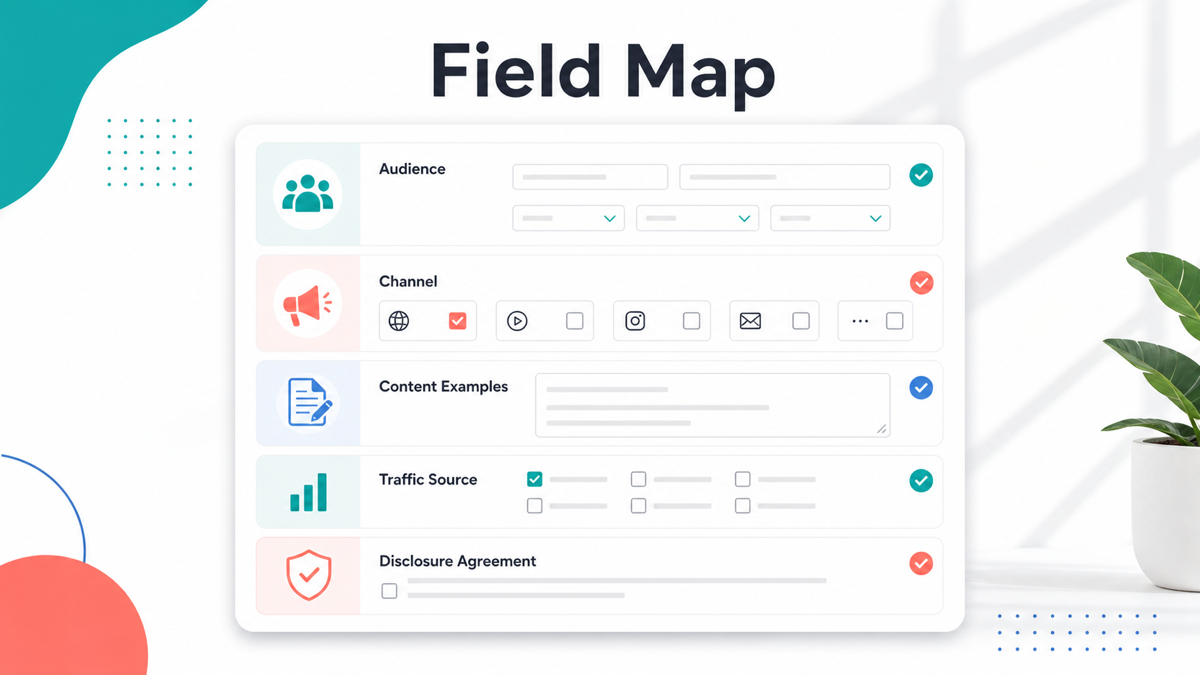
Audience and niche
Ask the applicant who they reach and what problem that audience is trying to solve. For SaaS programs, the answer should connect to buyer intent. "Small business owners who need simple forms" is more useful than "business audience."
Primary channel
Ask where promotion will happen first: blog, newsletter, YouTube, TikTok, LinkedIn, community, paid media, agency referrals, or client work. This tells you whether the applicant's traffic source matches your rules.
Content examples
Ask for two or three links. A good applicant should be able to show a relevant article, video, newsletter issue, community, or resource page. This helps your reviewer check quality without a long interview.
Promotion plan
Ask how the applicant would introduce the product. The answer reveals whether they understand the buyer, plan to make useful content, or only want a generic link.
Disclosure acknowledgement
Ask applicants to confirm that they will disclose affiliate links clearly. The FTC's Disclosures 101 resource is a useful external source for disclosure basics.
Keep Private Details Out Of The First Form
Do not ask for tax forms, banking details, government IDs, or payout account information on the first public form. Those details belong after approval inside a secure partner workflow.
The first form should answer fit questions. Payment and tax details answer finance questions. Mixing them too early makes the application feel heavier and creates unnecessary data handling risk.
If you use tools such as Tapfiliate, PartnerStack, Rewardful, or FirstPromoter, keep the public application lightweight and move sensitive onboarding steps into the tool's approved-partner flow. Rewardful's official features page is a useful place to understand the kinds of program operations these tools support.
For a deeper review process, pair this form with the affiliate application review checklist. The form collects the inputs. The checklist helps the team decide what to do with them.
Add A Clear Review Workflow
The applicant should know what happens after submission. A simple review note reduces support follow-ups and makes the process feel professional.
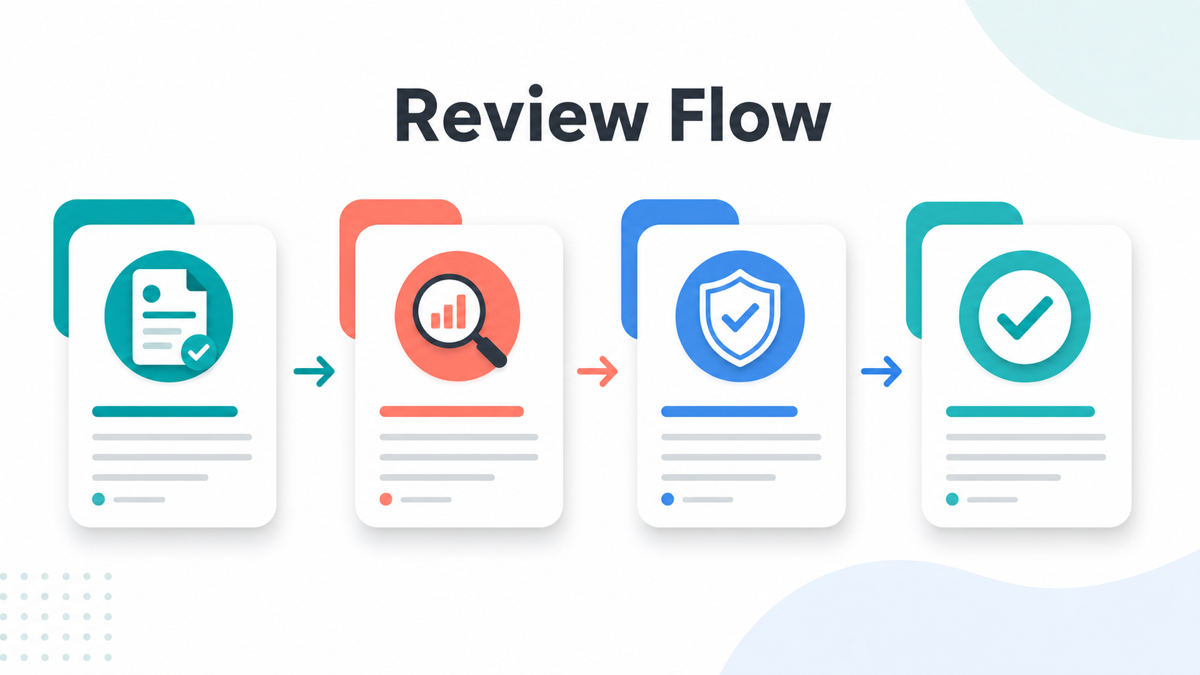
Use wording like this:
| Step | Public wording |
|---|---|
| Submit | Tell us about your audience, channel, and promotion plan. |
| Review | We review each application for audience fit and traffic quality. |
| Decision | Approved partners receive portal access and next steps. |
| Follow-up | If we need more context, we will ask one short follow-up question. |
Do not promise instant approval if your team manually reviews applications. If review usually takes a few business days, say that only if you can consistently meet it.
This workflow should connect to your broader SaaS affiliate program landing page examples. The landing page sells the opportunity. The application form proves whether the applicant fits.
Sample Form Copy
Here is a public form structure you can adapt:
| Section | Copy |
|---|---|
| Intro | Apply to join our affiliate program. We review each application for audience fit, content quality, and promotion plan. |
| Audience | Tell us who you reach and what problem they are trying to solve. |
| Channel | Select the main channel where you plan to promote our product. |
| Proof | Share two examples of content, community, or client work that show audience fit. |
| Plan | In a few sentences, explain how you would introduce our product. |
| Disclosure | I agree to disclose affiliate links clearly and follow program rules. |
| Timeline | We review applications before sending portal access. |
This is enough for most SaaS programs. If you need channel-specific detail, ask one conditional question after the applicant selects a channel. For example, ask YouTube creators for a channel URL and agencies for the client type they serve.
Common Mistakes To Avoid
The first mistake is asking too many questions. Long forms can push away strong applicants while still failing to catch poor-fit ones.
The second mistake is asking vague questions. "Tell us about yourself" does not help review. "Who do you reach, and how will you promote the product?" does.
The third mistake is hiding the criteria. If you prefer creators, agencies, consultants, existing customers, or B2B publishers, say so before the form.
The fourth mistake is collecting private payout details too early. Keep the public application focused on partner fit, then use the approved-partner portal for payout setup.
The fifth mistake is not routing decisions. Your team should know when to approve, reject, ask for more context, or park the applicant for later.
How To Use The Template
Start by naming the partner types you want. Then remove any fields that do not help you screen those partner types.
For creator partners, emphasize content examples, audience topic, traffic source, and disclosure. For agency partners, emphasize client type, service fit, implementation role, and referral path. For existing customer partners, emphasize product familiarity and audience access.
After you collect applications, compare the answers with affiliate program examples for SaaS companies. Different program models need different approval signals, and a form should reflect the type of partners you actually want.
When you are ready to choose tools or compare partner workflows, browse FindAffiliates and review current program pages before writing your own public terms.
Key Takeaways for Affiliate Application Form Template for SaaS Programs
An affiliate application form template for SaaS programs should be short, clear, and tied to review decisions. Ask who the applicant reaches, where promotion will happen, what content proves fit, how they plan to introduce the product, and whether they will follow disclosure and program rules.
Keep sensitive payout details out of the first public form. Use the form to screen partner fit, then move approved partners into a secure portal and onboarding flow.
FAQ
What should a SaaS affiliate application form include?
It should include contact details, audience description, primary channel, content examples, promotion plan, disclosure agreement, and optional notes. Keep payout and tax details for the approved-partner workflow.
How many questions should an affiliate application form have?
Most SaaS programs can start with seven to nine useful questions. Ask enough to review audience fit and traffic quality, but avoid a long intake form that creates friction for strong partners.
Should affiliate applications be manually reviewed?
Manual review is useful when the product has a specific buyer, brand-safety concerns, restricted traffic rules, or a high payout. Open approval can work only when payout controls and traffic monitoring are already strong.
What is the difference between an affiliate application page and form?
The application page explains who should apply and why the program exists. The form collects the applicant details needed to approve, reject, or follow up.
Should I ask affiliates for payout details in the application form?
No. Ask for payout details only after approval inside a secure partner workflow. The public application should focus on fit, channel, content quality, and compliance readiness.