Webflow vs Softr Affiliate Program for Creator Fit
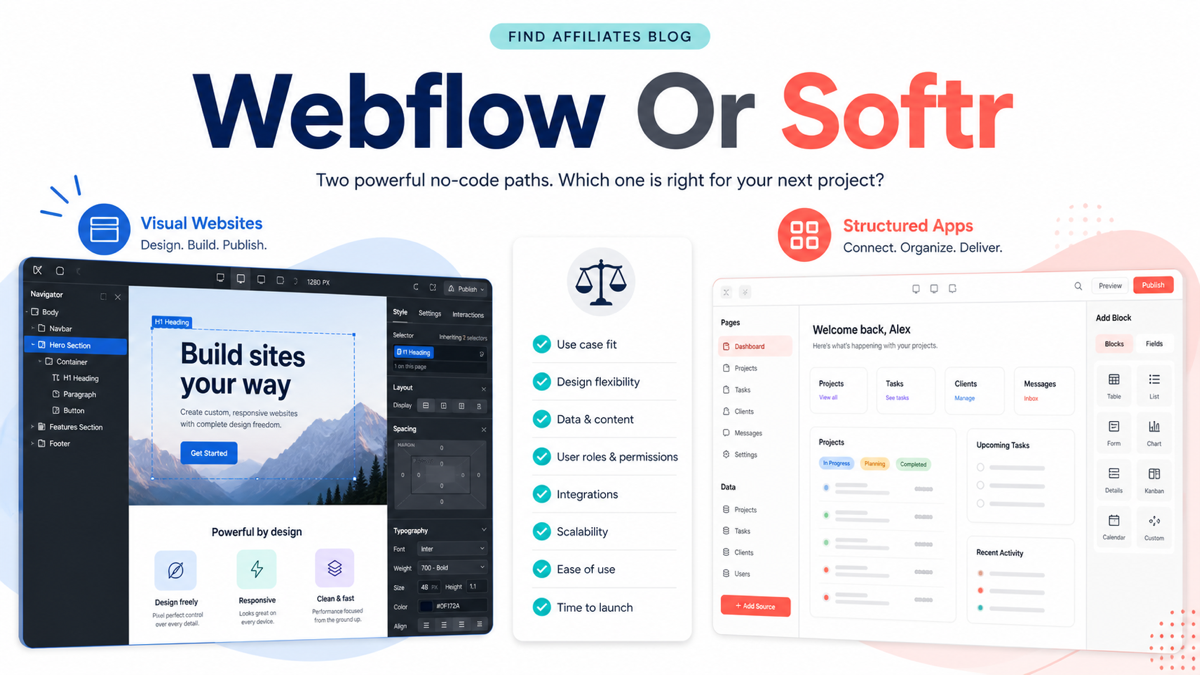
The Webflow vs Softr affiliate program decision is not mainly about picking the larger commission headline. It is about matching a creator's audience to the job each product solves. Webflow is built around visual websites and marketing pages. Softr is built around client portals, business tools, directories, and data-backed applications. For most publishers, the better program is the one they.
Who Should Promote This Affiliate Program?
The Webflow vs Softr affiliate program decision is not mainly about picking the larger commission headline. It is about matching a creator's audience to the job each product solves. Webflow is built around visual websites and marketing pages. Softr is built around client portals, business tools, directories, and data-backed applications.
For most publishers, the better program is the one they can demonstrate honestly. This guide compares the available official terms, the buyer intent behind each product, and the content formats that can earn qualified referrals without making unsupported promises.
Quick Answer: Choose by the Build Your Audience Wants
In a Webflow vs Softr affiliate program comparison, choose Webflow when your audience needs a polished public website, landing page, portfolio, or content-led marketing site. Choose Softr when the audience needs a working portal, member directory, operational process, or database-backed app. A tutorial that solves the reader's real build problem is usually more useful than a generic tools roundup.
| Decision factor | Webflow | Softr |
|---|---|---|
| Best audience job | Create a public website or marketing experience | Turn business data into a portal, internal tool, or member app |
| Official affiliate offer | 50% revenue share on a qualifying new user's first eligible subscription, for up to 12 months | 25% of referred-customer revenue for the first year |
| Attribution detail to verify | Webflow states a 90-day window | Confirm the current application and dashboard terms |
| Strongest content proof | A finished site, CMS setup, or landing page | A working client portal, directory, or operations app |
Webflow's current affiliate program overview says commissions apply to a brand-new user's first eligible subscription purchase, not client referrals. Softr's current affiliate program documentation states that affiliates can apply and earn 25% commission for the first year of revenue from referred customers. Review the live application terms before publishing any exact payout claim.
How the Two Programs Differ
Webflow: Public Sites and Marketing-Led Content
Webflow is the stronger fit when readers are designing a site people will discover, browse, and evaluate. That includes portfolio sites, agency sites, startup landing pages, resource hubs, product marketing pages, and CMS-led publishing. The visual result is easy to show in a tutorial, which gives an affiliate a natural way to explain why the product fits a specific use case.
The official program describes a 50% revenue-share commission on a qualified new user's first eligible subscription for up to 12 months, with a 90-day attribution window for the Base tier. It also draws a line between content affiliates and service providers: an agency or freelancer referring clients should review Webflow's partner path rather than assume a client purchase qualifies through the affiliate program.
The live Webflow affiliate program listing is a useful starting point for a creator researching the program. It lists the 50% commission and 90-day cookie, but the official rules should control if the two sources ever differ.
Softr: Portals, Directories, and Data-Backed Apps
Softr is the better fit when the content begins with operational data and ends with a usable interface. Good examples include a customer portal built from Airtable data, a gated member directory, a lightweight internal tracker, or a partner resource center. These are different buying jobs from choosing a visual website builder, even when both tools are described as no-code.
Softr's official documentation publishes a 25% commission for the first year of referred-customer revenue. The public page does not provide every practical detail a publisher needs, such as a universal cookie window or all approval conditions. Treat those details as dashboard checks, not assumptions. The Softr affiliate program listing also advises applicants to verify attribution, approval, payout, and traffic-source rules.
In other words, Softr content should sell clarity about an operational workflow, not a vague promise that anyone can build any kind of app quickly. Show the data source, user role, access rule, and finished workflow.

Compare Referral Eligibility Before You Promote
The Webflow vs Softr affiliate program comparison becomes clearer when you separate product fit from referral eligibility. A useful promotion page tells readers what will qualify, who the tool is for, and what is still unknown.
Webflow explicitly states that a qualifying purchase must come from a new customer and that client referrals do not qualify for affiliate commissions. Its documentation also notes that cookies can be cleared, so tracking is not guaranteed in every case. That makes disclosure, approved links, and correct audience targeting practical requirements rather than boilerplate.
For Softr, do not invent a cookie duration, minimum payout, acceptance rate, or channel policy. Explain the visible first-year commission, then direct interested creators to the official application process for the terms that govern their account. This approach remains useful even if the program changes a dashboard setting after the article is published.
Creators who want a third comparison point can review the Glide affiliate program. Glide is closer to Softr for spreadsheet-driven tools, which makes it a better alternative to discuss in app-building content than in a Webflow landing-page tutorial.
Content Angles That Match Buyer Intent
The highest-quality Webflow vs Softr affiliate program content does not start with a payout chart. It starts with a build brief. Give each article, video, or email one audience, one finished outcome, and one honest limitation.
Use Webflow for Website Decisions
Create content around a designer moving from a template to a custom marketing site, a founder publishing a launch page, or a content team organizing a CMS collection. Capture the planning choice, the build process, the final page, and the point where a simpler site builder might be enough. The recommendation should follow the proof.
Use Softr for Operations Decisions
Build around an agency client portal, a member directory, a customer-facing knowledge base, or an internal request workflow. Show the source data, the permissions model, and the usable result. A reader can then decide whether the tool solves their specific operations problem.
Keep Comparison Content Narrow
Avoid claiming that one tool is universally better. A public marketing site and a secure client portal can both be successful no-code projects, but they have different visitors, workflows, and maintenance needs. State the job first, then compare the tools against it.
The existing guide to no-code builder affiliate programs is useful for a broader stack view. If the reader only needs lead capture or a simple intake flow, the Tally vs Typeform affiliate program guide offers a more relevant comparison than either full builder.
How to Choose the Better Program for Your Channel
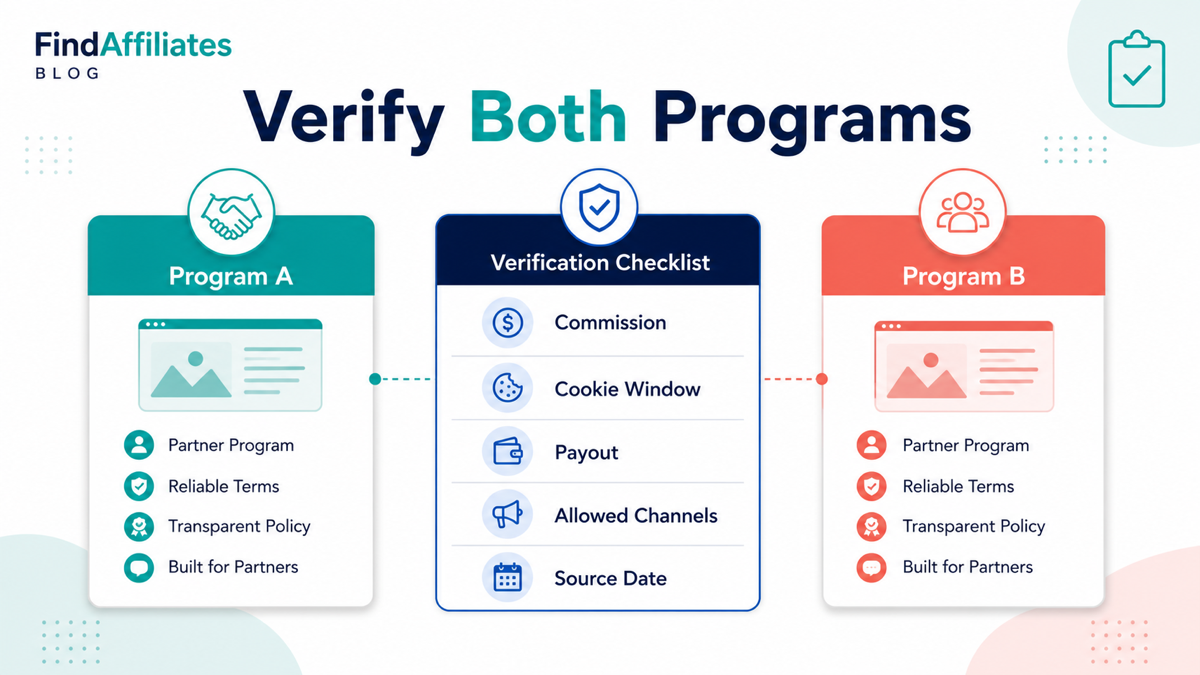
Use a simple four-part filter before applying or adding a tracked link:
- Audience problem: Does your audience ask for websites and marketing pages, or portals and data-backed workflows?
- Proof access: Can you demonstrate a complete, accurate build without using a client's private information?
- Eligibility: Have you checked the current application, referral rules, attribution window, payout setup, and allowed promotion channels?
- Editorial fit: Can you describe limitations and alternatives as clearly as benefits?
This filter prevents a common mistake: promoting a familiar brand where the reader needs a different category. It also protects against using an affiliate link for a client relationship that the program does not treat as eligible.
For the Webflow vs Softr affiliate program, a design newsletter, freelance portfolio channel, or startup-marketing tutorial library will usually have a natural Webflow angle. An operations newsletter, Airtable tutorial channel, or agency systems library may have a more natural Softr angle. Some publishers can cover both, but each piece of content should keep one buyer job in focus.
Source Confidence and Terms to Recheck
The public sources support a clear comparison of product use cases and the headline affiliate terms noted above. They do not justify universal claims about conversion rate, approval odds, earnings, audience geography, or a single payout experience. Those details can vary by account, traffic source, referral type, and current program rules.
Before a campaign goes live, save the current program page, read the agreement, test the approved link, and confirm the dashboard's attribution and payout settings. Update any published commission wording when the official documentation changes. This is especially important for content that remains visible long after an application is accepted.
Key Takeaways for Webflow vs Softr Affiliate Program for Creator Fit
The right Webflow vs Softr affiliate program choice follows the outcome your audience wants to create. Webflow fits public websites and marketing experiences. Softr fits operational apps, portals, and directories built around data. Lead with a real build, use current official terms, and make the referral path clear.
Browse FindAffiliates for more no-code programs, then verify every commercial term directly with the program before you publish a recommendation.
FAQ
Does Webflow have an affiliate program?
Yes. Webflow's official affiliate overview describes an application-based program for creators and publishers. It states a 50% revenue share on a qualifying new user's first eligible subscription for up to 12 months, subject to its current rules.
Does Softr have an affiliate program?
Yes. Softr's official affiliate documentation says applicants can earn 25% commission for the first year of revenue from referred customers. Check the active application and dashboard for the terms that apply to your account.
Is Webflow or Softr better for affiliate content?
Webflow is generally the better content fit for public sites, landing pages, portfolios, and CMS workflows. Softr is generally the better fit for content about portals, directories, internal tools, and data-backed applications.
Can an agency use an affiliate link for a Webflow client?
Webflow's public guidance says client referrals are not eligible through its affiliate program. Agencies and freelancers should review the separate partner route and the current program terms before making a referral.