Shopify Affiliate Program vs Partner Program: 8 Differences
Shopify affiliate program vs partner program: compare referral links, store work, earning triggers, terms, and tracking to choose the right path in 2026.
On this page (5)
Who Should Promote This Affiliate Program?
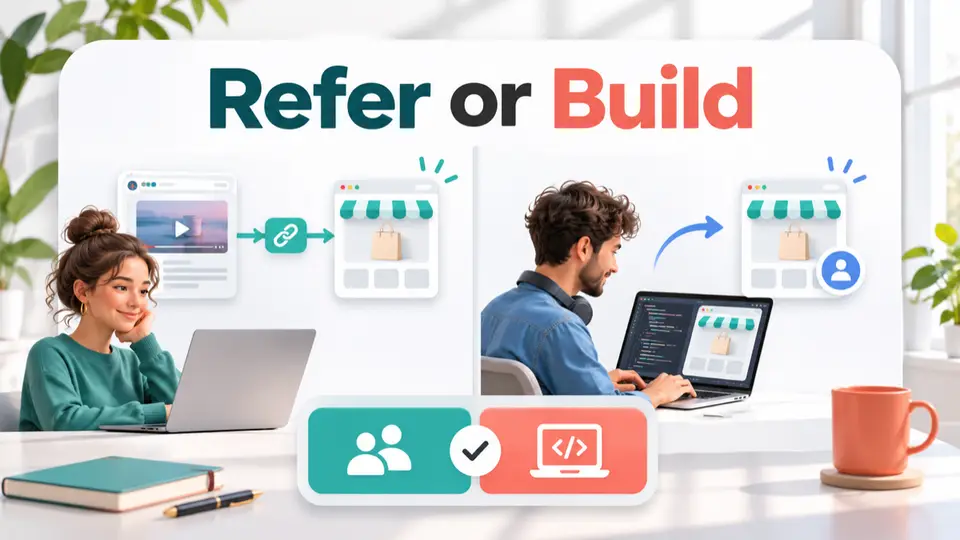
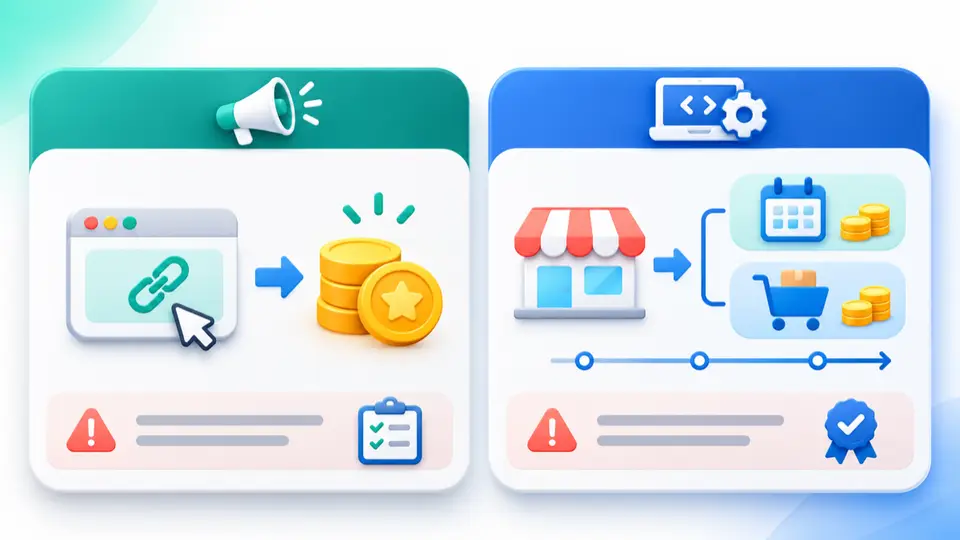
The Shopify affiliate program vs partner program decision comes down to the work you want to do. The Affiliate Program is built around referring a new merchant through a tracked link. The Partner Program covers several earning routes, including referring merchants, building and launching stores, and developing apps or themes. A creator with a merchant focused audience may prefer the affiliate route. A consultant, developer, or agency that works directly with stores may fit Partner activity better.
These labels do not describe two completely separate audiences. The Shopify affiliate program vs partner program choice can still be made around your current workload. Shopify's Partner Program includes referral activity, while the standalone Affiliate Program has its own terms and tracking. Compare the qualifying action and current account rules before choosing a route or estimating what a referral may earn.
Quick answer
| Decision | Shopify Affiliate Program | Shopify Partner Program |
|---|---|---|
| Main activity | Refer a new merchant through an affiliate link | Refer merchants, build or launch stores, or develop apps and themes |
| Who it tends to fit | Publishers and creators teaching or recommending ecommerce | Developers, agencies, consultants, and app or theme makers |
| Example earning trigger | A qualified new merchant purchases an eligible full-price plan | A qualifying referral, store launch, app sale, or theme sale |
| Public earning detail | Up to $150 per qualified full-price merchant referral, depending on location | Different models by activity, including recurring share for eligible launches |
| Tracking | Impact affiliate links and reports | Partner dashboard and activity-specific requirements |
In brief, this Shopify affiliate program vs partner program comparison separates a content referral from a qualifying Partner activity. Shopify's current Affiliate Program FAQ explains the standalone referral route. Its Partner earning guide lists current earnings by Partner activity. Both amounts and eligibility can change, so use the terms displayed when you apply.
Eight differences that affect your choice
1. The work behind the link
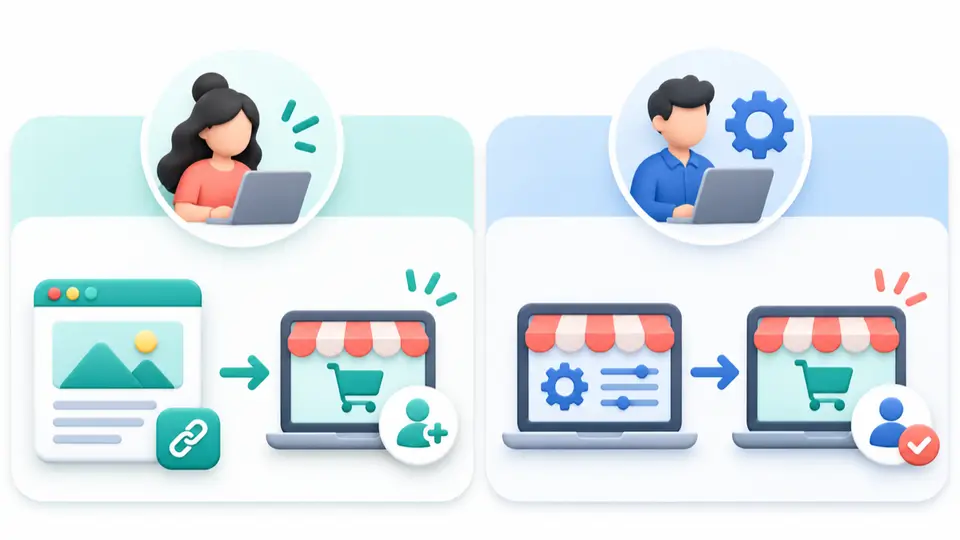
An affiliate introduces a prospective merchant to Shopify with educational content, a review, a tutorial, or another useful recommendation. The affiliate does not need to build the store to earn from an eligible referral. The audience member follows the affiliate link and may become a qualified merchant.
A Partner can work directly on a merchant's setup. Shopify lists building and transferring or launching stores, merchant referrals, and app or theme development as Partner earning activities. If you already scope store builds for clients, this is a service and product workflow as well as a referral question.
2. The audience you serve
The standalone Affiliate Program suits a publisher or educator whose audience is learning ecommerce or considering Shopify. Shopify describes its affiliates as people who teach or inspire their audience about entrepreneurship. That can include a blog, course, video channel, or other content property, subject to the current application requirements.
The Partner path fits people working with merchants directly. A developer may implement a theme or custom app. An agency may build a store and transfer it. A consultant may qualify a merchant lead. The audience matters, but your ability to deliver the Partner activity is the stronger signal.
3. What action qualifies for earnings
For an affiliate, Shopify says commission is earned when a referred new merchant purchases an eligible full-price store plan through the unique affiliate link. The current affiliate FAQ identifies Basic, Grow, and Advanced plans as eligible. A free trial or click by itself is not a completed commissionable referral.
For a Partner, the qualifying action depends on the activity. A store build share begins after a merchant activates a qualifying plan through an eligible transfer or launch. A new Plus or Enterprise referral has a separate qualification process. App and theme earnings follow their own sale rules. Read the Partner activity requirements, not just the top-line payout table.
4. The payout model is different
The affiliate FAQ advertises up to $150 USD per qualified full-price referral, with the amount depending on the merchant's country. It is a fixed referral payment rather than a percentage of every future store sale. Shopify pays affiliate commission to an Impact balance, and withdrawals require at least $10 USD.
The Partner model changes with the work. The current guide lists 20% of a merchant's monthly base platform or subscription fee plus 0.1% of eligible online gross merchandise volume for a qualifying build and launch, for up to four years. Other examples include one-time qualified Plus or Enterprise referrals, POS Pro referrals, and revenue share for apps or themes. These are separate activities, not one rate available to every Partner.
5. Earnings follow different timelines
Affiliate referrals use a 30-day tracking period from the click, according to Shopify's current FAQ. The merchant still needs to complete the qualifying signup and pay for an eligible full-price plan. Attribution and qualification are separate checkpoints, so a click does not guarantee a commission.
Some Partner earnings extend over time. For an eligible store launch, subscription share and eligible GMV share each have their own start trigger and earning term. One-time referral payments have their own qualification steps. Before forecasting, map the first eligible event, the payment trigger, and the period during which earnings can accrue.
6. The account and tools reflect the route
The Affiliate Program uses Impact for link creation, tracking, reporting, and payout management. Affiliates can check qualified actions and referral progress in the Impact reporting tools. Keep the link as generated and check current promotional rules before using paid search or another restricted channel.
Partner activities are managed through Shopify's Partner experience and follow activity-specific steps, such as creating a client transfer store or submitting a lead form. The records you need will depend on whether you refer, build, launch, or develop. Keep the client agreement and Shopify Partner activity evidence separate from affiliate-link performance reports.
7. Application fit is not the same
Shopify reviews affiliate applications using several criteria, and acceptance is not guaranteed. Before applying, make the audience you serve, your original content, and the Shopify use case clear. Wait for approval and account instructions before placing affiliate links.
Partner eligibility is tied to the Partner Program and the work you propose to do. A service provider should be ready to show its business capability and meet the platform's requirements for the chosen earning activity. An app or theme developer should verify the current technical, listing, and revenue-share terms before investing in a product.
8. You may need both concepts, but label them correctly
The Partner Program includes a referral route, so the words “affiliate” and “partner” can sound interchangeable in casual conversation. Shopify's published materials treat the standalone Affiliate Program as separate from referral activity conducted under the Partner Program. Use the right account and link type for the activity, and do not count one referral under two earning models.
A publisher can still be a fit for more than one Shopify relationship if they meet each program's terms. Keep separate links, disclosures, reporting, and application records. If the reader's actual question is which platform program to promote, compare the Shopify affiliate listing with Wix and Webflow. That is a different decision from choosing an affiliate or Partner route inside Shopify.
Which route fits your current work?
For the Shopify affiliate program vs partner program question, choose the Affiliate Program if your main asset is a relevant audience and you can help prospective merchants make a decision with accurate, original content. Choose Partner activity if you build stores, launch client projects, create apps or themes, or can submit qualified merchant referrals under the current rules. If your work spans both, compare the tasks and terms separately before deciding how to track each result.
| If your strongest asset is... | Start by reviewing... | Verify before you act |
|---|---|---|
| Tutorials, courses, or ecommerce recommendations | Affiliate Program | Application criteria, eligible plan, 30-day tracking, country-based payout |
| Store development or agency delivery | Partner store build or launch | Transfer requirements, qualifying plan, payout trigger, eligible GMV |
| A merchant lead with Plus or Enterprise fit | Partner referral | Lead submission process and merchant qualification |
| An app or theme sold to Shopify merchants | Partner developer activity | Current listing, revenue-share, and sale rules |
For an adjacent platform comparison, read the guide to Shopify vs WooCommerce affiliate programs or the Whop vs Shopify affiliate program comparison. Use the affiliate program research checklist to compare the contract, attribution, and qualifying event before forecasting revenue. For other current offers, browse the FindAffiliates directory.
FAQ
Is the Shopify Partner Program the same as the Affiliate Program?
No. The Affiliate Program pays for qualified merchant referrals through its link-based program. The Partner Program has several earning activities, including referrals, store builds and launches, and app or theme sales.
Can I earn from Shopify without building stores?
Yes, the standalone Affiliate Program is designed for qualified referrals and does not require you to build the merchant's store. You still need to meet current application rules and generate an eligible full-price plan purchase.
How much does a Shopify affiliate earn per referral?
Shopify's current FAQ says qualified full-price referrals can earn up to $150 USD, depending on the merchant's country. The exact amount is not universal, and the merchant must purchase an eligible plan.
Do Shopify Partners earn recurring commissions?
Some Partner activities can produce recurring earnings. Shopify's current guide lists a four-year term for qualifying store launch revenue share, while one-time referrals and app or theme sales use different models. Check the rules for the exact activity.