Shopify vs WooCommerce Affiliate Program 2026 Guide
Shopify usually fits creators helping merchants launch quickly, while WooCommerce fits WordPress publishers serving store owners who want control and flexibility. The better affiliate angle depends on reader intent: managed commerce simplicity, open-source customization, migration help, or long-term store infrastructure decisions.

Who Should Promote This Affiliate Program?
Shopify vs WooCommerce affiliate program searches usually come from creators who want to monetize ecommerce advice. The tricky part is that Shopify is a hosted platform with a direct affiliate path, while WooCommerce is better treated as a WordPress store stack made of themes, hosting, builders, and services.
That changes how you should promote each path. A beginner store audience may want one clear hosted recommendation. A WordPress audience may convert better when you explain the full stack and refer people to the right pieces.
This guide compares the two affiliate angles so creators can choose which content to publish, which referrals to prioritize, and where the stronger long-term opportunity sits.
The Core Difference
Shopify is a hosted commerce platform. The Shopify affiliate program on FindAffiliates is the cleanest fit when your reader wants to launch a store without assembling hosting, a theme, plugins, and checkout tools. Shopify also maintains an official Shopify affiliate page, which makes the program easier to research and explain to beginners.
WooCommerce is different. WooCommerce itself is an open WordPress commerce layer, and its official WooCommerce documentation reflects the setup work that happens around products, payments, shipping, taxes, extensions, and store management. For affiliates, the opportunity is usually not one single direct referral. It is the stack around the store: hosting, themes, page builders, design tools, and optimization services.
That means a Shopify vs WooCommerce affiliate program comparison is really a comparison between one hosted referral and several stack referrals. Neither path is automatically better. The right answer depends on the reader, the content angle, and how much implementation detail you can support.

When Shopify Is The Better Affiliate Angle
Shopify is strongest for beginner ecommerce creators, side-hustle audiences, product founders, dropshipping beginners, and small business owners who want a store online quickly. The pitch is simple: choose a hosted platform, build the store, connect payments, and start testing products or content.
That simplicity helps affiliates. You can write tutorials such as "how to start a store," "Shopify for beginners," "best ecommerce platform for first-time sellers," or "affiliate marketing vs ecommerce tools." The reader does not need to understand server setup or plugin compatibility before the recommendation makes sense.
Shopify also fits comparison content well. If your audience is still choosing between business models, link them to your affiliate marketing vs dropshipping comparison. If they are choosing tools, route them to ecommerce platform content and then make Shopify the hosted option.
The main risk is competition. Shopify is popular, so generic "how to start a Shopify store" content is crowded. Affiliates need narrower modifiers: Shopify for handmade products, Shopify for digital products, Shopify for local retail, Shopify for product-review creators, or Shopify versus a specific open-stack workflow.
When The WooCommerce Stack Is Better
WooCommerce-style content is better for readers who already like WordPress, need more control, want custom themes, or expect to combine several tools. The affiliate path is broader because the buyer needs multiple decisions.
For example, a WordPress store guide might include the Astra affiliate program on FindAffiliates for theme and design fit, the Cloudways affiliate program on FindAffiliates for managed hosting, and the PageFly affiliate program on FindAffiliates when the reader also works inside Shopify and needs landing pages.
The upside is that stack content can produce more than one relevant referral. A Shopify article often points to one core platform. A WooCommerce stack guide can point to hosting, a theme, page templates, security, analytics, and email tools when those recommendations are genuinely useful.
The downside is support burden. If you publish stack content, readers may expect setup advice. You need to explain tradeoffs clearly, keep tool recommendations current, and avoid presenting a pile of links as a real store plan.
Content Strategy For Creators
The Shopify vs WooCommerce affiliate program angle works best when you match article format to buyer readiness. Beginners need simple decision content. WordPress users need implementation content. Agencies and advanced creators need workflow comparisons.

Start with a comparison post if your audience is choosing a platform. Then build support posts around narrower jobs. For Shopify, write about first store setup, product page basics, ecommerce app stacks, or store launch mistakes. For the WooCommerce stack, write about hosting, theme selection, performance, landing pages, and checkout setup.
Your existing ecommerce content can support this cluster. The ecommerce platform affiliate programs guide gives readers a broader market view before they choose a stack. This comparison can then help them understand why one platform may be simpler while another may offer more flexible referral angles.
Do not force both paths into every post. A focused Shopify beginner guide can be more useful than a long list of WordPress tools. A focused WooCommerce setup guide can be more useful than a surface-level Shopify comparison. The strongest affiliate content solves one decision at a time.
Side By Side Comparison
Here is the practical affiliate view:
| Factor | Shopify affiliate angle | WooCommerce stack affiliate angle |
|---|---|---|
| Best reader | Beginner store owner, product founder, dropshipping creator | WordPress user, agency, technical creator |
| Referral shape | One hosted platform referral | Multiple stack referrals |
| Content difficulty | Easier to explain | More technical |
| Competition | High on broad keywords | Lower on narrow stack tutorials |
| Support burden | Lower | Higher |
| Strongest content format | Beginner guide, hosted platform comparison | Setup guide, stack tutorial, agency workflow |
If your audience is mostly beginners, Shopify is usually the better first article. If your audience already uses WordPress, the WooCommerce stack can create a deeper content cluster and more internal referral paths.
Keyword Angles Worth Building Around
The strongest SEO plan is not one broad comparison. It is a small cluster of search queries that match different reader jobs. For Shopify, target beginner and hosted-store queries such as "Shopify affiliate program for creators," "best ecommerce platform for beginners," and "Shopify store setup guide."
For WooCommerce stack content, use more specific implementation queries such as "WooCommerce hosting setup," "best WordPress ecommerce theme," "WooCommerce landing page builder," and "WooCommerce tools for creators." Those searches are narrower, but they often attract readers who are already close to choosing tools.
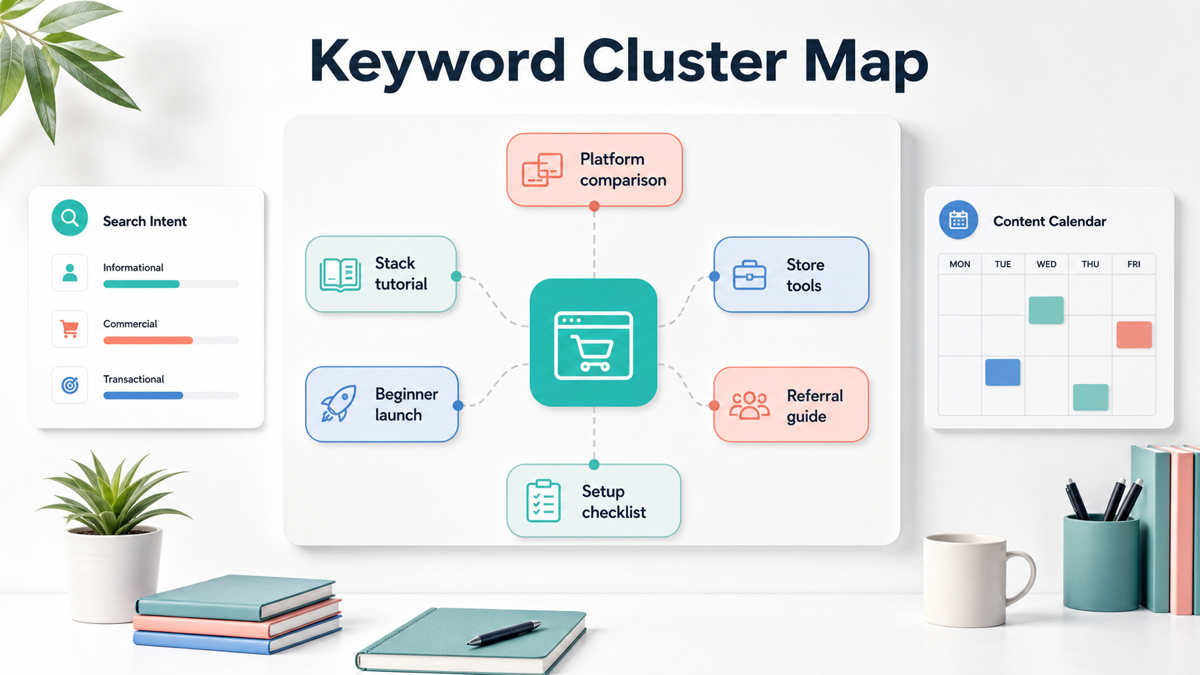
The cluster can also support future comparison posts. Good follow-ups include Shopify vs Wix affiliate program, Shopify vs BigCommerce affiliate alternatives, WooCommerce hosting affiliate programs, and Shopify landing page tools for creators. Each follow-up should answer one clear decision, not repeat this full comparison.
How To Choose Your First Post
Pick Shopify if your audience asks basic ecommerce questions. The first post should be direct, practical, and focused on launch speed. Use screenshots, checklists, and simple decision rules. Avoid burying beginners in stack language.
Pick the WooCommerce stack if your audience asks about WordPress, custom design, hosting, or control. The first post should explain the store architecture and show which tools solve each layer. This is where affiliates can naturally compare hosting, themes, landing pages, analytics, and security.
Pick a neutral comparison if your audience is still choosing. A balanced Shopify vs WooCommerce affiliate program article can rank for decision-stage searches and then send readers into deeper guides. The conclusion should not pretend there is one universal winner.
For most creators, the best path is simple: publish the comparison, watch which sections earn clicks, then build the next post around the reader behavior. If Shopify links get most clicks, expand hosted ecommerce content. If stack links get more engagement, build the WordPress commerce cluster.
Key Takeaways for Shopify vs WooCommerce Affiliate Program 2026 Guide
The Shopify vs WooCommerce affiliate program choice is not just about commission. It is about the type of reader you serve. Shopify fits simple hosted-store content. WooCommerce stack content fits readers who want control and are willing to assemble more tools.
If you want a faster starting point, browse ecommerce and software offers in the FindAffiliates directory, choose the path your audience understands, and build one useful comparison before expanding the cluster.
FAQ
Is there a direct WooCommerce affiliate program?
Creators should verify current WooCommerce and Automattic partner access before making direct claims. In practice, many WooCommerce affiliate articles monetize the related stack: hosting, themes, page builders, analytics, and ecommerce services.
Is Shopify easier to promote than WooCommerce?
Shopify is usually easier to promote to beginners because it is a hosted platform with a simpler setup story. WooCommerce stack content can work better for WordPress users and technical audiences.
Which content converts better for ecommerce affiliates?
Beginner comparisons, setup guides, launch checklists, and tool-stack tutorials tend to convert well because the reader is actively choosing how to build a store.
What are good follow-up keywords after this comparison?
Good follow-up keywords include Shopify affiliate program for creators, WooCommerce hosting setup, ecommerce affiliate programs for beginners, and best WordPress ecommerce theme affiliate options.
Should I promote both Shopify and WooCommerce stack tools?
Yes, if both fit your audience. Keep the recommendation honest: Shopify is the simpler hosted path, while the WooCommerce stack is the flexible WordPress path.