Home Improvement Affiliate Program Eligibility: 7 Checks
Check home improvement affiliate program eligibility for creator portals, publisher sites, retail sales, and installation leads before you apply in 2026.
On this page (8)
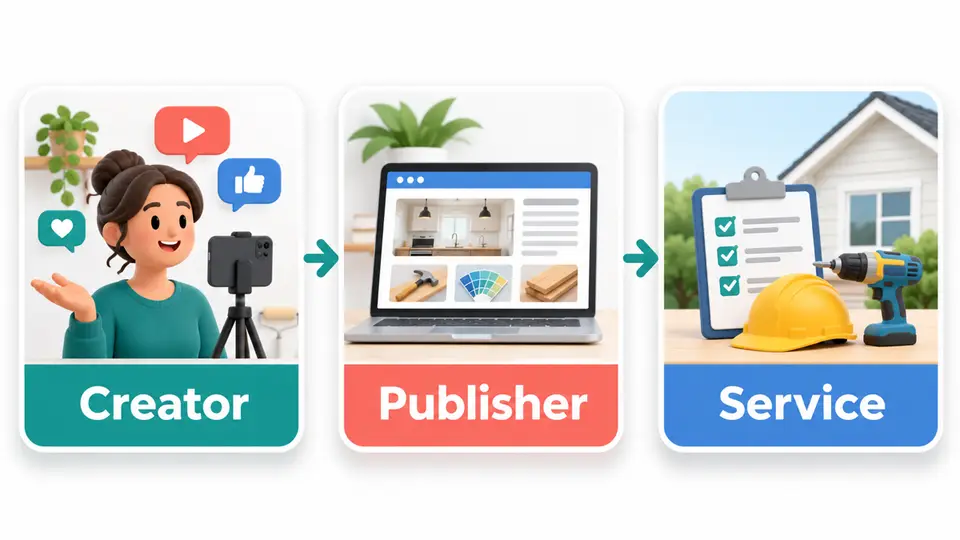
Home improvement affiliate program eligibility depends on the application route, your publishing property, where your audience shops, and the action that earns credit. A creator portal can accept social profiles while a retailer's traditional affiliate program still requires a live website. A service lead program can also use different rules from product sales.
Use these seven checks to decide which application to prepare before adding links. For broader offer comparisons, see the home improvement affiliate programs for DIY creators guide.
Quick answer: For home improvement affiliate program eligibility, identify the offer, confirm applicant and shopper countries, list the properties you will use, and verify the qualifying action. Keep the current terms beside the application. A directory profile is a discovery lead, not an approval or proof that another program uses the same terms.
| Route | Property check | Region check | Qualifying action to verify |
|---|---|---|---|
| Lowe's Creator | Social profiles or a blog | Official FAQ says applicants must be US-based | Qualifying online purchases through creator links |
| Home Depot Affiliate Program | A live website is required | Applicants may be outside the US, but the retail site serves eligible US shipments and has a separate Canadian route | A qualified online sale |
| Home Depot Installation Program | Website placement that can attract service leads | Check the service market and eligible locations | A qualified installation lead |
---
1. Choose the exact application route
Start with the action you want to recommend. A product article may fit a retail program, a creator portal may ask for social accounts and a campaign pitch, and a service program may pay for a qualified installation inquiry. These routes are related, but not interchangeable.
The Home Depot lists separate retail and installation programs. Its publisher route requires a live site, while its installation route rewards qualified service leads. Apply to the route that matches the action you can explain to a reader.
The Lowe's Creator Program provides a social and blog route. Its official FAQ says applicants must be US-based creators, influencers, or bloggers with an online following. It names social formats, YouTube, and blogs, with category-based rates and a 30-day attribution window. Confirm the terms in the application account. A dated directory profile is not evidence for this separate Creator Program.
FindAffiliates profiles can help you discover programs such as Lowe's, Ace Hardware, and Houzz Pro. Treat each profile as a starting point, then confirm the current program route with the operator.
---
2. Separate applicant country from shopper country
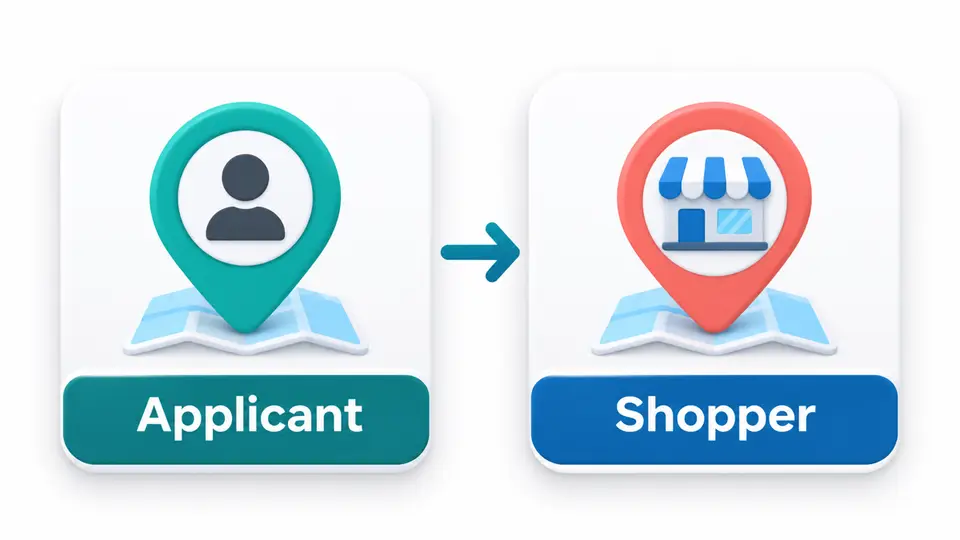
Eligibility has two locations: where you are based and where a reader can complete an order. A program may accept an international publisher while crediting only shoppers in one shipping market. Record both.
The Home Depot's standard affiliate FAQ says websites outside the United States may apply. It also says homedepot.com ships within the continental United States and offers a limited selection to Alaska and Hawaii. The FAQ directs Canadian shipments to homedepot.ca and its Canadian affiliate program. That does not establish that an international applicant can promote every Home Depot offer in every country.
Lowe's Creator publishes a different applicant rule: the creator must be US-based. Do not transfer that rule to another retailer or confuse shopper country with applicant eligibility.
When the operator does not publish a country rule, mark it unknown. Ask before investing in a page aimed outside the documented shipping area. See the home security affiliate program guide for another regional offer comparison.
---
3. Match the property to the application
List every website and social account that will carry the recommendation. Check that each is public, active, relevant to home projects, and managed by the applicant. A private profile or blank page makes it harder for a reviewer to evaluate fit.
The standard Home Depot Affiliate Program requires a live website at application time. Lowe's Creator names social and blog formats. A social-only creator should apply through the route that accepts that property.
Do not treat a blog link as evidence that a retailer accepts a social profile, or a social application as approval for a separate publisher program. Save the property types and dated guidance.
---
4. Confirm the event that earns credit
The phrase "affiliate commission" can describe different outcomes. A product program may credit a qualifying sale after returns and cancellations. A service program may credit a lead only after it meets the program's conditions. Compare like with like.
The Home Depot FAQ defines a qualified sale as one that is not cancelled, declined, or returned. Its installation route lists qualified lead submissions and a separate attribution period. Do not use the service terms to describe retail sales.
For each application, record the event, exclusions, attribution window, validation period, and payment timing. Treat a public rate range as a snapshot until the account terms confirm it. The Home Decor affiliate programs guide covers a related project category.
---
5. Check product, service, and location exclusions
Read the exclusions that determine which projects can earn. A retailer might pay on selected online products but exclude gift cards, special orders, in-store purchases, or some fulfillment paths. A service program may accept leads only for selected service categories and service areas. A creator campaign may have a brief that applies only to one promotion.
The Home Depot's public affiliate FAQ separates qualified retail sales from installation leads and lists specific exclusions for some product or order types. Its retail FAQ also limits eligible shipments by geography. When those limits matter to a project guide, describe the affected reader plainly. Do not write that a link earns on every store purchase unless the current terms explicitly say so.
For specialist offers, use a directory profile to locate the program, then verify its application, qualifying event, and market. A dated profile cannot confirm current acceptance rules.
---
6. Verify the application and approval record
Before applying, confirm the required fields, accepted properties, permitted promotion methods, and sample content. Save the submitted profile and response with the date, account, property, and program route.
For a creator portal, save the campaign brief separately from the account record. Platform access may not approve a specific campaign. For a publisher network, record the approved website and accepted program terms. Joining a network does not automatically approve every retailer.
If the site does not disclose an audience minimum or country rule, do not invent one. Mark it unknown and ask the operator. Keep responses with the terms version they clarify.
---
7. Build a simple eligibility evidence sheet
Use one row per route. Include the application URL, applicant country, audience markets, approved properties, offer category, qualifying event, exclusions, attribution period, terms date, and approval status. Mark each field verified, unknown, or not applicable.
This sheet prevents copying a rate, channel rule, or region limit from one route into another. It also gives you a dated source trail. Recheck official terms before publishing rates, accepted channels, or delivery locations. It can support a future home improvement affiliate program eligibility review without relying on memory.
Use this checklist beside the affiliate program application tracker template. Browse FindAffiliates profiles, then verify the operator's current terms. Keep the eligibility sheet as the basis for each home improvement affiliate program eligibility decision.
---
FAQ
Can I join a home improvement affiliate program without a website?
It depends on the route. The Home Depot's conventional affiliate FAQ requires a live website. Lowe's Creator accepts named social formats and blogs for US-based creators. Check each operator's current application terms for the route you plan to use.
Can someone outside the United States apply to Home Depot's affiliate program?
The public FAQ says websites outside the United States may apply. It also limits homedepot.com shipments to eligible US locations and points Canadian shipments to a separate Canadian program. Confirm the current route for your audience before applying.
Can Lowe's Creator accept a social-only publisher?
Lowe's official FAQ names social formats, YouTube, and blogs for US-based creators with an online following. Confirm the account's current terms before applying. This route is separate from Home Depot's standard affiliate program, which requires a live website.
Does an affiliate profile confirm that I will be accepted?
No. A directory profile is a discovery aid. The program operator reviews the application and sets the terms that apply to the approved property and account.
Home improvement affiliate program eligibility is route-specific. Confirm the applicant, property, shopper location, and qualifying action together, then save the program terms before you publish a recommendation.