Language Learning Affiliate Program Eligibility: 7 Checks
Check language learning affiliate program eligibility by region, including publisher location, audience market, channel rules, offer access, and payout terms.
On this page (10)

Who Should Promote This Affiliate Program?
Language learning affiliate program eligibility can depend on where you live, where your audience lives, which local offer you join, and how you plan to promote it. A program that sells lessons worldwide may still use separate affiliate offers, country-specific terms, or channel restrictions.
Quick answer: Check publisher residence, audience markets, the exact network offer, permitted traffic sources, payment setup, product availability, and the date of the terms. Treat these as separate questions. “Available in many countries” does not prove that every publisher, learner, or channel is eligible.
| Check | What to confirm | Why it matters |
|---|---|---|
| Publisher location | Your residence and contracting eligibility | The program may require local tax or identity details |
| Audience market | The countries where your readers or viewers live | An advertiser may route by market or storefront |
| Offer version | The exact campaign and network listing | Similar names can have different terms |
| Channel | Website, video, social, email, or paid search rules | Some channels or placements may be excluded |
| Payment | Currency, minimum, method, and timing | An approved referral is useful only if you can receive payment |
The existing language learning affiliate program roundup compares product types and public payout signals. This guide answers a narrower question: how to tell whether a specific offer and region fit your publishing setup before you build content around it.
---
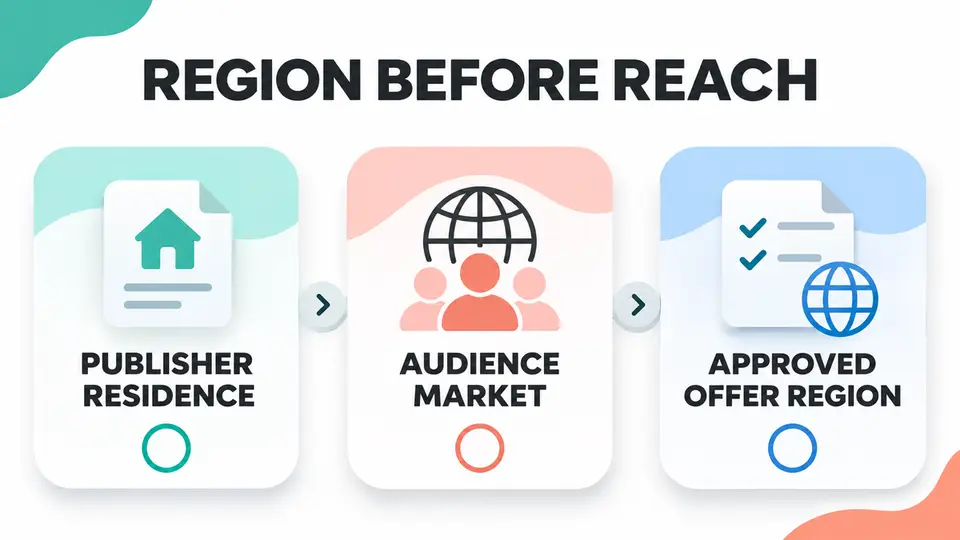
1. Separate your residence from your audience market
Start by writing down two facts: your legal residence and the main countries represented in your audience. They are related, but a program can use either one to determine eligibility. Your readers may live in the United States while you publish from another country. A regional program name alone does not tell you which publisher locations it accepts.
Babbel's partner page gives one example of audience-based routing. It says affiliates whose audience is mostly in North or South America should apply to its US program. That instruction concerns audience location. It does not mean every publisher living in the Americas automatically qualifies, so check the application requirements in the offer you will join. This distinction is central to language learning affiliate program eligibility: an audience-market instruction does not establish the publisher's residence rule.
When a program page names a region, ask the partner team whether the restriction applies to publisher residence, customer location, payment country, or all three. Keep the answer with the dated terms. If the policy is silent, mark it unknown rather than turning a customer-market statement into a publisher eligibility claim.
---
2. Check the learner's local product and checkout
A language course can be advertised internationally while its lessons, prices, currencies, or payment methods vary by market. Open the customer-facing site from the countries you plan to cover. Check that the relevant course is sold there, that the checkout works in the local currency, and that the landing page uses a language your reader can understand.
This check matters for both app and tutoring offers. A learner who wants live conversation practice needs to see tutor availability and lesson pricing in their market. Someone considering a self-study app needs to confirm that the course supports the target language pair and device. Do not describe an offer as globally available based only on a broad product page.
The Babbel affiliate program profile, Preply affiliate profile, and Lingopie affiliate profile show different product formats. Use the listings to build a shortlist, then test the actual customer route for the region your content serves.
---
3. Match the exact network offer to the country
Affiliate networks can carry separate offers for the same brand. Confirm the advertiser name, country label, program ID, and landing page inside the network where you will apply. Save the offer page or a dated export so you can distinguish it from another market's terms later.
The Awin listing for italki US is explicitly named “italki US.” Its published terms describe an $18 payout for a first purchase by a new registered student, a 30-day cookie, and no paid search. Those details belong to that listed offer. They should not be generalized to another italki market or treated as proof that a publisher must live in the United States.
If your network account shows more than one regional offer, compare the payout event, attribution window, exclusions, and currency before choosing. Ask whether a reader in one country can be credited through a different market's link. A regional product page and a regional affiliate contract are not always the same thing.
---
4. Read the promotion rules for your actual channel
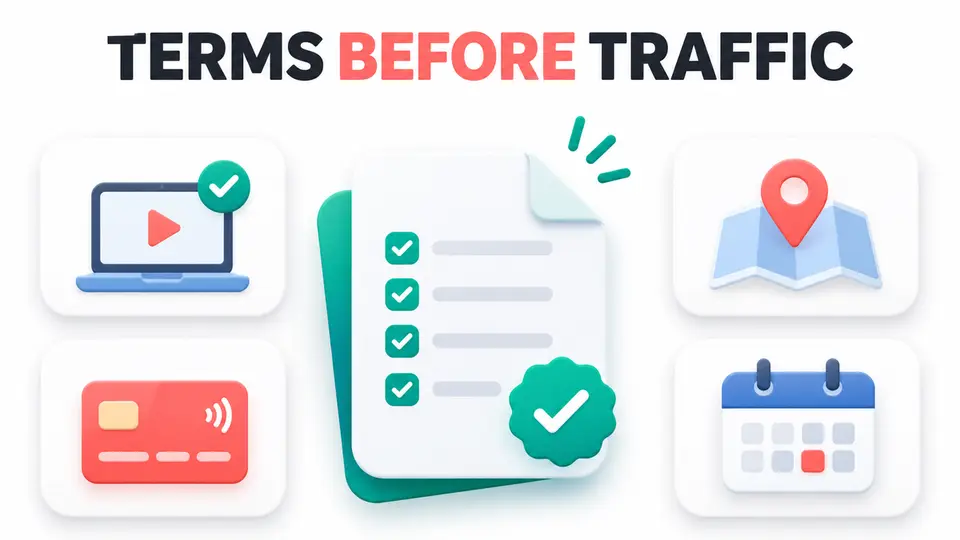
Eligibility can change by channel. A blog, teacher newsletter, short-form video account, paid search campaign, and coupon site may be treated differently. Check the exact offer's rules for each channel you plan to use. If you publish on several platforms, list each one in your application instead of assuming one approval covers all of them.
The Awin italki US terms exclude PPC, paid ads, and paid search. A creator relying on organic lessons, comparison pages, or newsletter recommendations should still check the terms that apply to those placements. Never infer that paid traffic is allowed because the program supplies tracking links or banners.
Also review rules for trademarks, bidding on brand names, discount codes, claims about fluency, and use of program images. Language education is a consequential purchase for some learners. Do not promise a language level, job outcome, visa result, or time to fluency unless the provider supplies evidence and permits the claim.
---
5. Confirm payment, currency, and tax onboarding
Before making a program part of your plan, confirm whether the network can pay to your country and through a method you can use. Check the payout currency, minimum balance, payment schedule, identity verification, tax forms, and any bank or payment-provider requirements. These are account-specific operational details, not assumptions to make from a commission headline.
If the public terms do not explain payment for your country, ask the program or network before publishing a forecast. A fixed payout in one currency may be converted or handled differently from a recurring percentage. Track any conversion or payout fees separately from the advertised commission so you can compare the offer honestly.
Do not submit tax or banking data through an unofficial link. Start from the provider's verified partner portal, save the confirmation, and keep private account details out of your public article and editorial notes.
---
6. Verify that the offer fits the language content
Regional fit is not only a compliance issue. It affects whether the offer solves the reader's learning problem. A travel writer might serve learners who need practical conversation before a trip. A teacher may need structured lessons and tutor support. A video creator may be able to demonstrate subtitles, pronunciation practice, or a sample lesson.
The FluentU affiliate profile is another starting point for comparing video-based language learning offers. Evaluate the course or app from the learner's point of view: language pairs, lesson format, accessibility, subscription terms, cancellation, and customer support. If you have not used the product, say so and avoid presenting a feature list as a personal review.
Choose one offer only when you can explain who it helps, which market can buy it, and what evidence supports the recommendation. If those questions are unclear, keep researching or choose a different resource for that audience.
---
7. Save a dated record and set a review trigger
Before publishing, record the official program page, network offer ID, region, date checked, commission event, attribution window, channel rules, payout details, and unresolved questions. Treat each answer as part of your language learning affiliate program eligibility record, with the source and date beside it. Keep the accepted terms or dashboard snapshot where you can find it. A screenshot of a public headline is not a substitute for the contract that governs your account.
Set a reminder to recheck the offer when a partner notice arrives, when the network changes its listing, when a course or market closes, or before a major campaign. If a claim changes, update the page and any social posts that repeat it. The affiliate program research checklist and the broader e-learning affiliate programs guide can help organize the next comparison.
| Before you publish | Evidence to keep |
|---|---|
| Publisher and audience eligibility | Application rules or written partner confirmation |
| Market and course availability | Customer page and checkout route for the target country |
| Network offer | Advertiser name, region, ID, and current agreement |
| Channel approval | Allowed placements and traffic restrictions |
| Payment readiness | Currency, minimum, method, and tax onboarding steps |
| Recommendation quality | Product experience, limitations, and clear disclosure |
---
Key Takeaways for Language Learning Affiliate Program Eligibility: 7 Checks
The safest way to check language learning affiliate program eligibility is to separate publisher residence, audience market, and the exact offer you plan to promote. Then confirm channel, payment, product, and source-date details before you write a regional claim. If you are comparing offers, start with the FindAffiliates directory and confirm changing terms in the provider or network account that governs your application.
---
FAQ
Does an affiliate program's country label mean publishers must live there?
Not always. A country label may describe the customer market, network offer, storefront, or publisher eligibility. Read the actual offer terms and ask the program which location rule applies.
Can I promote a language learning app to readers in another country?
Only if the offer permits that audience and the product can be purchased in that market. Check the customer page, accepted traffic sources, and network attribution rules before publishing.
Are the commission terms the same in every country?
They can differ by offer, network, or market. Compare the exact program ID and current agreement instead of copying a rate from another region.
What should I verify before applying to a language learning affiliate program?
Confirm publisher eligibility, audience markets, the approved channel, local product availability, commission event, attribution window, payout method, and any tax or identity requirements.