AI Voice vs AI Video Affiliate Programs: 5 Checks for 2026
AI voice vs AI video affiliate programs fit different creator workflows. Compare audience intent, content effort, current terms, and tracking before choosing.
On this page (9)
Which Affiliate Programs Are Worth Comparing First?
AI voice vs AI video affiliate programs suit different audience problems. Choose voice-first offers when your readers need narration, dubbing, speech generation, or audio production. Choose video-first offers when they need explainers, product demos, training clips, or short-form video. If your audience covers both, compare the content workflow and the program terms separately, then lead with the format you can demonstrate well.
This is a category decision guide, not a product test or another list of every AI affiliate program. It compares a few current public terms as examples. The figures and rules below were checked on October 21, 2026. They can change, so confirm the vendor agreement and your approved account before publishing a specific offer claim.
Quick answer: choose the workflow your audience already needs
| If your readers are trying to... | Start with... | Useful content to make | Main question to answer |
|---|---|---|---|
| Add narration, voiceover, dubbing, or generated speech to existing work | AI voice offers | A script-to-audio walkthrough, voice selection guide, or dubbing workflow | Can the tool handle the language, style, rights, and review steps the reader needs? |
| Turn a script, lesson, or product explanation into a finished visual story | AI video offers | A tutorial, product demo, training example, or short-video workflow | Can the creator make and revise the format their audience expects? |
| Publish both audio and visual tutorials | A narrow comparison across both categories | Two matched examples using the same topic and audience | Which workflow solves the reader's primary problem with less friction? |
The category label alone is not a recommendation. The reader should be able to see the task, the output, and the decision criteria in your article or video. If you cannot demonstrate either workflow, start with research and a small sample before adding affiliate links.
How the affiliate terms differ
Public commission percentages are not directly comparable unless the qualifying purchase, commission period, referral window, and payment conditions also match. The examples below show why two programs with similar headlines can require different content and reporting decisions.
| Example program | Public terms checked | What the terms mean for your comparison |
|---|---|---|
| ElevenLabs for voice workflows | The vendor says qualifying new Starter, Creator, Pro, and Scale subscribers can generate 22% commission on eligible payments for the first 12 months. Business is listed at 11%, and enterprise purchases are excluded. The vendor guide describes a 90-day period after the first payment before commission becomes active. Official terms and partner guide. | A voice tutorial should explain which paid plan and customer type it covers. Do not imply that every signup, enterprise contract, or business plan has the same rate. A delay before commission activation affects how you read an early report. |
| InVideo AI for video workflows | Its help center lists 50% on monthly plans and 25% on annual plans, with commission for the first billing cycle only. It also says referrals are tracked for up to 120 days. Official program details. | Separate plan choice from commission duration. A high first-cycle rate is not a recurring commission. Track monthly and annual purchases as distinct outcomes. |
| Synthesia for business video workflows | The agreement sets commission at 25% of net payments for up to 12 months. A qualified customer must be new and register within 60 days of clicking the referral link. If a customer clicks multiple links, the last clicked link receives credit. Official affiliate terms. | Explain the new-customer rule and the attribution rule when your content compares video options. A longer commission period does not remove the need to qualify the referred account. |
These examples illustrate different models, not earnings potential. InVideo AI describes first-cycle commissions, while ElevenLabs and Synthesia publish commissions across a stated period, with different eligible plans and payment conditions. That distinction is more useful than ranking the offers by the largest percentage.
For a broader voice shortlist, see the AI voice affiliate programs guide. For a deeper list of video tools, use the AI video affiliate programs guide. This comparison stays focused on choosing a content direction across those categories.
When voice-first content is a better fit
Voice content is a natural starting point when your audience already works with audio or needs speech as one part of a larger process. That can include podcasters, audiobook publishers, language educators, video creators who record narration, and teams localizing existing material.
A useful affiliate article should show the actual decision. For example, compare how a creator prepares a script, selects a voice, edits pronunciation, reviews the result, and exports the audio. A reader may also need to understand consent and rights for voice cloning, language coverage, usage limits, and whether generated audio can be used in the intended project. Confirm those product details from current vendor documentation before making a claim.
Voice-first content can be efficient to demonstrate when the audience values a listenable before-and-after sample. It still needs editorial work: check names and pronunciations, listen to the entire result, disclose synthetic narration where appropriate, and distinguish a generated sample from a real customer outcome. Avoid suggesting that a tool guarantees engagement or revenue.
The ElevenLabs listing and the LOVO listing are two starting points for researching voice offers. Their program pages and vendor agreements should be checked for the reader's country, channel, product, and commission eligibility.
When video-first content is a better fit
Video content fits audiences that need to show a process or communicate visually. Examples include software educators, course publishers, product reviewers, marketing teams, and creators who turn written lessons into clips. The best demonstration may be a short complete workflow: provide the input, show the generated draft, edit it, and explain what still needs a human review.
Video offers can span very different jobs. Some tools create avatar-led lessons, while others focus on editing, clips, templates, or script-to-video workflows. A category roundup can help readers explore that range. A focused comparison should state which job it addresses and avoid presenting unrelated video tools as substitutes.
Plan for the time and evidence your demo requires. You may need to show the script, visuals, captions, output review, and final export. If one tool includes narration or text-to-speech, explain whether that feature changes the reader's primary job or simply supports the video workflow. A tool that includes a voice feature is not automatically a better fit for someone searching for a dedicated voice production workflow.
The InVideo AI program page and the Synthesia program page provide video-oriented examples with different public commission and attribution structures. Compare them by the task your audience wants to complete, then verify the current program terms.
A five-check selection process
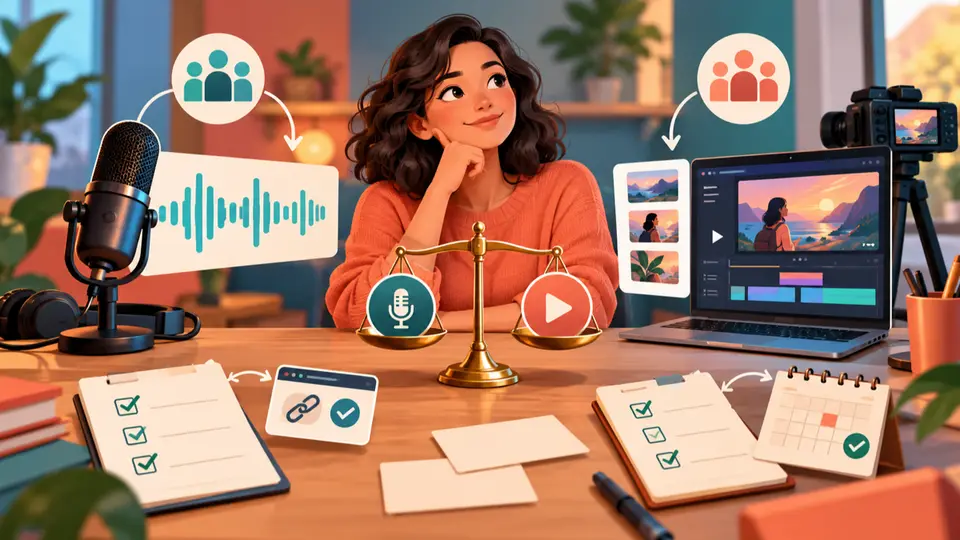
- Name the reader's job. Write one sentence about what the reader wants to make or improve. “Make a product tutorial for a small software team” is more useful than “use AI video.”
- Match the format to an existing audience. Review the questions, search terms, comments, and content formats already present on your site or channel. Treat them as audience evidence, not a forecast of sales.
- Build one representative sample. Create a small voice or video example that shows the tool's actual workflow. Record the inputs, edits, final output, and time required. Do not publish a tool claim based on a demo you have not reviewed.
- Check the complete agreement. Confirm eligible plans, new-customer rules, commission base, commission duration, referral window, refund treatment, payment timing, allowed traffic sources, and approval requirements. The affiliate program research checklist helps you record the source and date for each term.
- Measure comparable outcomes. Track impressions, clicks, qualified signups, paid conversions, approved commission, and refunds for the same reporting period. The EPC versus commission guide explains why a posted commission rate is not the same as earnings per click.
A simple recommendation rule
Choose voice-first coverage if the audience's main need is speech, narration, localization, or audio production. Choose video-first coverage if the audience needs a visible explanation, avatar presentation, product walkthrough, or edited clip. If both formats serve the same readers, compare them on the same task and disclose where the workflows overlap.
Before placing links, verify the relationship and disclosure wording. The FTC endorsement guidance explains that material connections should be disclosed clearly and conspicuously. Make the disclosure easy to notice near the recommendation, and keep it distinct from your review of the product.
Key Takeaways for AI Voice vs AI Video Affiliate Programs: 5 Checks for 2026
For creators comparing AI voice vs AI video affiliate programs, start with the audience's job, make a representative example, and compare the full commission and attribution rules before choosing an offer. The two categories are different content choices as much as they are different software categories. Voice is a stronger starting point for speech-centered workflows; video is a stronger starting point when the reader needs to see a process or story. Measure each offer with the same reporting definitions and update the article when the vendor terms change.
FAQ
Are AI voice and AI video affiliate programs the same?
No. They can overlap, but they usually support different content workflows. Voice programs may suit narration, dubbing, or speech production, while video programs may suit tutorials, training, explainers, or edited clips. Check the specific product and agreement before describing its features or commission terms.
Which AI affiliate category should a creator promote?
Start with the audience and the type of content you can demonstrate accurately. Use audience questions and a representative sample to choose a format. Then verify program access, eligible plans, attribution, payout timing, and promotion rules.
Are higher commission percentages better?
Not by themselves. Compare the commission base, billing period, qualifying customer, referral window, refunds, approval, and payment timing. A percentage based on one billing cycle is not directly comparable to one that applies for a stated number of months.
Can one article cover both AI voice and AI video tools?
Yes, when the reader is deciding between workflows and the article uses the same audience and task to compare them. Keep the scope narrow, show where the categories overlap, and link to separate category guides for readers who need a complete program list.