Dify vs Relevance AI affiliate program comparison 2026
Dify vs Relevance AI affiliate program comparison covering public terms, commission visibility, audience fit, restrictions, and checks before applying.
Who Should Promote This Affiliate Program?
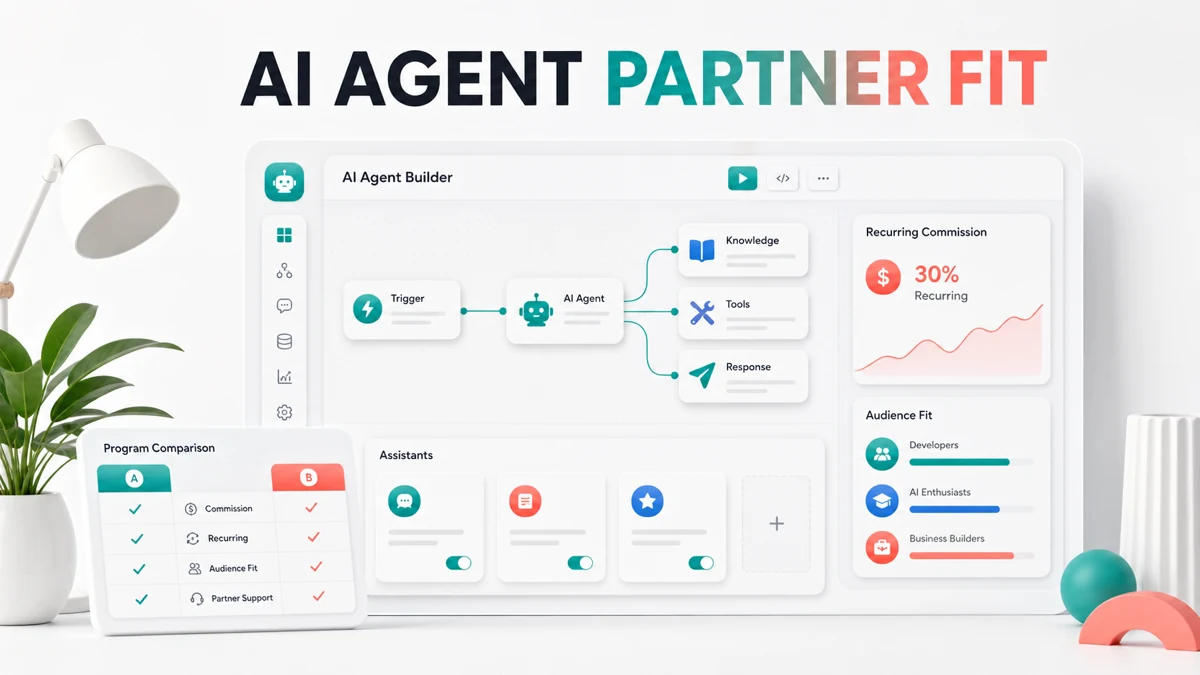
The Dify vs Relevance AI affiliate program choice is best made by audience fit and term visibility, not by an assumed payout. Dify's public agreement places key commission, tracking, locking, and commission-period details in its affiliate tool or program policies. Relevance AI's public affiliate page promises recurring commissions but says specific rates and terms appear inside its portal.
Dify is the more natural editorial fit for creators teaching LLM application development, AI workflows, and builder-focused implementation. Relevance AI is positioned for creators, educators, agencies, and community builders who reach business audiences interested in AI agents and operational automation.
Both can support useful tutorials, but neither selected public source supports inventing a universal earnings figure. Apply, read the account-level offer, and compare the same fields before assigning valuable content to either program.
Quick answer and side-by-side view
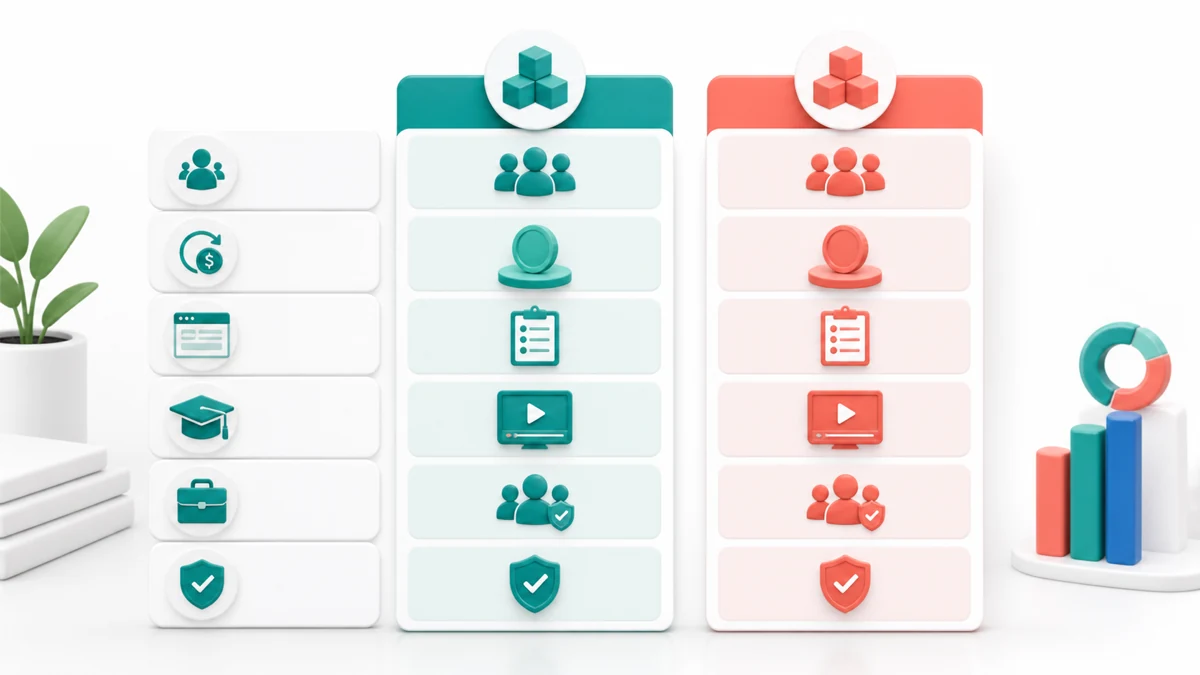
The Dify vs Relevance AI affiliate program comparison favors Dify for technical builder education and Relevance AI for business-facing agent content. Relevance AI's public page gives a simpler overview of who can join and the recurring nature of commission. Dify's agreement gives more legal detail while reserving core commercial numbers for the affiliate tool or program policies.
| Decision factor | Dify | Relevance AI |
|---|---|---|
| Best public audience fit | AI builders, developers, and technical educators | Creators, educators, agencies, and business communities |
| Public commission description | Commission is defined in the affiliate tool or program policies | Recurring commissions for referred paying customers |
| Public rate | Unknown from the agreement | Specific rate is shown inside the portal, not on the public page |
| Public tracking window | Set in the affiliate tool or program policies | Not stated on the selected public affiliate page |
| Application | Reviewed by Dify, with no notice within 30 days treated as rejection | Apply through the affiliate portal |
| Main strength | Detailed public agreement and technical content fit | Clear public audience statement and simple program overview |
| Main caution | Commercial terms are account or policy dependent | Public landing page leaves rate and detailed attribution unknown |
This is a source-confidence comparison. Unknown fields should remain blank in your forecast until the current portal terms answer them.
How the Dify program works
The Dify affiliate program uses an application and acceptance process. The official Dify affiliate agreement says applicants are notified if accepted, and an application is deemed rejected if Dify does not notify the applicant within 30 days.
The agreement defines eligible leads and customer transactions, but it sends several important details to the affiliate tool or program policies. These include lead expiration, commission amount, locking period, commission period, and payment schedule. That means Dify portal-only rates must not be presented as universal public facts.
To receive payment, an affiliate must accept the agreement, complete the affiliate-tool account, maintain a valid payment method, and complete required tax documentation. Dify also reserves the right to change commission structure, payment schedule, or eligibility criteria with seven business days of notice through the affiliate tool.
The agreement places clear boundaries around promotion. Affiliates must avoid deceptive claims, comply with applicable law, use approved marks as directed, disclose the relationship, and avoid prohibited tactics such as cookie stuffing, hidden frames, misleading brand use, and self-referrals.
For a content creator, the practical opportunity is education. Tutorials can show how a builder approaches an AI application, evaluates workflows, or chooses deployment patterns. The promotion should stay factual and should not promise that the software guarantees business outcomes.
How the Relevance AI program works
The Relevance AI affiliate program is publicly framed for creators, educators, agencies, and community builders with business audiences. The official affiliate page says applicants receive a personal referral link and tracking dashboard, can access product updates, and earn recurring commissions for referred customers who become paying users.
The page also says there is no upfront fee to join. It does not publish a specific percentage in the main program explanation. Instead, it says specific rates and terms are shown inside the portal.
That makes the public value proposition clear but leaves the operating details incomplete. Applicants still need to confirm the referral window, attribution model, commission duration, eligible plans, validation period, payout threshold, payment method, and treatment of refunds or chargebacks.
The strongest audience match is business automation. Agencies can teach client workflows, educators can explain agent use cases, and community leaders can demonstrate how teams evaluate AI tools. The content should help a reader decide whether the platform fits a real process rather than treating AI agents as a shortcut to guaranteed savings or revenue.
Compare commercial clarity before content fit
In the Dify vs Relevance AI affiliate program decision, the two public sources reveal different kinds of information. Dify publishes a detailed legal agreement but moves the key numerical fields into the affiliate tool or policies. Relevance AI publishes a concise marketing page that names the audience and recurring model but leaves the specific commercial terms inside its portal.
Rate and commission period
Do not compare a private portal screenshot with a public landing page. Ask each program for the current rate, the revenue base used in the calculation, the eligible products, and the length of the commission period. Confirm whether renewals, upgrades, services, custom plans, taxes, and discounts are included.
Referral and attribution rules
Record the click window, first-click or last-click model, cross-device treatment, and what happens when a lead is already in a sales process. Dify's agreement specifically conditions lead validity and points to the affiliate tool for expiration details. Relevance AI's selected public page does not state a universal window.
Validation and payout
Ask how long transactions remain pending, which events cause reversals, and whether a minimum threshold applies. Confirm payment currency, method, schedule, tax requirements, and fees. Keep pending commission separate from approved and paid commission in your records.
Changes and termination
Read how each program communicates changes and what happens to unpaid commission after termination. Dify's public agreement contains detailed change and termination provisions. Relevance AI applicants should review the current portal agreement before promoting.
Which content audience fits each program
Dify for builders and technical educators
Dify is a strong candidate for tutorials about LLM application architecture, prompt workflows, retrieval, agents, and production planning. Developer newsletters, technical YouTube channels, AI engineering communities, and implementation consultants can explain the product in the context of real build decisions.
The content should distinguish a demonstration from a production recommendation. Discuss data handling, model costs, evaluation, maintenance, and governance where relevant.
Relevance AI for agencies and business operators
Relevance AI is a natural candidate for business process education. Agencies and consultants can map repetitive work, identify where an agent might help, and explain human review. Educators can create function-specific examples for sales, marketing, research, support, or operations without promising automatic results.
The public affiliate page directly names agencies and business audiences, which makes this positioning easier to support. The affiliate still needs to disclose the relationship and explain where a use case requires customization or human oversight.
Mixed audiences should test topic clusters
If your publication reaches both groups, separate the content into clear clusters. Compare accepted referrals, paid conversions, reversals, and support burden instead of choosing from clicks alone.
Promotion rules and trust checks
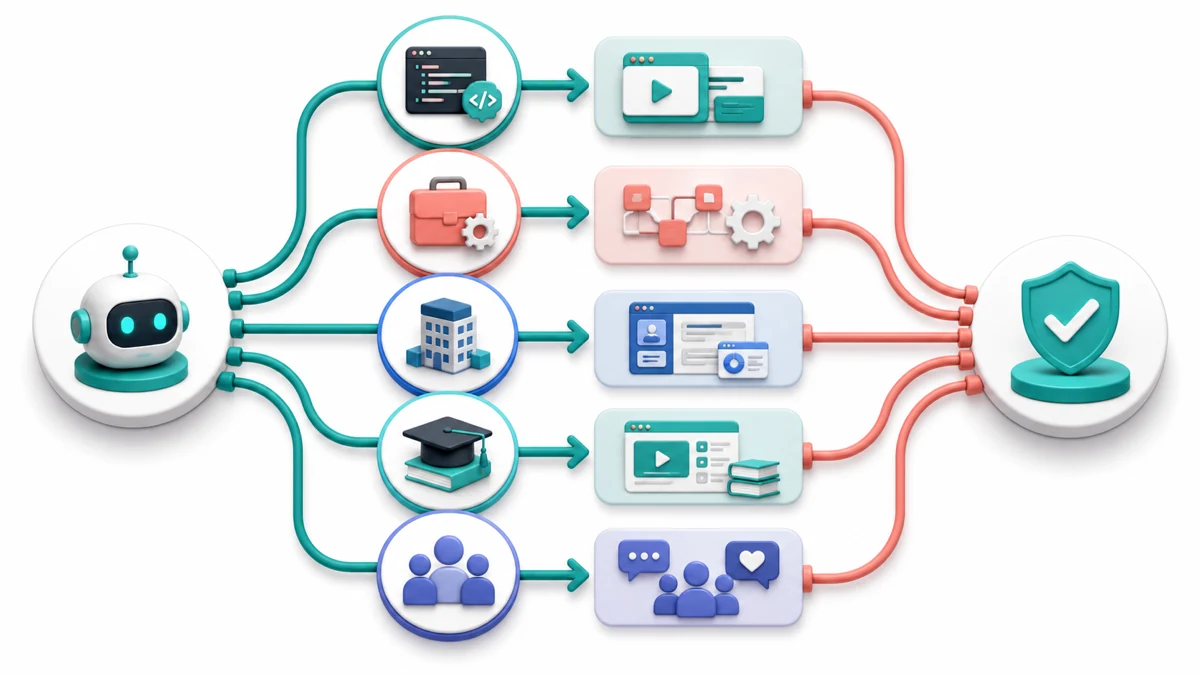
Disclose that you may earn commission before or near the recommendation. A footer-only policy is not enough when the reader encounters the link earlier.
Use approved brand materials without implying a partnership or certification. Dify restricts misleading use of its marks. Relevance AI applicants should check equivalent portal rules before editing logos, screenshots, or copy.
Avoid self-referrals, hidden cookie placement, spam, unauthorized coupons, and restricted brand bidding. Qualify every outcome claim and show limitations beside successful examples.
Alternatives worth comparing
The CodeRabbit affiliate program targets a narrower developer workflow around AI-assisted code review. The Lovable affiliate program is another AI-building offer to investigate when your audience is interested in creating software products.
These alternatives sharpen positioning. A code-review audience may not need a broad agent platform. The AI agent affiliate programs guide gives a wider category view, while the CodeRabbit affiliate review shows a focused developer offer.
| Reader's main job | First program to investigate | Key evidence to collect |
|---|---|---|
| Build and teach LLM applications | Dify | Portal rate, lead window, eligible subscriptions, and policy fit |
| Automate business workflows with agents | Relevance AI | Portal rate, recurring period, attribution, and payout rules |
| Improve pull-request review | CodeRabbit | Current qualifying action and developer audience fit |
| Build software through prompt-led workflows | Lovable | Current terms and fit for product-building education |
Treat every row as a research starting point. Verify current terms with the official program before publishing a numerical comparison.
Final verdict
The Dify vs Relevance AI affiliate program comparison gives Dify the edge for technical builder audiences and Relevance AI the edge for agencies, educators, and business automation communities. Public information does not establish a universal payout winner.
Apply to the better audience match first, capture the current portal terms, and run a small content test with clear disclosure. Judge the result on approved revenue and reader value, not on a private headline rate alone. You can browse FindAffiliates to compare more AI programs before deciding.
FAQ
Does Dify publish its affiliate commission rate?
Dify's public agreement says commission is described in the affiliate tool or program policies. This article therefore treats a universal public rate as unknown and does not repeat portal-only numbers.
Does Relevance AI pay recurring commission?
The official Relevance AI affiliate page says affiliates receive recurring commissions for referred customers who become paying users. It also says specific rates and terms are shown inside the portal.
Which program is better for technical creators?
Dify is generally the clearer editorial fit for creators teaching LLM application building and technical workflows. Relevance AI can fit technical content too, but its public affiliate page is more directly positioned toward business audiences, agencies, and educators.
Can I join both Dify and Relevance AI?
Potentially, if each program accepts you and its current terms permit your promotional methods. Keep the use cases separate, disclose both relationships, and avoid presenting the tools as identical.
What should I verify before promoting either program?
Verify rate, calculation basis, referral window, attribution model, commission period, eligible plans, validation time, payout threshold, payment method, reversals, traffic restrictions, disclosure rules, and termination treatment.