5 3D Printer Filament Affiliate Programs for Makers in 2026
Compare 5 3D printer filament affiliate programs by public commission, repeat-purchase fit, creator requirements, attribution windows, and terms to verify.
On this page (6)
Which Affiliate Programs Are Worth Comparing First?
3D printer filament affiliate programs can suit makers who publish material tests, spool comparisons, calibration guides, and project tutorials. A filament buyer may return for more colors or materials, but repeat orders only create commission when the program credits those purchases under its current terms.
Quick answer: Compare eSUN, 3D-Fuel, 3D Innovators, MarsWork, and Polar Filament by eligible products, public commission, attribution, creator requirements, and shipping region. eSUN publishes a 5% starting commission and a 30-day cookie through Awin. Other public programs show different rates and eligibility rules, while some do not publish an attribution window. Verify the current account terms before forecasting earnings.
| Program | Public commission detail | Attribution detail | A useful fit to investigate |
|---|---|---|---|
| eSUN | Starts from 5% | Awin lists 30 days | Material reviews across PLA, PETG, and resin |
| 3D-Fuel | 5% to 10% | Not stated on the affiliate page | Project tutorials using its filament range |
| 3D Innovators | 10% per qualifying order | 30 days | Makers, teachers, and print farms |
| MarsWork | Up to 6% on qualifying orders | Not stated on the affiliate page | Filament and reusable-spool demonstrations |
| Polar Filament | 5% per order | Not stated on the affiliate page | Creators who meet its stated product and channel criteria |
How we chose these filament programs
This list focuses on public programs connected to filament makers or material suppliers, rather than another general roundup of 3D printer brands. The 3D printer affiliate programs for makers guide compares printer and multi-category offers. This article narrows the decision to material-led content and gives extra attention to recurring supplies, product eligibility, and the creator's ability to test what they recommend.
Each percentage below comes from a public program or partner-network page checked for this article. A public rate is not a guarantee that every spool, market, code, or order qualifies. A missing cookie length, return rule, or payout threshold is marked as unknown instead of inferred.
5 3D printer filament affiliate programs to compare
1. eSUN for a broad materials catalog
The eSUN official store affiliate profile on Awin lists 3D filament, resin, and accessories, a starting commission of 5%, and a 30-day cookie. That makes it a useful option for publishers whose tutorials compare several material types or walk through a project from first spool to finished print.
The Awin profile is the public source for those details, but the advertiser account controls the actual offer a publisher can join. Confirm which storefront, product categories, countries, and order events qualify. If a tutorial links to both filament and resin, verify whether the rate and tracking rule are the same for each product type.
2. 3D-Fuel for material-led project content
The 3D-Fuel affiliate page says creators can earn 5% to 10% through a discount code or affiliate link. It describes a product range that includes dozens of PLA+ colors and Pro PCTG colors, which can support specific project and material comparisons rather than a generic printer recommendation.
The page does not state a cookie duration, payout threshold, or rate conditions for each material. Treat those fields as unknown until the program confirms them. Its help content also describes quantity discounts on spools, so a publisher should check whether a public sale or volume discount changes the eligible order value before estimating a commission.
3. 3D Innovators for maker and education channels
The 3D Innovators affiliate page publishes a 10% commission, a 30-day referral window, and monthly PayPal payments after an order passes its 30-day return period. The page also states a $25 minimum payout and says an unpaid balance rolls forward until it reaches the threshold.
The brand describes the program for makers, YouTubers, print farms, teachers, and people who use filament. Those are useful signals for a creator whose audience wants hands-on project evidence. Before applying, confirm how the program handles coupons, canceled or returned orders, eligible countries, and the timing of a qualified referral.
4. MarsWork for filament and reusable-spool demonstrations
The MarsWork affiliate program advertises up to 6% on qualifying orders and invites creators to recommend filaments and reusable spools. Its public page describes a referral and commission dashboard, but it does not state a cookie length, minimum payout, or full list of qualifying products.
This offer may fit a comparison that shows a material, a spool system, and the finished object in the same workflow. Do not treat “up to” as the default rate. Ask which rate applies to your audience and products, whether a discount code can be combined with a link, and when an order becomes payable.
5. Polar Filament for creators who already use the material
The Polar Filament affiliate page says the program pays 5% on orders and sets eligibility conditions. It lists an age minimum of 18, asks creators to have used the filament, and states a 1,000-follower requirement for several social channels. Its recommended TikTok Shop route requires a TikTok Shop account and a brand invite.
That product-use requirement can be a strong fit for honest reviews, print settings, and material comparisons. The page describes TikTok Shop as handling analytics and payments for that route. It also refers to a website program, so confirm the right application path, attribution window, and payout rules for your channel before publishing links.
5 checks before you join or publish
First, check the product. When comparing 3D printer filament affiliate programs, match the eligible materials, diameters, colors, bundles, and storefront to the topic on your page. Do not assume a printer-focused campaign automatically commissions every accessory or material. For broader retailer options, the FindAffiliates directory lists the Anycubic, Creality, Bambu Lab, and 3D Printing Canada programs. Those pages are discovery starting points; review their current program terms separately.
Second, compare the commission base rather than the headline percentage. Ask whether the rate applies to product subtotal, discounts, shipping, tax, or only selected items. If a reader buys several spools, the program's qualifying-order definition determines the credited amount.
Third, record the attribution window and return treatment. A 30-day cookie does not answer whether a code overrides a link, how an order is attributed across devices, or when a sale is locked. Save the written terms and date you checked them in an affiliate program research checklist.
Fourth, confirm the audience and region. Check shipping destinations, local stock, currency, and whether the program accepts your website or social channel. A technically available program may still be a poor fit if the audience cannot buy the material you tested.
Fifth, make the recommendation useful without relying on an earnings claim. Show the tested material, printer settings, failed prints, and the use case. Separate your hands-on result from the program's commission terms, and place the affiliate disclosure close to the recommendation.
Choose a program that matches the repeat-purchase question
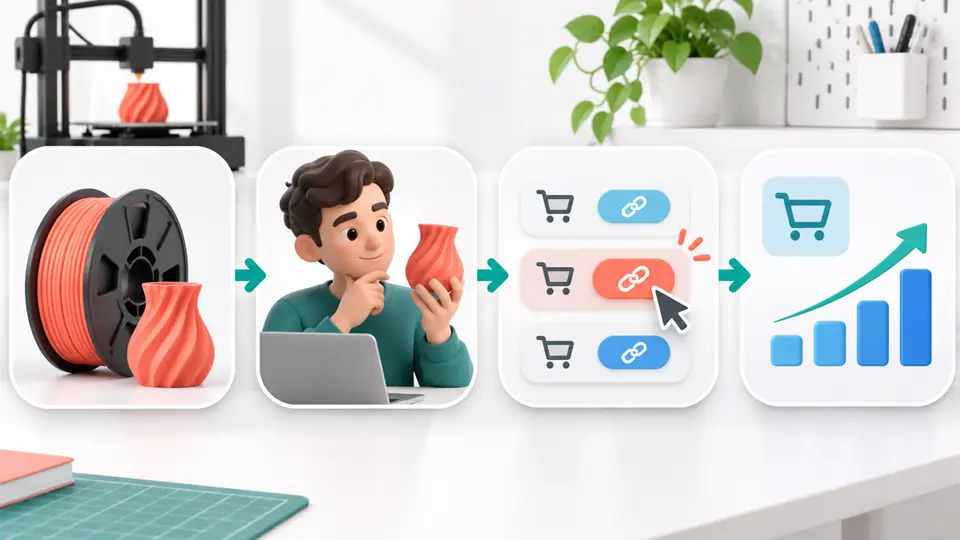
A material guide can answer a more specific problem than “which printer should I buy?” A reader may want to know whether a spool works in a multi-material feeder, how a material behaves after drying, or which color is available for a project. Those pages can make the product choice clearer, but no program's public information guarantees a repeat order or commission.
Build a simple forecast only after collecting your own traffic and conversion evidence. A useful model is qualified product clicks multiplied by the conversion rate, eligible order value, and confirmed commission rate. Keep return rates, discount codes, shipping exclusions, and payout timing visible. Use low, expected, and high scenarios rather than treating the public percentage as a revenue forecast.
For additional product selection context, read the guide to comparing affiliate programs. Then browse the FindAffiliates directory for programs that match the products your audience already uses. The best 3D printer filament affiliate programs for your channel are the ones with products your readers can buy, evidence you can gather, and written terms that support the recommendation.
| Decision | What to verify before publishing |
|---|---|
| Product fit | The specific filament and storefront are commissionable |
| Commission | Rate, base, exclusions, and code treatment are documented |
| Attribution | Cookie or referral rule and return window are known |
| Eligibility | Your region, channel, and application status qualify |
| Trust | The material was tested and the disclosure is clear |
FAQ
Which 3D printer filament affiliate program has the clearest public terms?
The eSUN Awin profile publishes a 5% starting commission and a 30-day cookie. 3D Innovators also publishes a 10% rate, a 30-day referral window, a $25 payout minimum, and monthly payments after the return period. Confirm the current offer in your account before relying on either summary.
Do filament affiliate programs pay on repeat orders?
They may credit qualifying repeat orders, but the public pages do not establish that every program credits every later purchase. Check the referral window, coupon rules, eligible products, and order status in the current agreement.
Can a small 3D printing channel join a filament program?
Requirements vary. Some programs invite creators broadly, while Polar Filament lists channel and product-use requirements for its social routes. Check the exact application path and channel rules before including a program in a content plan.
Should I compare filament programs by commission rate alone?
No. Compare the rate with eligible products, tracking, returns, shipping region, audience fit, and payout rules. A lower public rate may still be more useful when the products match your readers and the offer terms are clearer.