Ecommerce Affiliate Platform Contract Checklist, 9 Clauses
Review nine ecommerce affiliate platform contract clauses for fees, tracking, service scope, data, renewal, partner terms, and exit rights before signing.
On this page (6)
What Should You Compare Before Choosing?
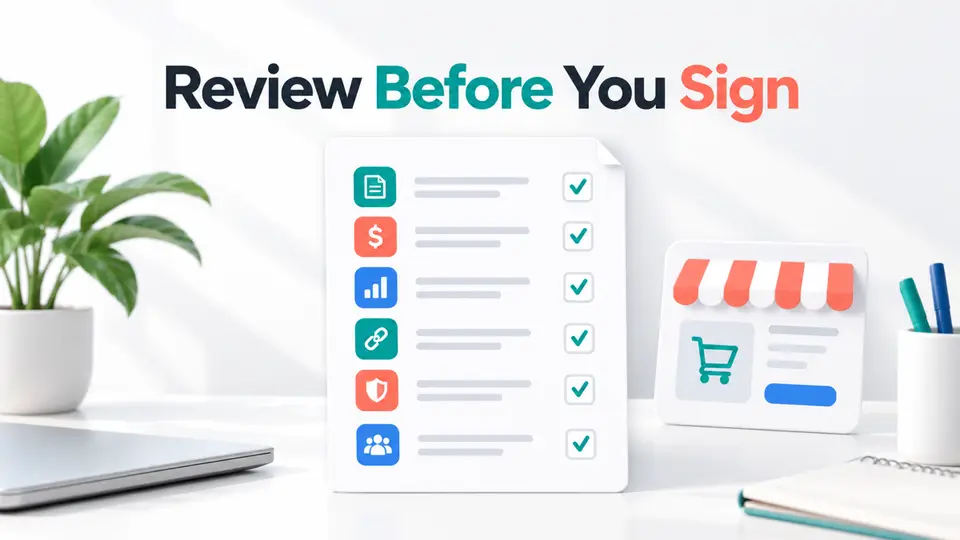
An ecommerce affiliate platform contract checklist helps merchants compare the clauses that control software fees, order tracking, partner rules, data access, renewal, and exit. Review the agreement, order form, service schedule, data terms, and partner-facing terms together before you sign.
This is a procurement worksheet for ecommerce programs, not legal advice. It focuses on store transactions, refunds, commissions, catalog changes, and partner operations. Get counsel to review the final contract and any clause that changes your legal rights.
Quick answer
Before choosing an affiliate platform, confirm what the vendor will deliver, how it bills, which events count, who can audit the records, how partner terms are administered, what data you can export, how renewals and price changes work, and what happens when the agreement ends. Use the ecommerce affiliate platform contract checklist to compare each answer beside the controlling clause and its operational owner.
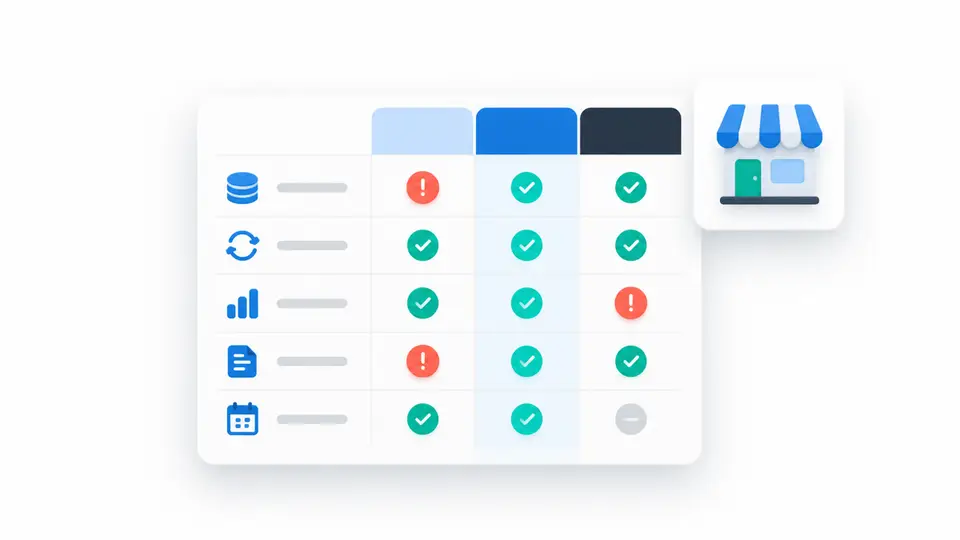
Nine clauses to review before signing
1. Scope, included services, and launch commitments
List the stores, domains, regions, programs, integrations, and channels covered by the order. Separate features included in the subscription from setup, migration, custom development, support, and optional services. If the contract relies on an implementation plan, attach the deliverables, owner, dependencies, and acceptance steps.
For an ecommerce merchant, confirm whether the scope covers web checkout, mobile purchases, marketplaces, subscriptions, returns, and multiple storefronts. A sales demo is not a contract promise unless the agreement or an attached schedule includes it.
2. Subscription fees, billing base, and extra charges
Record the fixed subscription, setup fees, minimum term, billing cycle, taxes, transaction or revenue share, payment processing, wire fees, premium support, and usage thresholds. Ask for the exact calculation behind any percentage-based charge, including which orders, currencies, refunds, and locked commissions enter the base.
Keep vendor fees separate from commissions paid to partners. Compare the clause with the pricing guide for impact.com and ecommerce brands, which separates subscription, partner payouts, volume fees, and services. The guide helps frame cost questions; your quote and contract control your account.
3. Tracking, attribution, and the qualifying order
Write down which event creates a referral, which system records it, and which timestamp controls attribution. Define click or code rules, coupon overrides, last-click behavior, cross-device matching, account-level referrals, and the treatment of orders that start on one domain and finish on another.
Specify how the platform handles checkout extensions, payment failures, duplicate webhooks, subscriptions, partial refunds, full cancellations, exchanges, and chargebacks. Request a test plan for the events that matter to your store, and make clear which records are authoritative if the platform and ecommerce system disagree.
4. Commission base, eligible products, and program terms
The contract should explain the commission model and its base. Check whether the percentage applies before or after discounts, tax, shipping, or returns. Define excluded products, bundles, gift cards, subscription renewals, new-customer rules, geographic restrictions, tiers, caps, and any partner-specific exceptions.
Keep the software subscription contract distinct from the terms you give affiliates. A platform may host your partner terms, but your own approved program rules should state what partners can promote and how eligible sales earn commission. Avoid relying on an informal dashboard label when the agreement needs a precise definition.
5. Validation, reversals, disputes, and audit rights
Set out how long an order stays pending, who can approve or decline it, what reason codes are available, and how refunds or fraud findings affect commissions. Make sure you can inspect the event, order, partner, adjustment, and payout records behind a disputed amount.
Agree on a process for correcting an attribution error or a duplicate conversion. Name the evidence each side retains, how long it is kept, and how a partner can raise an appeal. A generic right to correct records is less useful if the merchant cannot export the source event and adjustment history.
6. Data access, ownership, security, and export
Identify the data each party supplies, processes, and retains. Confirm your right to view and export partner records, referral codes, click and order events, commission states, adjustments, payout history, and audit logs. Specify the export format, frequency, delivery method, access controls, and any fee or support requirement.
Check the data processing terms and security responsibilities with counsel and your privacy lead. State how access is restricted, how incidents are reported, which subprocessors are used, and what happens to data after termination. A promise that data is available in a dashboard does not guarantee a portable export after your account closes.
7. Partner terms, promotion rules, and disclosures
Define which partner activities are allowed, including trademark bidding, paid search, coupons, loyalty sites, email, creator content, sub-affiliates, and product claims. Set a process for publishing changes, sending notices, recording acceptance when required, and preserving prior versions.
The Awin terms and conditions guide describes program terms as the agreement between an advertiser and its partners and calls out clear commission rules and decline reasons. Use it as an example of the topics a partner-facing terms document may cover, not as a substitute for your own agreement. For US endorsements, the FTC's endorsement guidance explains when a material connection should be disclosed clearly and conspicuously. Ask counsel to adapt rules to your markets and contract.
8. Renewal, price changes, uptime, and support
Record the initial term, auto-renewal date, notice deadline, permitted price changes, and the method used to deliver notices. Ask whether the vendor can change service terms during the term and how much lead time applies. Put an owner and calendar reminder beside each notice date.
Confirm support hours, response targets, escalation contacts, maintenance windows, incident notices, and any service level remedy. Ask what happens when tracking or reporting is unavailable during a promotion. If a service level is important to the business, make the metric and remedy contractual rather than relying on a sales presentation.
9. Termination, transition, and final partner balances
Check termination rights, cure periods, early exit charges, data export time, migration assistance, link continuity, and any deletion deadline. Decide who will operate redirects or preserve referral codes while links are updated. Identify how pending, approved, unpaid, reversed, and below-threshold commissions will be handled after the platform stops tracking.
The exit plan should name the export owner, final reconciliation date, partner communication path, and evidence you need to retain. The affiliate software migration checklist covers record mapping and cutover testing. Use it for migration execution, while this ecommerce affiliate platform contract checklist captures the terms to secure before the contract begins.
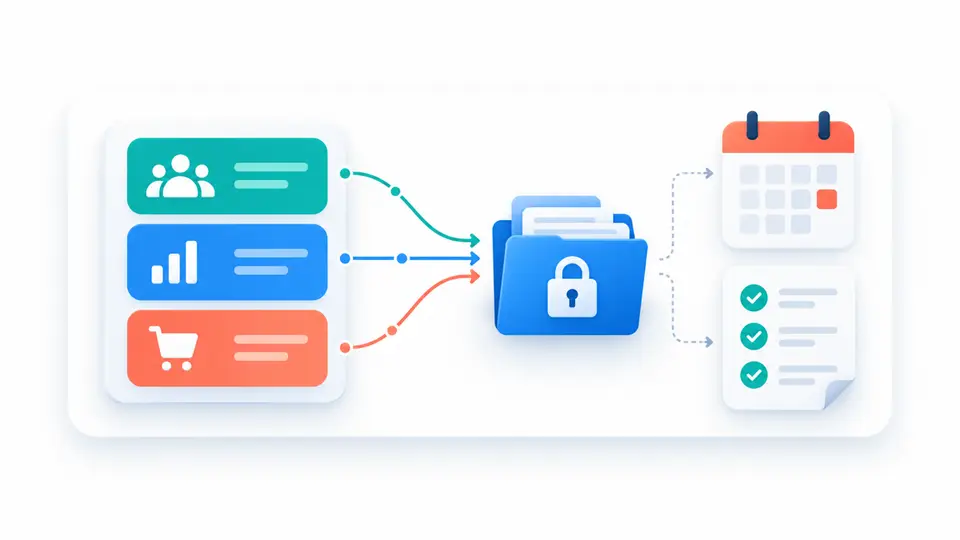
Compare vendors without confusing the contracts
Use the same clause list for each finalist, then mark each term as documented, negotiable, unavailable, or needs legal review. Keep the vendor answer, contract section, and operational test in one row. A verbal answer can identify a question, but it should not replace a written term that the business needs to rely on.
For a platform shortlist, FindAffiliates has publisher program profiles for FirstPromoter, Rewardful, and Tapfiliate. Those pages describe affiliate offers for publishers. They are discovery listings, not the merchant service agreements, pricing schedules, or legal commitments for your ecommerce store. Ask each vendor for the agreement that applies to your account.
Source confidence and limitations
Contract language, pricing, consumer rules, and data obligations vary by vendor, account, and jurisdiction. This ecommerce affiliate platform contract checklist is a question set for procurement, not a representation that every vendor uses these clauses or that one clause is legally sufficient. Awin's current guidance supports the limited point that advertiser terms govern the partner relationship and should clearly state commission rules; the FTC source covers US endorsement disclosures.
Do not assume public prices or a partner-facing affiliate offer disclose a merchant's platform fees or service terms. Confirm the current proposal, incorporated documents, order form, data terms, service commitments, and exit process in writing. Browse the FindAffiliates directory to research related programs, then have the actual merchant contract reviewed by qualified counsel.
FAQ
What should an ecommerce affiliate platform contract checklist include?
Check service scope, fees, tracking events, commission rules, validation, data access, partner terms, renewal, support, termination, and final balance handling. Attach an implementation plan when launch work is part of the purchase.
Are partner commissions part of the platform subscription fee?
Usually they should be modeled as a separate program cost unless the contract clearly bundles them. Confirm how software fees, partner payouts, usage fees, and optional services are billed.
Can a platform contract guarantee affiliate tracking accuracy?
Review the defined events, exclusions, support process, audit records, and remedies. Test the checkout, refund, cancellation, and subscription flows that matter to your store before relying on the tracking setup.
What happens to affiliate commissions when a merchant changes platforms?
The agreement should say how pending and approved balances, payout records, referral codes, and partner access are handled. Keep the old records until the final reconciliation and any required partner payments are complete.