12 Affiliate Program Scam Red Flags to Check in 2026
Learn 12 affiliate program scam red flags, verify payout and company claims, protect account access, and know when to reject a suspicious offer.

Who Should Promote This Affiliate Program?
Affiliate program scam red flags often appear before you share a link, publish a review, or give anyone account access. A suspicious offer can expose private data, damage audience trust, or leave commissions trapped behind unclear rules.
The quick answer is to verify the company, product, written terms, payout path, and support contact before joining. Walk away when the offer relies on guaranteed income, pressure, recruitment-first rewards, invasive access requests, or payment demands that do not match a normal affiliate relationship.
This guide gives beginners 12 checks for separating a legitimate but imperfect program from an offer that is too risky to promote.
Quick Answer
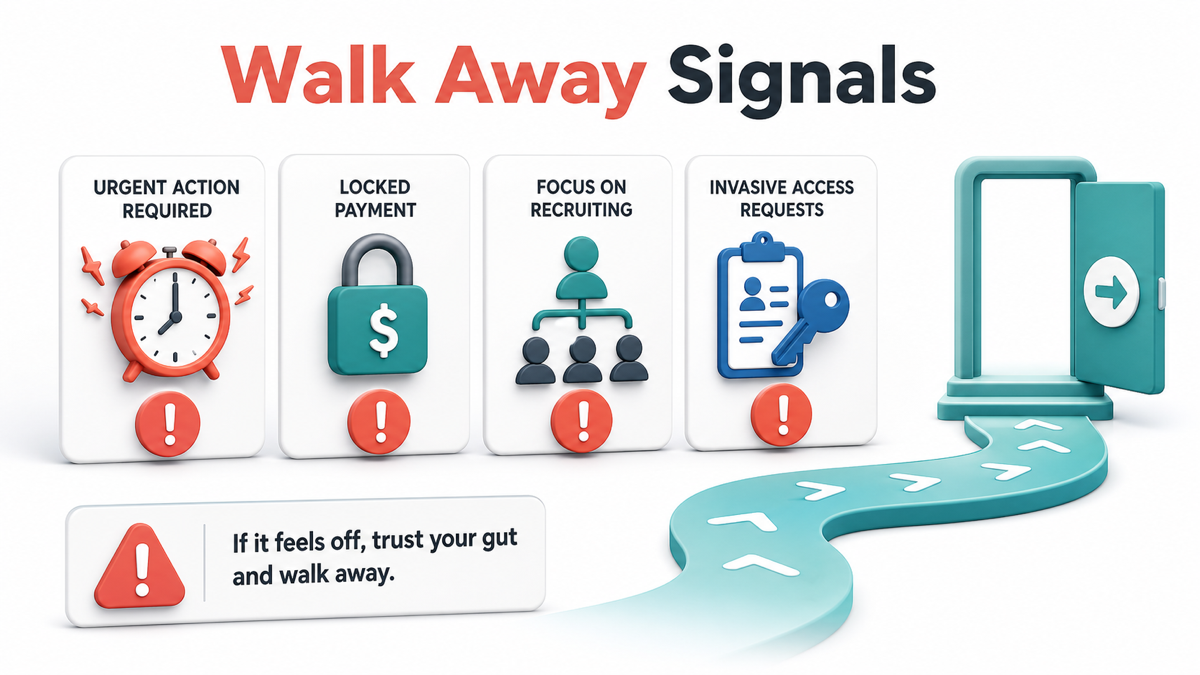
The strongest affiliate program scam red flags are guaranteed earnings, a fee to unlock commissions, rewards driven mainly by recruiting other participants, no verifiable legal business, missing written terms, pressure to act immediately, and requests for passwords or remote access. One weak signal may deserve a question. Several connected signals should stop the application.
Use a proof-first test. A legitimate program should let you identify what customers buy, who operates the program, how a qualified referral is tracked, when commissions become payable, and where disputes go. If the promoter cannot answer those questions in writing, do not risk your audience or account.
12 Affiliate Program Scam Red Flags
1. The offer guarantees income
No affiliate program can guarantee what you will earn. Results depend on traffic quality, buyer intent, conversion, refunds, eligibility, attribution, and program rules.
The Federal Trade Commission warns that business offers using guaranteed income, a proven system, or promises that anyone can earn quickly may be scams. Read the FTC guide to business offer and coaching scams before paying for access to an income opportunity.
2. You must pay to unlock commissions
A product subscription can be a legitimate eligibility requirement when promoters are expected to use the software. That is different from paying a recruitment fee, buying mandatory training, or purchasing a vague starter package mainly to gain the right to earn.
Ask what you receive, whether customers buy the same product, and whether the payment is refundable.
3. Recruiting affiliates matters more than customer sales
A normal affiliate program rewards a defined customer action, such as a paid subscription or completed purchase. Be cautious when the main pitch is recruiting more people who also pay to join.
The economics should begin with a real product sold to real customers. Recruitment can support a valid two-tier program, but it should not replace customer value or become the only practical path to earnings.
4. You cannot verify the legal business
Check the company name, domain, address, support email, and people responsible for the program. Look for consistency across the website, terms, invoices, and application.
A new company is not automatically fraudulent. The problem is a promoter who hides ownership, copies another brand, or refuses to name a legal entity for contracts and payments.
5. The product is vague or has no buyer outside the opportunity
Ask what the end customer receives and why someone who is not an affiliate would buy it. A real product should solve a clear problem at a defensible price.
Avoid offers where the product is only a thin excuse for selling membership in the earning system. If every buyer is expected to become a promoter, demand evidence of genuine customer demand before proceeding.
6. Written commission terms are missing
You should be able to find the qualifying event, commission basis, attribution window, reversal rules, payout schedule, threshold, payment method, prohibited traffic, and termination terms.
Compare that standard with documented programs such as the Shopify affiliate program or the Kinsta affiliate program. Terms can change, but affiliates need a source to review and date.
7. The promoter pressures you to join now
Urgency can be normal for a campaign deadline. It is not normal when someone discourages research, says the opportunity disappears if you read the agreement, or pushes you to pay during a call.
Pause the conversation. Ask for the offer and terms in writing. A legitimate manager should accept basic due diligence.
8. The application asks for sensitive account access
Never send a password, private key, authentication code, banking login, browser session, or remote desktop access to join an affiliate program. Use official account connections and permission screens only when the business purpose is clear.
Payment onboarding may require tax and identity information through a recognized provider. Confirm the destination domain and data policy before uploading documents.
9. Payment methods are hard to reverse or trace
Crypto, gift cards, cash apps, and wire transfers can be legitimate in limited contexts, but they are common scam tools when used to collect joining fees. Be especially cautious when the payee does not match the company.
Do not let a promised commission justify an irreversible payment. Verify the contract, recipient, refund path, and invoice first.
10. Proof relies on screenshots and borrowed endorsements
Income screenshots, celebrity photos, private chat testimonials, and dashboard images can be fabricated or stripped of context. Search for the original source and look for independent evidence.
The FTC's Endorsement Guides questions and answers explain that endorsements must be honest and material connections should be clear. A program that teaches affiliates to hide compensation or copy claims creates both trust and compliance risk.
11. There is no support or dispute path
Before promotion, send one specific question about attribution, payout, or traffic rules. Record whether the answer is direct, written, and consistent with the agreement.
Established offers such as the Semrush affiliate program and Kit affiliate program give affiliates a recognizable program path. A suspicious offer may route every question back to the recruiter.
12. The agreement can erase earnings without a defined process
Programs need fraud, refund, and policy clauses. The red flag is unlimited discretion with no qualifying event, status history, review window, or appeal path.
Look for how pending commissions become approved, what creates a reversal, what happens at termination, and whether material changes receive notice. Unknown rules turn forecasted income into guesswork.
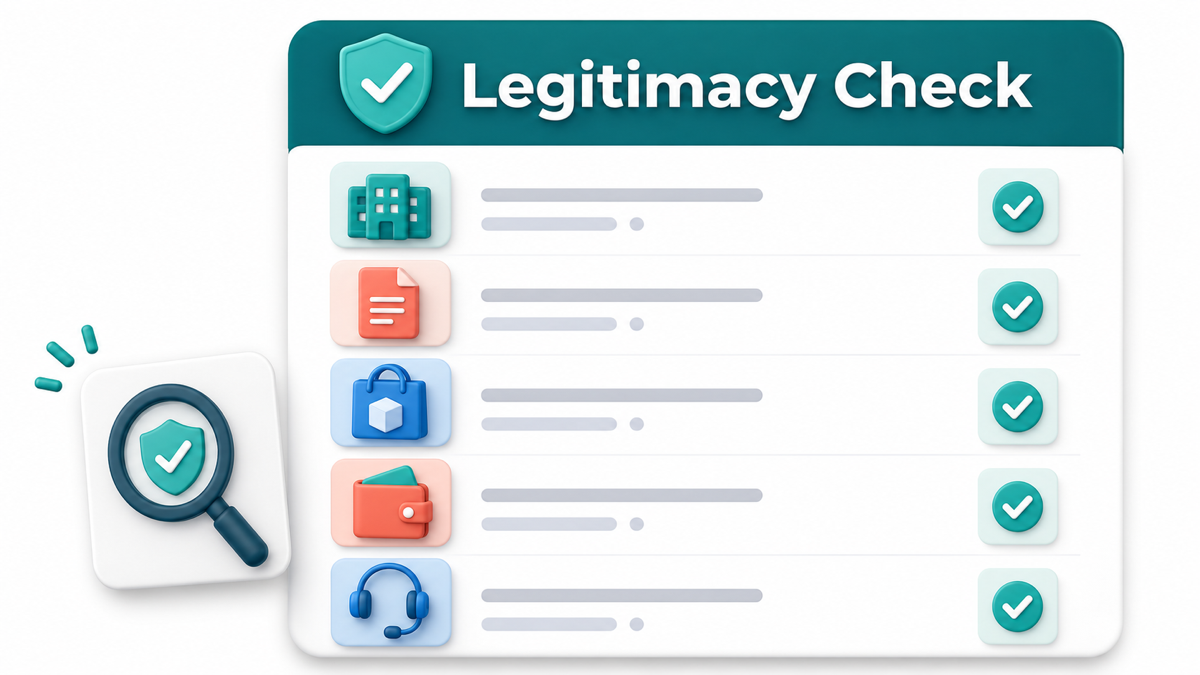
A 10 Minute Affiliate Program Legitimacy Check
Use this table before you apply, pay, or connect an account.
| Check | Evidence to find | Stop signal |
|---|---|---|
| Company | Legal name, working domain, support contact | Identity changes or cannot be verified |
| Product | Clear customer, price, and delivered value | Product exists mainly to recruit promoters |
| Terms | Commission, attribution, reversal, payout, restrictions | No written agreement or vague earning event |
| Payment | Named provider, threshold, schedule, recipient | Joining fee sent by gift card, crypto, or unknown payee |
| Access | Official application and limited permissions | Password, authentication code, or remote access request |
| Claims | Sourceable product and income statements | Guaranteed earnings or copied testimonials |
| Support | Written answer and dispute route | Recruiter is the only available contact |
Save the evidence date and source. The affiliate program research checklist can hold the detailed payout, cookie, traffic, and source fields after an offer passes this first safety screen.
Risk Signals That Are Not Proof of a Scam
Do not label a business fraudulent because it is new, small, in-house, or paying a high percentage. Software can support margins that would be unrealistic for physical goods.
Treat uncertainty as a reason to ask for evidence. The guide to what makes an affiliate program worth promoting helps assess fit and value after legitimacy. The guide to comparing affiliate programs helps rank several offers that pass the screen.
When discussing risk, state what you could not verify and which source was missing. Do not turn suspicion into an unsupported accusation.
What to Do When an Offer Looks Suspicious
Stop sending money, content, or information. Change credentials if you shared them, revoke connected-app access, and contact your bank or payment provider if a transfer may be fraudulent.
Preserve messages, URLs, invoices, names, dates, and payment instructions. Report impersonation to the real company and suspected business scams to the FTC.
Tell your audience only what you can support. If you already published the offer, remove or pause the link, add a correction when needed, and direct readers to a verified alternative.
Key Takeaways for 12 Affiliate Program Scam Red Flags to Check in 2026
Affiliate program scam red flags are easiest to act on before your reputation or data is at risk. Verify the company, customer product, written terms, payout path, permissions, and support route. Reject guaranteed income, recruitment-first economics, pressure, and invasive access requests.
Browse FindAffiliates for program pages you can use as a starting point, then confirm the current official terms before applying or publishing a claim.
FAQ
How can I tell if an affiliate program is fake?
Check whether the company and product are real, the agreement defines a qualifying customer action, the payout process is written, and support can answer a specific question. Guaranteed income, joining fees, hidden ownership, and password requests are strong warning signs.
Is it normal to pay to join an affiliate program?
Most affiliate programs do not charge a joining fee. Some require active product use or a paid customer plan, but that should provide genuine customer value and be disclosed before application. Paying only for the right to recruit or earn is a serious risk.
Are two-tier affiliate programs scams?
Not automatically. A two-tier program can reward an affiliate for direct customer sales and provide a smaller override on customer sales produced by recruited affiliates. The risk rises when rewards depend mainly on paid recruitment instead of real customer purchases.
What information should an affiliate program never request?
Do not provide passwords, authentication codes, private keys, browser sessions, banking logins, or remote device access. Tax and identity data should go only to an official, verified onboarding provider with a clear business purpose.
What are the most common affiliate program scam red flags for beginners?
The most common signals are guaranteed earnings, pressure to act immediately, a fee to unlock commissions, no written payout terms, recruitment-first rewards, unverifiable ownership, and requests for sensitive access. Several related signals should end the application.