Sub-Affiliate Fraud Prevention Rules for SaaS Teams
Use these sub-affiliate fraud prevention rules to control recruitment, sales attribution, duplicate accounts, disclosures, reviews, and payout holds in SaaS.
On this page (8)

What Should You Compare Before Choosing?
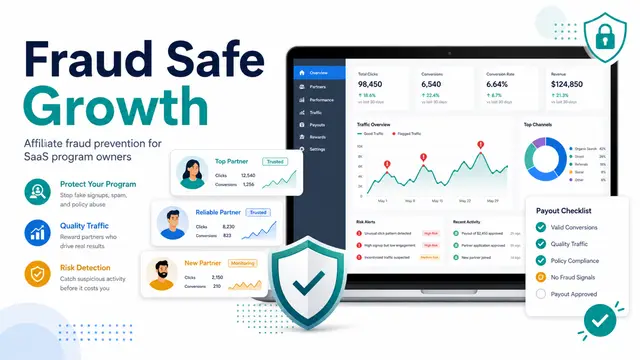
Sub-affiliate fraud prevention rules define what a parent affiliate may recruit, how child partners must identify themselves, which sales can create an override, and when either reward can be held or reversed. SaaS teams need these controls before enabling a second tier because one invalid conversion can otherwise create two commission entries and two dispute paths.
The safest rule is performance-first: recruitment alone earns nothing. A parent reward exists only after an approved child affiliate drives a valid customer action that passes attribution, payment, refund, identity, and policy checks. Parent and child records must remain linked to the same conversion and review evidence.
Quick answer: Approve every sub-affiliate, prohibit paid recruitment and self-dealing, require a real eligible sale, preserve parent-child history, screen duplicate identities and payment methods, delay both commission lines through the risk window, and give partners a documented review and appeal process.
| Control | Parent affiliate | Sub-affiliate | Program owner |
|---|---|---|---|
| Approval | May invite, cannot approve | Must apply accurately | Makes and records decision |
| Promotion | Must train and monitor network | Uses approved channels | Defines and enforces rules |
| Conversion | Cannot create reward by recruitment | Must drive eligible action | Validates sale and attribution |
| Payout | Receives override only after approval | Receives direct reward after approval | Holds or reverses linked lines |
| Disclosure | Explains commercial relationship | Discloses recommendation | Provides clear policy and training |
Why a Sub-Affiliate Layer Changes Risk
A direct program has one partner relationship attached to a conversion. A two-tier program adds recruitment history, parent eligibility, child eligibility, an override calculation, and responsibility for downstream promotion. The added records create legitimate growth opportunities, but they also create more ways to hide traffic origin or duplicate credit.
The parent may never see the child affiliate's full customer data, and the program should not expose it unnecessarily. Still, the program needs stable IDs for the parent, child, click or referral, customer, conversion, invoice, direct commission, override commission, and payout. Without those links, finance cannot explain why two rewards exist.
This article narrows the wider fraud topic to parent-child controls. The affiliate fraud prevention guide covers direct-program screening, traffic, holds, and investigations. The rules below add genealogy, recruitment, and linked-commission safeguards.
Source confidence is highest for platform behavior stated in current official documentation. Policy thresholds, investigation rights, and legal requirements still need written program rules and qualified review for the markets where the SaaS company operates.
Eight Sub-Affiliate Fraud Prevention Rules
1. Pay for validated outcomes, not recruitment
Do not pay a parent merely for adding a child affiliate. Require a verified customer sale, subscription payment, or other written qualifying event. This keeps the economic basis tied to customer value and removes an obvious incentive to create fake partner accounts.
Tapfiliate's current multi-level documentation describes a relative structure in which the affiliate driving the conversion earns the standard reward and eligible uplines can earn configured higher-level rewards. It also states that recruitment alone is not rewarded.
2. Approve every child affiliate independently
A trusted parent can recommend applicants, but should not bypass screening. Collect the child's legal or business identity, website and channels, audience, countries, planned traffic sources, tax or payout requirements, and acceptance of the current terms.
Record who approved the account, the evidence reviewed, and the effective date. Re-screen when ownership, domain, traffic source, or payout details change materially.
3. Lock parent-child relationships with history
Store the parent ID, child ID, relationship start time, status, end time, change reason, and approving user. Do not allow an affiliate to change parents retroactively after sales appear. If reassignment is allowed, apply it prospectively from a documented effective time.
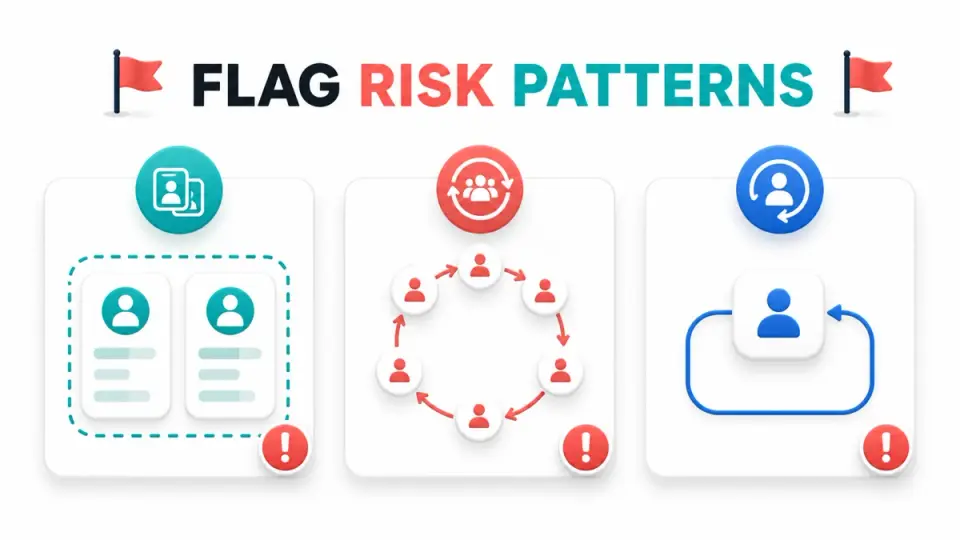
Prevent loops in which two accounts become each other's parent. Decide whether a child can have one parent or several, and enforce that rule in both software and agreement.
4. Prohibit self-referrals and shared control
Define self-referral broadly enough to include an affiliate's own company, household, controlled account, or coordinated duplicate identity when appropriate for the program. Match more than email address. Review billing names, payment instruments, tax details, device and IP patterns, domains, company ownership, and account behavior under a privacy-approved process.
A shared IP is a signal, not automatic proof. Agencies, coworking spaces, households, and corporate networks can create legitimate overlap. Combine signals and document the decision.
5. Preserve the original traffic source
Require the child affiliate to use an assigned link, code, or approved server-side identifier. Capture referral and conversion timestamps, landing page, channel or sub-ID, campaign, and available referrer evidence. Do not let the parent replace the child's source with a generic network label.
Tapfiliate's fraud monitoring guidance describes duplicate-ID checks, attribute comparison, self-referral detection, blacklisting, and review of click and conversion patterns. It also cautions that no system guarantees complete prevention.
6. Apply linked holds and reversals
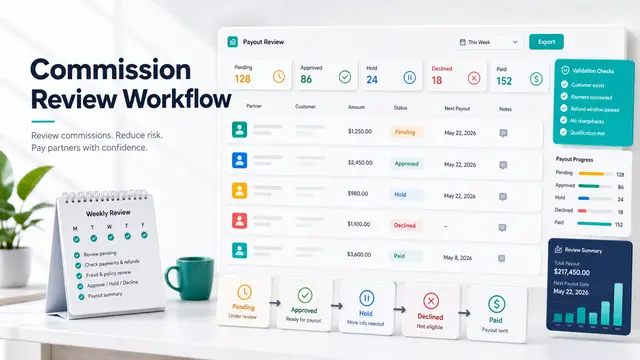
The direct commission and parent override should share a validation dependency. If the customer payment is refunded, charged back, duplicated, or ruled ineligible, both reward lines should be reviewed together. Do not pay the override while the underlying direct commission remains disputed.
State the pending period, release criteria, reversal window, and treatment of already-paid amounts. If an override is capped or time-limited, store that rule with the calculation rather than editing a total manually.
7. Require disclosures and approved promotion
Both parent and child affiliates need clear promotion rules for claims, coupons, paid search, brand bidding, email, incentives, social posts, and disclosure. A parent should not distribute vague instructions that conflict with the program agreement.
Require a clear disclosure near each commercial recommendation, provide examples for every approved channel, and monitor whether partners follow the policy. Programs should obtain qualified advice for the advertising and disclosure rules that apply in their markets.
8. Use a documented investigation and appeal path
Define who can open a case, what evidence is preserved, when payouts can be held, how partners are notified, who decides, and how an appeal works. Keep investigation notes separate from general account comments and restrict access to people who need it.
Use neutral reason codes such as duplicate customer, self-referral signal, prohibited channel, unverified identity, refunded payment, altered tracking, or insufficient evidence. A reason code should start the explanation, not replace it.
Configure the Platform to Enforce the Policy
When comparing Tapfiliate, FirstPromoter, Rewardful, and PartnerStack, verify the exact multi-tier behavior rather than assuming every product uses the same model.
Ask these questions:
- Can the platform require both parent and child approval?
- Is the relationship relative or fixed, and can changes apply retroactively?
- Can one conversion create a direct commission plus a separate override with linked IDs?
- Do refunds and voids reverse both lines automatically?
- Can the program cap levels, duration, reward count, or total override?
- Which fraud signals, raw events, exports, and audit logs are available?
- Can finance hold one payout without erasing the evidence?
The two-tier affiliate programs guide explains the broader model. Use it with a platform-specific acceptance test before launch.
Monitor Signals Without Automatic Accusations
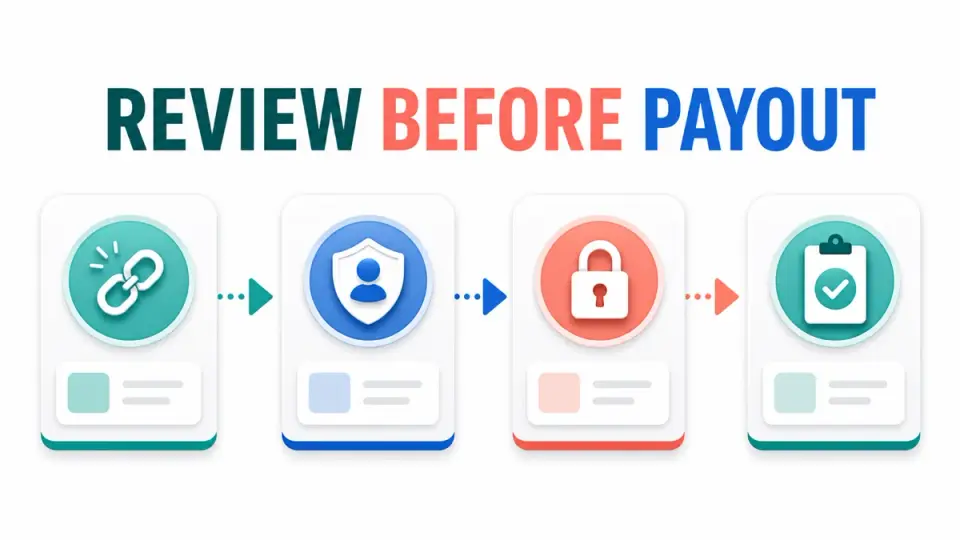
Review unusual patterns such as many children sharing payout details, rapid account creation, identical content or domains, impossible click-to-conversion timing, repeated customer identifiers, concentrated IP or device signals, high refund rates, brand-search traffic that violates policy, and parent overrides with no stable child activity.
Each signal needs context and a documented threshold owned by the business. Do not publish universal fraud percentages or treat one technical match as conclusive. Use a queue with case ID, linked accounts, signal, evidence source, owner, next action, deadline, decision, and appeal status.
Compare parent and child behavior over time. A parent with many inactive recruits may simply have weak enablement. A sudden cluster of new children, identical conversions, and shared payout details needs a different review. The policy should distinguish low performance from manipulation.
Run a Controlled Launch
Start with one tier, a small approved parent group, a fixed pilot period, and a documented maximum liability. Apply these sub-affiliate fraud prevention rules while testing valid sales, refunds, parent changes, child suspension, duplicate IDs, payout holds, and appeals before scaling.
Reconcile the first payout cycle manually. Trace every override to the child commission, customer payment, program rule, and approval status. Confirm that removing or suspending a child does not silently delete historical evidence.
Review the rules with partner operations, finance, security, privacy, and qualified counsel where needed. The right control depends on the program's markets, data, payment methods, and contract.
Key Takeaways for Sub-Affiliate Fraud Prevention Rules for SaaS Teams
Sub-affiliate fraud prevention rules should make the second tier explainable from recruitment through settlement. Require independent approval, pay only for valid outcomes, lock relationship history, preserve traffic evidence, review duplicate-control signals, and connect both commission lines to one decision.
Use FindAffiliates to compare program software, then prove the selected configuration with controlled transactions. A scalable network is one that finance can reconcile and legitimate partners can understand.
FAQ
Should a parent affiliate be paid for recruiting a child?
The safer SaaS structure pays an override only when an approved child drives a valid qualifying action. Recruitment by itself should not create commission.
Can a shared IP prove sub-affiliate fraud?
No. Shared networks can be legitimate. Treat an IP match as one signal and review it with identity, payment, device, customer, timing, and behavioral evidence.
What happens when a child's sale is refunded?
Review both the child's direct commission and the linked parent override. The written rules should explain pending periods, reversals, already-paid amounts, and appeal rights.
How many sub-affiliate tiers should a SaaS program use?
Start with one additional tier unless there is a clear business reason and the platform, finance process, and agreement can support more. Every tier increases calculation, monitoring, and dispute complexity.