Internxt vs pCloud Affiliate Program Compared in 2026
Compare the Internxt vs pCloud affiliate program by annual, lifetime, and recurring commissions, payout rules, tracking uncertainty, and storage audience fit.
Who Should Promote This Affiliate Program?
The Internxt vs pCloud affiliate program decision depends on which storage purchase your readers want to make. An annual subscription, a lifetime purchase, and a continuing subscription create different earning paths, even when both brands appear in the same comparison.
Quick answer: Evaluate Internxt for privacy-first storage content and its annual-versus-lifetime commission split. Evaluate pCloud when lifetime purchases or documented subscription recurrence fit your audience. Confirm attribution before forecasting results because pCloud's public page gives conflicting tracking windows.
Official Terms at a Glance
This Internxt vs pCloud affiliate program snapshot uses provider information checked on October 8, 2026. Headline maximums are conditional marketing ceilings, not typical earnings.
| Factor | Internxt | pCloud |
|---|---|---|
| Annual-plan commission | 30% | 20% on subscription payments |
| Lifetime-plan commission | 15% | 20% of the one-time payment |
| Renewal eligibility | Not specified publicly | Recurring subscription commission published |
| Cookie evidence | 30 days | FAQ says 45 days; feature panel says up to 90 |
| Payment timing | End of month | Monthly, normally around the 16th, after a minimum 45-day referral delay |
| Minimum payout | Not specified publicly | $10 PayPal; $500 bank transfer |
Internxt's official affiliate page supplies its plan rates and payment statements. The pCloud affiliate page supplies its commission models and the conflicting cookie claims. Its help center corroborates the shorter window and payment conditions, but account-level confirmation is still needed.
Both official pages advertise up to $300 per sale. Older directory summaries show different headline terms. Those older values should not replace the provider evidence above.
How Each Affiliate Offer Works
Internxt for private storage audiences
Internxt invites content producers to apply, then promote with tracking links. The Internxt program listing introduces its open-source and zero-knowledge storage positioning. That is a relevant starting point for readers comparing private alternatives to mainstream drives.
A useful publisher angle is a real file workflow: organizing personal documents, moving an archive, or choosing a storage commitment. Describe what you tested and what remains untested. A provider's privacy positioning is not proof that every device, password, or recovery process is secure.
The public offer leaves some commercial details unstated. Get written answers about eligible revenue, refunds, payment minimums, and renewal credit before creating an earnings forecast. An annual plan is a customer billing choice; it does not automatically establish annual affiliate renewal payments.
pCloud for lifetime and subscription comparisons
The pCloud program listing fits media archives, family files, and lifetime-storage comparisons. It can also support readers who prefer subscriptions and want to avoid a larger upfront commitment.
pCloud lets partners choose a commission model per referred customer, then fixes that selection for the customer. Treat configuration as part of your evaluation, rather than assuming the dashboard will optimize it later.
Its help center describes ongoing monthly commissions while the subscription remains active. Retention therefore matters to the earning path. Cancellations, refunds, and unsuccessful attribution can reduce results, so recurring does not mean guaranteed.
Compare the Purchase Base Before the Percentage
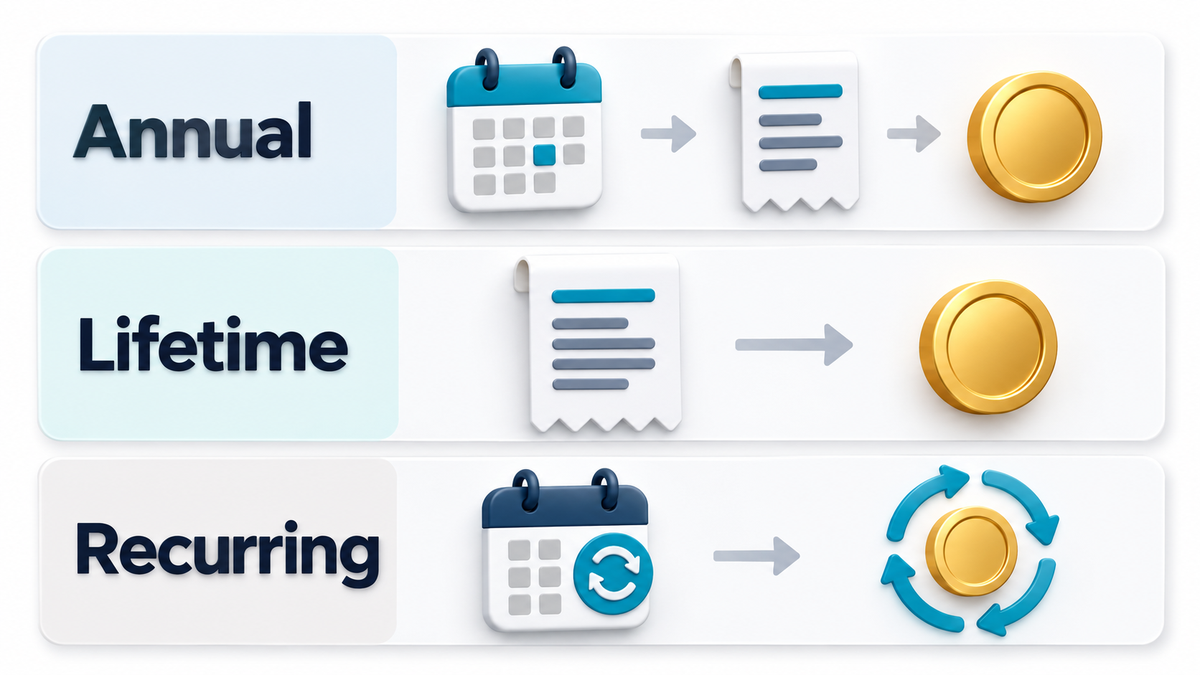
The Internxt vs pCloud affiliate program comparison gets more useful when you separate a percentage from the amount it applies to. A higher rate on a smaller eligible purchase can produce less commission than a lower rate on a larger purchase.
Here is simple arithmetic using hypothetical eligible amounts, not current plan prices or a revenue forecast:
| Hypothetical eligible purchase | Calculation | Gross commission before adjustments |
|---|---|---|
| $100 at 30% | 100 multiplied by 0.30 | $30 |
| $300 at 15% | 300 multiplied by 0.15 | $45 |
| $300 at 20% | 300 multiplied by 0.20 | $60 |
These examples isolate purchase size and rate. They do not assume that taxes, discounts, upgrades, fees, or every billed dollar qualify. Use the accepted agreement's revenue definition for a real calculation.
For recurring offers, list each eligible payment separately. Then subtract cancellations and reversals and account for payment timing. Comparing a single lifetime purchase with an unlimited stream of hypothetical renewals would overstate the recurring offer.
A practical worksheet needs four inputs: eligible purchase amount, applicable rate, number of approved payments, and adjustments. Keep projected commission separate from cash received. That distinction makes the comparison useful even before you have enough referral data to estimate conversion.
Resolve Tracking and Payment Uncertainty
Do not turn a public conflict into a promise
pCloud's feature panel and FAQ disagree about the tracking period. Ask the program which rule applies to your approved account and whether the event is a click, registration, or paid purchase. Retain the dated answer with your campaign records.
Do not combine one page's window with another page's attribution model to create a rule neither source states. A cookie duration also does not settle competing referrals, different devices, consent choices, or an existing customer's eligibility.
For either provider, ask what happens when the reader registers through your link but buys later. That is a concrete scenario a manager can answer. It is more useful than asking whether tracking is simply reliable.
A monthly schedule is not immediate payment
A sale can be recorded, pending, approved, and payable at different times. The published pCloud delay and minimum balance make that distinction visible. Internxt's month-end statement does not explain every approval or reversal condition.
Build a forecast around approved commissions and the next applicable payment cycle. Avoid spending projected revenue as though a click, signup, or pending order were settled cash.

Selection Criteria for Your Storage Audience
Use the Internxt vs pCloud affiliate program question to choose an editorial direction, then test the product against the reader's actual needs. Our criteria are purchase-type fit, current term evidence, payment visibility, and the publisher's ability to demonstrate a useful workflow. This is an affiliate decision framework, not a storage performance benchmark.
For privacy-led readers, investigate the security model, recovery process, sharing controls, and client support. For archive-led readers, investigate upload practicality, restore access, capacity, and ongoing cost. Do not claim a speed winner without a repeatable test on comparable files and connections.
For lifetime buyers, explain the current product terms and what the commitment includes. Avoid suggesting that a one-time payment removes every future product limitation or business risk. Storage recommendations should still encourage readers to maintain an independent recovery copy of important files.
For subscription buyers, show the renewal cost and cancellation path. A recurring affiliate payment should follow a useful recommendation, not become the reason to steer a reader away from a better purchase type.
If neither offer matches a reader's need for secure client collaboration, the Sync program listing provides another research starting point. An alternative belongs only when you explain the job it solves.
For wider context, read the Internxt versus NordLocker comparison or the pCloud versus Sync comparison. Each addresses a different product pair.
A Practical Decision Table Before Applying
Use this final table to shortlist an offer, then confirm the missing account terms. It translates the comparison into actions without assuming either program converts better.
| Your publishing situation | First offer to investigate | Evidence to obtain next |
|---|---|---|
| Private-storage and open-source tutorials | Internxt | Product test, eligible purchase types, refund treatment |
| Lifetime-storage buying guides | Both | Current checkout value, commission base, product commitments |
| Subscription-focused storage content | pCloud | Accepted recurring model, cancellation and reversal rules |
| Tight payment-planning needs | Compare both account agreements | Approval lag, minimum balance, payable date and method |
| Long research-to-purchase journeys | Neither gets an automatic win | Written attribution clarification and registration scenario |
Before applying, document your channel, audience, sample article, and expected promotion method. Check whether each planned placement is allowed. Do not assume that permission for a blog review extends to paid search, coupon promotion, or every email campaign.
After approval, label links by placement and keep the original tracking URL. Review the landing page and disclosure before publishing, then compare clicks, accepted referrals, approved commission, and paid balances separately. The guide to comparing affiliate programs explains how to organize that evidence across more offers.
Key Takeaways for Internxt vs pCloud Affiliate Program Compared in 2026
The Internxt vs pCloud affiliate program choice should follow your audience's storage job and purchase preference. Use current provider terms, resolve conflicting tracking evidence, and compare eligible payments rather than headline percentages alone.
Shortlist the offer you can explain and demonstrate honestly. Browse the FindAffiliates directory to compare storage programs before committing a content series to one provider.
FAQ
Which program pays more on lifetime storage purchases?
The published rates are 15% for Internxt and 20% for pCloud. The actual eligible purchase amount and adjustments still determine the commission, so the percentage alone cannot predict your earnings.
Does an annual Internxt plan guarantee recurring affiliate payments?
No recurring entitlement is stated on the public affiliate page reviewed. Confirm renewal eligibility in your accepted terms before treating annual customer billing as recurring affiliate income.
What cookie window should I quote for pCloud?
State the conflict rather than a guaranteed window: its FAQ and help center say 45 days, while its feature panel advertises up to 90. Obtain current account-specific confirmation.
Can the same publisher promote both storage programs?
Yes, if both accepted agreements permit the planned activity and each recommendation fits a reader's needs. Give every comparison a clear use case, disclose affiliate relationships, and avoid predicting results from rates alone.