Billing-Native vs Pixel Affiliate Tracking for SaaS
Compare billing native vs pixel affiliate tracking for SaaS, including attribution, recurring commissions, refunds, setup effort, and data quality.
On this page (13)

What Should You Compare Before Choosing?
Billing native vs pixel affiliate tracking is not a choice between server and browser data. Both begin with a referral link, browser identifier, coupon, or signal that links a visitor to an affiliate. The difference is what maintains commission after that connection.
Billing-native tracking listens to paid invoices and subscription changes from a billing system. Pixel tracking records a conversion when code runs on a confirmation page or another browser event. For most subscription brands, a hybrid design is strongest: capture the referral in the browser, attach it to a stable customer ID, then create or adjust commissions from verified billing events.
This billing native vs pixel affiliate tracking guide explains attribution, renewals, upgrades, refunds, implementation effort, and failure modes so a SaaS team can choose the right architecture before promising recurring commissions.
Billing Native vs Pixel Affiliate Tracking: Quick Answer
Choose billing-native tracking when commissions must follow subscription invoices, upgrades, downgrades, cancellations, and refunds with minimal custom event work. Choose pixel tracking when you need flexible lead, trial, form, or one-time conversion events across a custom funnel. Use both when the browser must identify the affiliate but the billing system should remain the source of truth for money.
| Decision factor | Billing-native tracking | Pixel tracking | Hybrid tracking |
|---|---|---|---|
| First referral capture | Link, cookie, coupon, or stored referral ID | Link and browser cookie | Link or coupon stored against customer ID |
| Commission trigger | Paid invoice or billing event | Browser event on a confirmation page | Billing event tied to the captured customer |
| Recurring subscriptions | Strong when integration supports renewals | Requires repeated events or extra automation | Strong with stable customer mapping |
| Refunds and downgrades | Can follow billing changes automatically | Needs reversal logic outside the original pixel | Billing feed can adjust the commission ledger |
| Lead and trial tracking | May need an extra product or API event | Flexible and fast to add | Pixel captures lead, billing confirms revenue |
| Main risk | Assuming native support covers every billing edge case | Lost, duplicated, blocked, or premature browser events | Bad identity mapping between browser and billing records |
What Billing-Native Affiliate Tracking Means
Billing-native affiliate tracking connects affiliate software to a subscription billing platform such as Stripe or Paddle. After a referred visitor becomes a customer, paid invoices and subscription events can create, continue, change, or reverse commissions.
Rewardful is a clear example. Its official campaign documentation says it checks paid Stripe invoices for referred customers and can create recurring commissions until cancellation or a configured cap. The amount is based on what the customer actually paid, which helps account for discounts.
This matters because SaaS revenue changes after signup. A customer may convert after a trial, upgrade, miss a payment, cancel, or refund. A one-time success page cannot describe that lifecycle.
Billing native does not mean browser signals disappear. The system still needs a way to know which affiliate introduced the customer. That may be a cookie, referral parameter, coupon, promotion code, or server-captured ID. The billing integration becomes most important after identity has been established.
What Pixel Affiliate Tracking Means
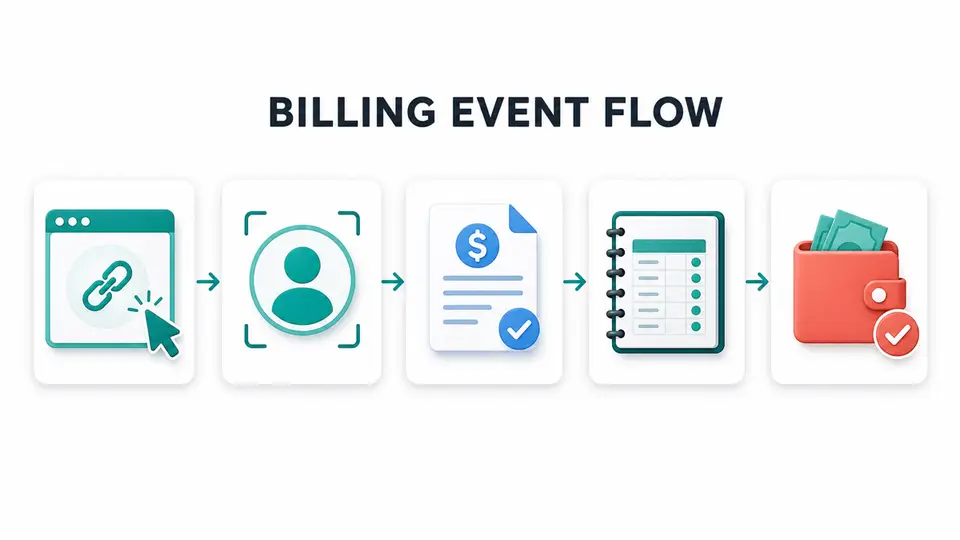
A conversion pixel is code that runs when a visitor reaches a qualifying page or completes a browser action. A common flow is referral click, tracking cookie, checkout, thank-you page, then conversion pixel.
Tapfiliate documents this pattern in its official integration overview. Its click script sets referral data in the browser, and a conversion script on the confirmation page reads that data to record the sale.
Pixel tracking can record a demo request, trial, account creation, checkout, or another browser event. That makes it useful for lead programs and multi-step funnels.
The risk is treating the browser event as final financial truth. A thank-you page can load twice, fail to load, be blocked, run before a payment settles, or record a trial that never becomes revenue. Recurring commissions also need new events for future invoices, usually through an API, automation, or native billing integration.
Pixel tracking becomes weak when an anonymous event never connects to a stable customer, transaction, or billing record.
The Attribution Layer and Revenue Layer Are Different
Strong affiliate tracking separates two questions:
- Which affiliate should receive credit for this customer?
- Which customer events create, adjust, approve, or cancel commission?
The attribution layer uses links, cookies, coupons, and overwrite rules. The revenue layer uses invoices, order IDs, refunds, plan changes, and eligibility rules.
The guide to first-click vs last-click affiliate attribution explains why referral windows and overwrite order need explicit policy. Billing data can confirm revenue, but it cannot decide attribution correctly if the original customer mapping is missing or ambiguous.
A trustworthy commission should reconcile the analytics source, attributed partner, and paid invoice without pretending they are the same record.
How Common Affiliate Platforms Fit the Comparison
Most established tools support several tracking methods.
Rewardful
Rewardful fits Stripe and Paddle subscription brands that want billing events to drive commissions. It captures the referral on the site, then connects the customer to later billing activity.
FirstPromoter
FirstPromoter supports native billing integrations and API tracking for trials, leads, recurring rewards, and capped commission periods. Verify which events are automatic and which require developer work.
Tapfiliate
Tapfiliate supports browser scripts, customer IDs, APIs, coupons, and native integrations. Its flexibility requires an explicit data contract for identity, deduplication, and renewals.
Rekomi
Rekomi offers native billing connections, server-to-server tracking, coupon attribution, and recurring commission controls. Compare its billing ownership and operating cost in the Rekomi vs Rewardful guide.
When Billing-Native Tracking Is the Better Fit
Prefer billing-native tracking when:
- The qualifying event is a paid subscription invoice
- Partners earn on renewals for several months or customer lifetime
- Upgrades and downgrades should change commission amounts
- Refunds, credits, chargebacks, and failed payments need ledger adjustments
- Finance wants commissions reconciled to billing transaction IDs
- The company uses a supported billing provider and standard checkout path
Ask whether the native integration handles trials, delayed conversion, multiple subscriptions, annual renewals, partial refunds, one-time charges, and reactivation.
When Pixel or Event Tracking Is the Better Fit
Prefer pixel or custom event tracking when:
- The program pays for qualified leads, demos, applications, or trials
- A conversion happens outside the primary billing provider
- The funnel spans forms, marketplaces, mobile apps, or custom checkout
- Different actions need different commission types
- Product events must be recorded before revenue exists
- The development team can send stable IDs and deduplicate events
For valuable conversions, send a transaction ID, customer ID, amount, currency, event type, and timestamp. The event should be safe to retry without creating a duplicate commission.
A Practical Hybrid Architecture for SaaS
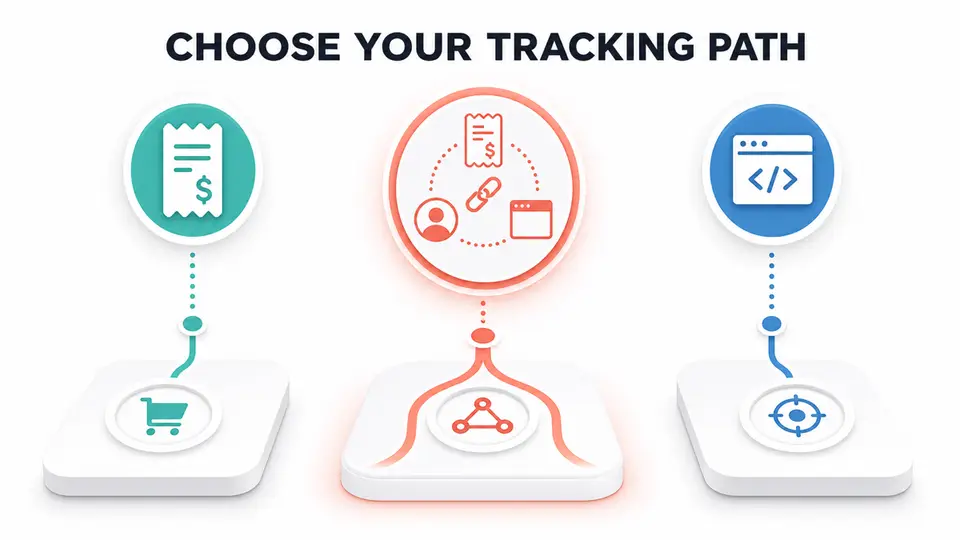
For many subscription brands, the safest design uses five steps:
- Capture the affiliate ID from the referral link or approved coupon.
- Store it with a first-party session and then a stable account or customer ID.
- Apply the program's attribution rule when multiple referrals exist.
- Create commissions from verified billing events, not page views alone.
- Reconcile refunds, cancellations, and payout approval against transaction IDs.
Use browser code for acquisition context and billing events for financial truth. Record a trial as a customer event, then create commission when the first eligible invoice succeeds.
The related guide to best affiliate tracking software for SaaS can help create a shortlist. This article should then be used to question each vendor's integration design.
Implementation Checklist
Before launch, document:
- Referral parameter, cookie duration, and overwrite rule
- Coupon priority and rules for unattributed coupon use
- Stable customer ID and transaction ID formats
- Qualifying event for lead, trial, sale, and renewal
- Commission duration, rate changes, and caps
- Refund, chargeback, cancellation, and failed-payment handling
- Duplicate event protection and safe retry behavior
- Consent, privacy, and data retention requirements
- Test cases for web, mobile, checkout, and account changes
- Reconciliation owner and payout approval process
Test the real checkout with a trial conversion, upgrade, downgrade, refund, failed payment, coupon purchase, renewal, and cancellation. One clean first payment does not prove recurring tracking.
Mistakes to Avoid
The first mistake is choosing a tool because it says "server-side" without checking how the affiliate identity reaches the server. Server events cannot repair an attribution ID that was never captured.
The second is firing a sale pixel on a thank-you page before payment is final. Record the browser event as pending or wait for verified payment.
The third is paying recurring commissions from scheduled dates instead of successful invoices. Failed and refunded charges should not look like earned revenue. Also avoid using email as the only identity key; prefer stable internal customer IDs.
The fourth is skipping reconciliation. Compare affiliate conversions, billing transactions, approved commissions, and payouts on a schedule.
Key Takeaways for Billing-Native vs Pixel Affiliate Tracking for SaaS
Billing native vs pixel affiliate tracking is best understood as a data architecture decision. Browser signals are useful for identifying the referral. Billing and server events are better for confirming eligible revenue. A hybrid system connects both with stable customer and transaction IDs.
Choose the smallest design that covers your actual conversion lifecycle, then test every financial edge case before recruiting partners. Browse FindAffiliates to compare affiliate software, and ask vendors to show exactly how a click becomes a customer, commission, adjustment, and payout.
FAQ
Is billing-native affiliate tracking cookieless?
Not necessarily. A billing integration may create commissions from server-side invoice events, but the system still needs an attribution signal such as a cookie, coupon, referral ID, or stored customer mapping.
Can a conversion pixel track recurring commissions?
Yes, if future payments create new conversion events tied to the same customer. Many teams use an API, automation, or native billing integration for renewals instead of loading a browser pixel every month.
Is server-side affiliate tracking more accurate?
It is usually stronger for verified transactions, refunds, and retries. Accuracy still depends on correct referral capture, identity mapping, attribution rules, and deduplication.
What should be the source of truth for SaaS commissions?
Use verified billing transactions as the source of truth for revenue, affiliate software as the commission ledger, and a documented attribution rule to connect the customer to the partner.
Should a SaaS affiliate program use a hybrid tracking setup?
Often, yes. A hybrid setup captures referral context in the browser, stores it against a stable customer, and uses billing events to create or adjust commissions over time.